
Causes of P0695 engine code
From my time at the workbench, I can tell you P0695 almost always traces back to one of a few usual suspects:
- A blown fuse for cooling fan 3-hands down, the one I find most in the shop. Fuses are cheap, but they’re the first line of defense.
- A failing cooling fan relay 3-they can get stuck or just wear out after years of cycling on and off.
- A rare but possible PCM issue-these computers don’t fail often, but when they do, they’ll throw you for a loop.
Here’s a pro-tip from the garage: Start with those fuses and relays before you jump to conclusions about expensive electronic parts.
Symptoms of obd code P0695
So, what should you look for if a P0695 code is in play? Here’s what I usually see in the bay:
- Check engine light glaring at you from the dash.
- Engine temps creeping up, especially when you’re idling or caught in a long line of traffic on a hot day.
- Sometimes, I’ve watched the temp gauge climb dangerously close to the red-if you see that, take it seriously.
Trust me, cooling fan issues aren’t something to shrug off. If you ignore them, you’re asking for trouble.

Diagnosis process for P0695
If you pulled a P0695, here’s how I’d walk you through narrowing it down:
- First thing: check the cooling fan 3 fuse. Find it in the fuse box, pull it, and inspect the filament. If it’s blown, pop in a new one with the right amp rating.
- If that fresh fuse pops immediately, you’ve probably got a dead short somewhere-maybe in the wiring, or a fan motor that’s locked up. If it blows only when things get hot, the motor may be seizing under load.
- Next, I’d swap cooling fan relay 3 with another relay of the same type (if you have one handy). If the fans spring to life, you’ve nailed the problem.
- With fuse and relay ruled out, check the fan motor. I like to spin the blades by hand (engine off, key out, of course). If they’re stiff or jammed, the motor’s done for.
- Still no luck? Now’s the time to check wiring for broken insulation, corrosion, or loose plugs. Only after all these steps do I even consider the PCM, and that’s rare in my experience.
Here’s a heads-up: always have someone keep an eye on the temp gauge during testing, and watch your fingers-fans can start unexpectedly, and that engine bay can get scorching hot in a hurry.
Common Mistakes during dtc P0695 troubleshooting
I can’t tell you how many times I’ve seen folks overlook the basics and run into trouble chasing this code:
- Forgetting to check the fuse-seriously, it takes seconds and solves the problem more than you’d think.
- Jumping to PCM replacement before even looking at the relay or fan motor-a costly and unnecessary mistake in most cases.
- Not physically checking if the fan spins-if that motor is seized, it won’t matter how many relays or fuses you swap.
My advice? Tackle each step methodically. It’ll save you time, money, and a lot of frustration.

Seriousness of P0695 code
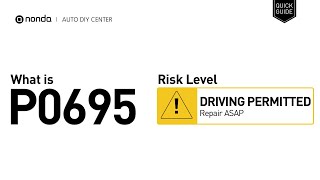
P0695 isn’t the kind of code to let slide. When your cooling fans aren’t doing their job, your engine can overheat frighteningly fast-especially if you’re crawling in city traffic or it’s a scorcher outside. Overheating isn’t just an inconvenience; it’s a one-way ticket to warped heads, blown gaskets, or even a completely toasted engine. I always tell customers: don’t gamble with overheating. Get it fixed, pronto.
Repair options for obd2 code P0695
When I’m fixing a P0695, these are the tried-and-true solutions I stick with-straight from both hands-on experience and the official service manuals:
- Swap out any blown fuse for cooling fan 3. Simple, but effective.
- Replace a bad cooling fan relay 3.
- If the fan motor’s locked up or doesn’t spin easily, it’s time for a new one.
- Patch or replace any damaged wiring you find in the circuit.
- If you’ve checked everything else and the problem’s still there, only then look at swapping the PCM-but that’s the exception, not the rule.
Always double-check your work, and make sure you’re using the right parts. That’s how you keep your fix solid.



Conclusion
Bottom line? P0695 is your warning that the cooling fan system’s out of whack, and you can’t ignore it. Nine times out of ten, it’s a fuse, a relay, or a stuck fan motor. Always start with the basics: test the fuse, try a known-good relay, and see if that fan spins free. Deal with this code quickly or you’ll risk major-and expensive-engine damage. Take care of it now, and your car will thank you with miles of reliable service.

 4961
4961 5 minutes of reading