
Causes of obd code P06A3
From what I’ve seen in the shop, the most common reasons for a P06A3 code are pretty straightforward. Here’s what usually causes it:
- Broken or disconnected wiring or connectors in the sensor circuit
- Blown fuses or faulty fusible links related to the sensor’s power supply
- A bad system relay that isn’t sending power where it should
- The sensor itself has failed and isn’t sending any signal
Most often the issue is with wiring-either a loose connector, corroded pin, or a wire that’s gotten damaged or rubbed through. But don’t rule out a blown fuse or a sensor that’s just given up the ghost.
Symptoms of dtc P06A3
If your car has triggered a P06A3 code, here’s what you might notice behind the wheel:
- Transmission won’t switch between sport and economy modes
- Shifting feels rough, delayed, or doesn’t happen at all
- It might not go into gear, or takes a long time to engage
- Can’t switch between two-wheel and four-wheel drive (if equipped)
- Transfer case won’t shift between high and low ranges
- Front differential or hub won’t engage
- Speedometer or odometer acts up or stops working
Sometimes, the only sign is the check engine light, but honestly, if you’re experiencing any of these symptoms, it’s a clear sign something’s up and shouldn’t be ignored.

Diagnosis steps for P06A3 trouble code
Here’s how I usually tackle a P06A3 code, step by step:
- First, I always check for other codes-especially those pointing to a specific sensor. Write them down, along with any freeze-frame data, because they can give you clues if the problem is intermittent.
- Next, I inspect all related fuses and fusible links. Sometimes a fuse looks fine until it’s under load, so don’t just eyeball it-test it with a meter if you can.
- Then, I do a thorough visual check of the wiring and connectors for the sensor in question. Look for broken wires, loose plugs, corrosion, or anything that looks out of place. It’s best to have someone wiggle the harness while you watch for changes.
- If everything looks good, I use a voltmeter to check for the proper reference voltage (usually 5 volts) and a good ground at the sensor connector. If you’re missing either, trace the wiring back to the PCM and check for continuity or shorts.
- If voltage and ground are present, I check the sensor’s resistance and continuity against the manufacturer’s specs. If it’s out of range, replace the sensor.
- For sensors that use a more complex signal (like a variable resistance or electromagnetic type), I’ll use an oscilloscope to watch the live signal-looking for glitches or a totally flat line.
- Once repairs are made, I clear the code and take the car for a drive. If the code comes back, there’s still something wrong-so don’t skip any steps.
It’s better to take your time and check each step carefully. Rushing can mean missing something simple.
Common Mistakes with P06A3 engine code
I’ve seen a few common pitfalls with this code. One big mistake is replacing the sensor right away without checking the wiring or fuses first-sometimes it’s just a loose connector or a blown fuse. Another is ignoring other codes that show up alongside P06A3; those can point you straight to the real problem. Skipping the step of checking for proper voltage and ground at the sensor is another one-without those, even a new sensor won’t work. And don’t forget to clear the code and test drive after repairs; otherwise, you might think you’ve fixed it when you haven’t. Take it from me, double-check everything before calling it done.

Seriousness of obd2 code P06A3
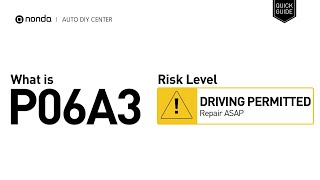
This isn’t something to brush off. Depending on which sensor circuit is open, you could be facing anything from annoying shifting issues to a total loss of drive or four-wheel drive. If the transmission can’t shift properly, you’re risking serious damage to expensive parts like the transmission itself, transfer case, or differentials. In some cases, you could be left stranded or even lose control if the vehicle can’t engage the right gear or drive mode. Honestly, you don’t want this kind of trouble on the road. The risks just aren’t worth it-get it checked out right away.
Repair solutions for P06A3 code
Here’s what usually fixes a P06A3 code, based on what I’ve seen and what the manuals say:
- Repair or replace any damaged wiring or connectors in the sensor circuit
- Replace blown fuses or faulty fusible links, and fix whatever caused them to blow
- Swap out a bad system relay if it’s not sending power
- Replace the sensor itself if it fails resistance or continuity tests
- In rare cases, if all else fails and the code is stored alone, a PCM reprogramming or replacement may be needed
It’s best to start with the simple stuff-wiring and fuses-before moving on to sensors or the PCM.

Conclusion
To sum it up, the P06A3 code means your car’s computer has lost communication with a key sensor, usually tied to the transmission or drivetrain. This can cause anything from shifting problems to total loss of drive, and it’s not something to put off. Start by checking fuses, wiring, and connectors, then move on to the sensor itself. Most of the time, fixing a wiring issue or replacing a sensor solves it. If you ignore it, you could end up with a much bigger (and more expensive) problem. My advice? Get on top of it now, and you’ll save yourself a lot of headaches down the road.

 4152
4152 6 minutes of reading