
Main Causes of P06A8 Trouble Code
After years of chasing down these gremlins, I’ve learned the P06A8 code nearly always points to a handful of usual suspects. Here’s my go-to checklist when one of these rolls into my bay:
- The sensor itself has given up the ghost-they don’t last forever, especially in harsh conditions.
- Fuses can blow, and I’ve seen more than one crispy fusible link over the years, especially if there’s been a short somewhere in the harness.
- Relays can flake out without warning and stop sending juice to the sensor circuit.
- Wiring and connectors are prime trouble spots. Heat, road salt, or just old age can lead to broken, corroded, or loose connections-especially if the wiring’s routed near the exhaust or underbody.
- Every now and then, there’s a PCM programming glitch, but honestly, that’s rare unless you’ve ruled out everything else and there are no other codes muddying the waters.
Nine times out of ten, the problem’s something simple-a chewed wire or a tired sensor. But don’t skip the basics, or you’ll end up chasing your tail.
Common dtc P06A8 Symptoms
When a car shows up with a P06A8, I can usually guess what the owner’s about to complain about before they even finish their sentence. Here’s what I hear most:
- The transmission refuses to switch between sport and economy modes. Sometimes it’s stuck in one or just won’t shift at all.
- Shifts are rough, delayed, or flat-out non-existent. You put it in gear, and nothing happens-or it slams in after a pause.
- Four-wheel drive acts up. Maybe it won’t switch from 2WD to 4WD, or the transfer case won’t budge from low to high range.
- Front differential or hub fails to engage, leaving you stuck when you need traction most.
- Dash gauges like the speedometer or odometer start going haywire, or quit working entirely.
Bottom line? These issues make your ride unpredictable and can leave you stranded or in a dangerous spot. Don’t ignore them.

How to Diagnose obd2 Code P06A8
Here’s the step-by-step approach I’ve used countless times to zero in on a P06A8:
- Start by checking for any other codes. If you’ve got more specific sensor codes, chase those down first-they often point straight to the problem.
- Give the wiring and connectors a thorough once-over. I get under there with a good light, looking for anything out of place-frayed wires, green crusty corrosion, or loose plugs. Don’t forget to check fuses and relays while you’re at it.
- Grab a scan tool and pull the stored codes and freeze-frame data. This snapshot shows you what was going on when the code set, which can be a huge help.
- Clear the codes, then take her for a spin. See if the code comes right back or if it takes a special condition to trigger.
- If the code returns, it’s time to break out the DVOM (digital volt/ohm meter). Check that you’re getting that 5-volt reference signal and a solid ground at the sensor connector. If either is missing, start tracing the harness back toward the PCM, looking for the break or short.
- If voltage and ground check out, measure the sensor’s resistance and continuity against factory specs. Out of spec? That’s your problem.
- For sensors that send a variable signal-like speed sensors-I’ll hook up an oscilloscope and watch the waveform while driving. Any dropouts or weird glitches are a dead giveaway.
If you can, have a buddy ride along and monitor the scan tool while you focus on the road. Two sets of eyes are better than one, especially when you’re chasing intermittent faults.
Avoiding Common P06A8 Mistakes
Let me save you from a few headaches I’ve watched others stumble into with this code. Don’t fall for these classic blunders:
- Swapping the sensor right away without checking wiring or fuses first. I’ve seen folks spend good money on a new sensor only to find a $2 fuse was the issue all along.
- Missing a blown fuse or lazy relay. These are quick checks that can spare you hours of frustration.
- Probing circuits for resistance without disconnecting the PCM or other modules. That’s a surefire way to fry your computer, and trust me, you don’t want to see that repair bill.
- Ignoring other codes that might be pointing you to the real root cause. Always address them first-you’ll thank yourself later.
Slow down and work through the basics before throwing parts at the problem. It’ll save you time, money, and a lot of aggravation.

How Serious Is the P06A8 Engine Code
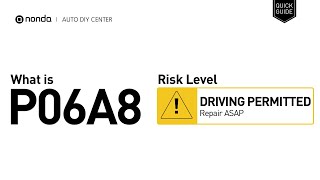
Make no mistake-this isn’t a code you can just shrug off. Depending on which circuit’s affected, you could lose shifting, four-wheel drive, or even speed readings. That’s a recipe for disaster if you’re on the highway or in dicey conditions. Keep driving, and you risk wrecking your transmission, transfer case, or differential-repairs that’ll empty your wallet faster than you can blink. In my book, this is a code you handle now, not later. Waiting only makes things worse, and a simple fix can turn into a major overhaul before you know it.
Effective P06A8 Code Repairs
Once you’ve tracked down what’s causing the P06A8, here’s what’s fixed it in my shop most often:
- Repairing or swapping out toasted wiring or crusty connectors in the sensor circuit. Sometimes a simple solder and heat-shrink job does the trick.
- Popping in a new fuse or relay if you find power isn’t getting through. Quick, cheap, and effective.
- Replacing the sensor if it’s out of spec or not sending a proper signal. Don’t forget to match the part number exactly-close isn’t good enough.
- Very rarely, it’s a PCM issue. If you’ve checked everything else and the problem won’t quit, you might be looking at a reflash or a replacement module. That’s a last resort, though.
After the fix, always clear the code and drive the car until the PCM hits readiness. Watch for the code coming back-if it stays gone, you’ve nailed it.

Conclusion
Here’s the bottom line: If you’re seeing a P06A8 code, your car’s computer isn’t happy with the voltage signal from a key sensor-usually something tied to the transmission or drivetrain. That can spell trouble with shifting, four-wheel drive, or even your speedo, and none of those are problems you want to let slide. My advice? Start with the basics: check those fuses, relays, and wiring before you go hunting for a new sensor. Catch it early and you’ll likely save yourself a heap of trouble and expense. But put it off, and you’re rolling the dice on a much bigger repair bill down the road. Don’t wait-get it sorted for both your peace of mind and your wallet.

 6440
6440 7 minutes of reading