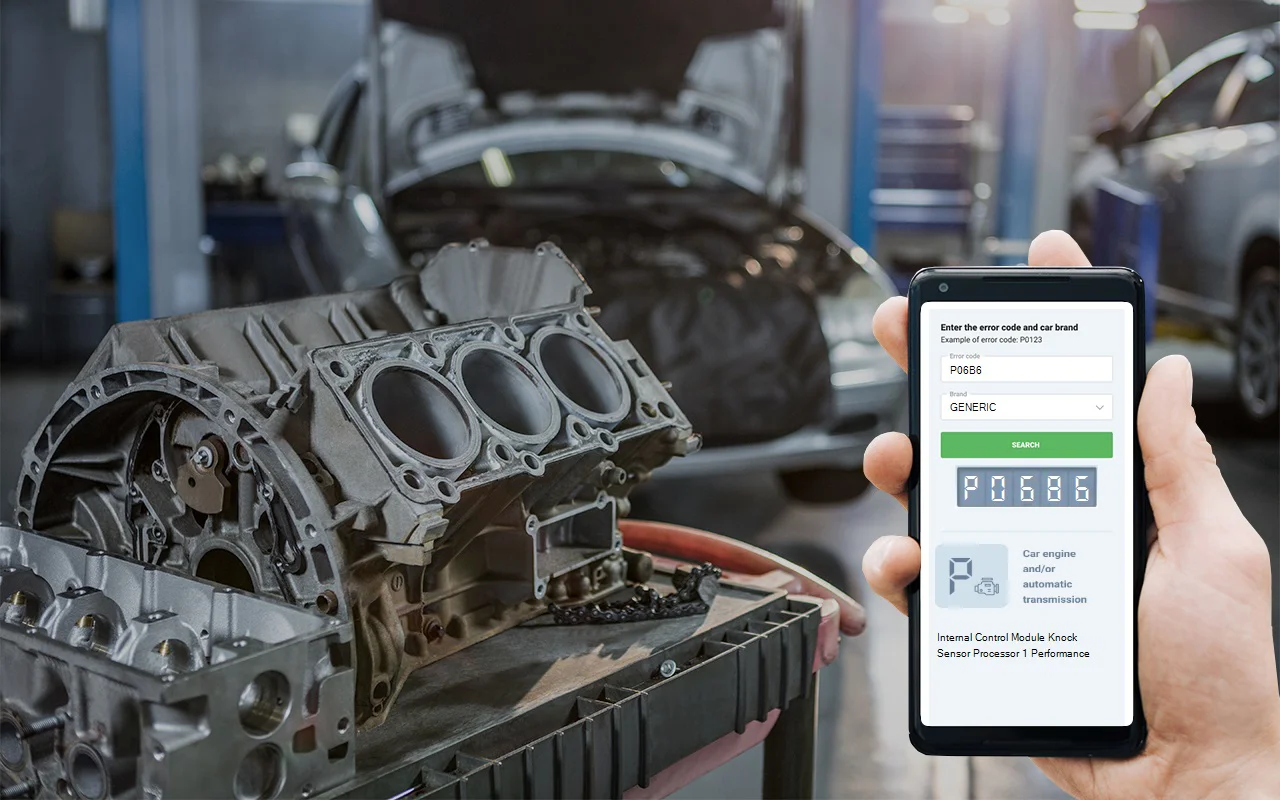
When you see the P06B6 code show up, you're dealing with a situation I’ve run into plenty of times in the shop. This particular code means your vehicle’s main computer-the Powertrain Control Module, or PCM-has picked up on an internal hiccup when trying to process information coming from the knock sensor circuit, specifically knock sensor 1. The knock sensor’s a small but crucial component, designed to pick up on those telltale engine vibrations that spell trouble-knocking or pinging noises. Left unchecked, that kind of detonation can be a death sentence for an engine. If the PCM can’t properly read what the knock sensor is telling it, you’ll get the P06B6 code thrown your way. I’ve seen this code light up on everything from domestic trucks to imports, and it’s always a sign the computer isn’t confident in its ability to keep tabs on engine knock-putting your motor’s well-being at risk. The sensor itself is usually threaded right into the engine block, ready to pick up even the slightest vibration. Also worth noting: the PCM, the transmission control module, and sometimes other controllers all share info from this sensor, so a problem here can set off a domino effect through several different systems.
DTC P06B6
 5639
5639 7 minutes of reading
Causes and obd2 code P06B6
From my time under the hood, these are the usual suspects when it comes to a P06B6 code:
- A PCM that’s faulty or has a programming glitch
- A knock sensor that’s gone bad
- Wiring that’s damaged or connectors that are loose, corroded, or just plain dirty in the knock sensor circuit
- A fuse that’s blown or a relay that’s quit working and feeds power to the controller
- Issues in the CAN communication wiring or connectors-the network all these computers use to chat with each other
- Poor grounding for the PCM or related modules
What I’ve often found is it’s usually a problem with the wiring or the sensor itself, but don’t rule out the computer-especially if there’s been any sign of flooding, water intrusion, or electrical gremlins. So when you see the p06b6 keyword, keep in mind you’re likely hunting down one of these root causes.
Symptoms and P06B6 trouble code
If you’re staring at a P06B6, here’s what you might notice. First off, that check engine light will almost always pop on. You could also hear some odd knocking or pinging-those sharp, metallic noises-from the engine bay, especially when you’re accelerating or the engine’s under load. Sometimes, the idle gets rough or the engine just doesn’t feel as smooth as normal, and your fuel mileage might take a hit. Every now and then, you’ll notice the car hesitating, losing power, or just running off-kilter. You might even get hit with a handful of other trouble codes, since the computer’s struggling to keep track of what’s going on. I’ve seen this across different makes-Ford, Renault, you name it-the end result is usually the same: the car just isn’t happy, and neither are you.

Diagnosis and P06B6 code
Here’s how I tackle a P06B6 diagnosis, step by step, just like I would in my own bay:
- First up, I grab my scan tool, pull every stored code and freeze frame, and jot everything down. It’s a lifesaver if the problem only shows up now and then.
- Next, I clear the codes and take the car for a spin to see if the code comes back right away or if it was just a fluke.
- If the code returns, I dig up any Technical Service Bulletins (TSBs) for your specific car and code-they’re goldmines for known issues and fixes.
- Then, I check every fuse and relay that powers the PCM and the knock sensor circuit. Pro tip from the garage: don’t just eyeball the fuses-test them with the circuit under load.
- After that, I give the wiring and connectors for the knock sensor and PCM a close look. I’m searching for broken wires, corrosion, water damage, or anything that doesn’t look right.
- Don’t forget the grounds. I always check and clean every ground connection for the PCM and related modules. A lousy ground can make you chase your tail for hours.
- If all that checks out, I break out my volt/ohm meter and test for continuity in the knock sensor circuit, making sure the sensor is doing its job.
- When the wiring, fuses, relays, and sensor all pass the test, the PCM becomes suspect. Swapping out a PCM usually means reprogramming, so that’s a job best left to a shop with the right tools and know-how.
If you’re poking around under the dash or hood, having a buddy on hand to wiggle wires while you watch the scan tool can help you catch those annoying intermittent faults. The p06b6 keyword is a solid reminder to stick to a methodical process when chasing this code down.
Common Mistakes and P06B6 engine code
A classic mistake I see is folks throwing parts at the problem-swapping out the knock sensor or the PCM-without checking the basics. Overlooking the simple stuff like fuses and wiring is a fast way to waste money. Another one? Ignoring TSBs. Manufacturers put those out for a reason, and sometimes the fix is straightforward. Here’s a quick word of warning: don’t dive in and yank the knock sensor out while the engine’s still hot, especially if it threads into a coolant passage. You don’t want to find out how fast hot coolant can ruin your day. Many times, that p06b6 keyword code traces back to something simple that’s been skipped over.

Seriousness and P06B6
Take it from someone who’s seen what happens when this code gets ignored: it’s not worth the risk. If the PCM can’t keep tabs on engine knock, it’s not going to save your engine from the kind of detonation that can melt pistons or even kill the motor outright. PCM failures can also cause all sorts of weird driveability problems, sometimes leaving you stranded miles from home. I’ve watched small issues snowball into big, expensive repairs because someone put off fixing a P06B6. Other components-wiring harnesses, knock sensors, even other control modules-can get caught up in the mess if the root cause isn’t handled. The p06b6 keyword is a blinking red light: ignore it and you’re rolling the dice with your engine’s life.
Repair and dtc P06B6
Here’s what’s worked in my own shop when fixing a P06B6 code:
- Repair or replace any damaged wiring or connectors in the knock sensor circuit
- Swap out a bad knock sensor
- Replace blown fuses or bad relays feeding power to the PCM or sensor
- Clean and tighten every ground connection for the PCM and related modules
- As a last resort, replace the PCM (with the proper programming, of course)
- Always check the manufacturer’s TSBs for your specific make and model
My advice: start with the easy, inexpensive stuff like wiring, fuses, and grounds before you think about shelling out for a new PCM. Keeping the p06b6 keyword top of mind will help you zero in on what actually needs attention.
Conclusion
If you’ve got a P06B6 code, your car’s computer is struggling to read the knock sensor-and that’s a big deal for engine safety. Don’t drag your feet on this one; it’s a top-priority code that can lead to expensive engine damage if left unchecked. Your best bet is to start with the basics: check the wiring, fuses, and grounds, then move on to the sensor and, if needed, the PCM. Quick, smart troubleshooting is the surest way to keep your car safe and running right.