
Causes of P0709 engine code
From experience, the most common culprit for a p0709 code is a faulty transmission range sensor itself. But I’ve also seen plenty of cases where the wiring to the sensor is damaged-think frayed wires, loose connections, or corrosion in the connector. Much less often, the issue can be traced back to a problem with the PCM or TCM, but that’s pretty rare. Here’s what I usually see:
- Bad transmission range sensor (TRS)
- Damaged or corroded wiring or connectors going to the sensor
- Very rarely, a malfunctioning PCM/TCM
Symptoms related to obd2 code P0709
If you’re dealing with this code, you’ll probably spot a few warning signs right away. After the second time your car sees the problem, that check engine light won’t wait-it’ll be staring you down. The biggest giveaway? Transmission jumps into ‘limp-home’ mode. That means your car’s starting out in third gear, which is sluggish and makes pulling away from a stop feel like you’re towing a trailer. Other things I’ve noticed: The transmission might refuse to shift normally, or the gear indicator on your dash won’t match what you’ve actually selected. And sometimes, your car won’t even crank if it thinks you’re not in Park or Neutral. That’s a headache no one needs.

Diagnosis steps for dtc P0709
Let me walk you through how I tackle a dtc P0709. First thing’s first-start with your eyes. Pop the hood and hunt down the transmission range sensor and its wiring harness. You’re looking for anything obvious: broken wires, connectors hanging loose, or that greenish-white corrosion that loves to sneak into plugs. I like to get someone in the driver’s seat, running the shifter through all the gears while I watch the sensor and wires for weird movement or telltale problems. If you spot anything off, fix it, clear the code, and take her for a test drive-see if it comes back.
Still looks clean? Grab your trusty digital voltmeter (DVOM). With the ignition on, check for 12 volts at the sensor and also at the PCM/TCM. Here’s a little trick from the shop: Gently wiggle the wiring harness while you’re watching the voltmeter. If you see the voltage drop, odds are you’ve got a wiring fault. If the wiring’s solid but you’re still getting the code, it’s time to suspect the sensor itself-it probably needs replacing. Only after all those checks do I start eyeing the PCM or TCM, but honestly, that’s a rare one.
Common mistakes when fixing obd code P0709
A classic mistake I see all the time? Folks jump straight to swapping out the sensor before they’ve checked the wiring. That’ll burn through cash and still leave you with the same headache. Another slip-up: ignoring corrosion or loose pins in the connector. Those tiny details can create massive problems. And here’s something even seasoned techs forget-always clear the code and take the car for a drive after any fix. If you skip this, you’re just guessing whether you’ve solved the real issue.

Seriousness of the P0709 trouble code
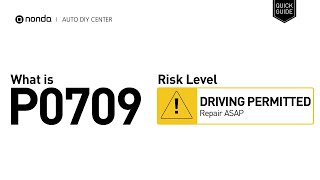
Trust me-you don’t want to brush this off. When your transmission goes into limp mode, it’s not just annoying; it’s downright dangerous, especially if you need to punch it to merge or dodge traffic. Plus, driving like this heaps extra stress on the transmission’s clutch packs, and that can lead to a bill for a full rebuild if you keep pushing your luck. If you ask me, the smart move is to park it and get the problem sorted out fast. Dragging your feet could cost you a whole transmission.
Repair procedures for the P0709 code
Most of the time, swapping out the transmission range sensor does the trick if it’s shot. If you find wiring or connectors that are chewed up or corroded, fixing or replacing those nearly always solves the issue. And on the rare occasion the PCM or TCM is the troublemaker, you’ll need to replace or reprogram it-but honestly, I can count on one hand how many times that’s happened in my career. After you finish the work, don’t forget: clear the code and take the car out for a spin to make sure everything’s back on track.


Conclusion
Bottom line: p0709 means your car’s computer isn’t getting the right info about your gear selection, and most of the time, you’re looking at a sensor or wiring issue. Ignoring it isn’t an option, unless you like limp mode and pricey transmission repairs. My best advice? Start with a thorough inspection, zero in on the sensor and wiring, fix what’s broken, and always confirm with a test drive. Take care of it quick, and you’ll save yourself a whole mess of headaches and a pile of cash.

 6160
6160 5 minutes of reading