
Causes of obd2 code P0728
From experience, the most common reasons for a P0728 code are usually electrical or mechanical issues with the sensor or its circuit. Here’s what I see most often:
- Broken, shorted, or corroded wiring or connectors in the input speed sensor circuit
- Excessive metal shavings or debris stuck to the magnetic tip of the sensor
- A faulty engine input speed sensor itself
- A damaged or worn toothed ring (reactor ring) inside the transmission
- Internal mechanical failure in the transmission, like slipping clutches or a failing input shaft
In cases like this, it’s usually something simple like a bad sensor or wiring, but you can’t rule out bigger transmission problems if the basics check out.
Symptoms of P0728 engine code
If your car throws a P0728, chances are you’ll notice right away that things aren’t running like they should. Over the years, drivers have come to me with the following complaints:
- The speedometer or odometer starts acting funky or just quits entirely
- Transmission shifts get rough, you might get stuck in limp mode, or sometimes it just won’t shift at all
- The tachometer (that RPM gauge) might fluctuate wildly or go dead
- You may feel the transmission slipping or there’s a real delay when you try to put it in gear
- The check engine light? Yeah, it almost always lights up
Let me be honest-these issues can make driving unpredictable and, frankly, unsafe. If you’re seeing any of these signs, don’t put it off.

Diagnosis of P0728 trouble code
Here’s how I usually tackle a P0728 code, step by step:
- First, I always check the transmission fluid level and condition. Low, burnt, or dirty fluid can cause all sorts of problems. If it smells burnt or looks black and gritty, that’s a red flag for internal damage.
- If the fluid checks out, I move on to a careful visual inspection of the wiring and connectors at the input speed sensor. Look for corrosion, broken wires, or loose plugs. Don’t forget to check for fluid leaks around the sensor, too.
- If everything looks good, I hook up a scan tool and check for any other related codes. I also look at live data to see if the input speed sensor readings make sense compared to engine RPM. If the readings jump around or don’t match, that’s a clue.
- Next, I’ll test the sensor itself. With the sensor unplugged, I use a digital voltmeter (DVOM) to check its resistance and compare it to the specs for your vehicle. If it’s out of range, the sensor is likely bad.
- If the sensor tests fine, I check the signal wire between the sensor and the PCM/TCM for continuity and shorts. Sometimes, wiggling the harness while watching the readings can reveal an intermittent problem.
- For stubborn cases, I might use an oscilloscope to watch the sensor’s signal in real time, but that’s usually more advanced than most DIYers need.
It’s better to have someone assist you when checking live data or wiggling wires, just to be safe and thorough.
Common mistakes when diagnosing dtc P0728
A classic mistake I see in the shop is replacing the sensor right off the bat, without so much as glancing at the wiring or the condition of the transmission fluid. Another one? Ignoring a dirty or damaged reactor ring inside the transmission. That thing can really mess up the sensor’s readings if it’s not in good shape. Skipping the fluid check is another big one-sometimes people miss major internal issues just because they didn’t pull the dipstick. And here’s a pro-tip: always check for other codes. Sometimes, the real culprit is hiding elsewhere in the system.

Seriousness of P0728
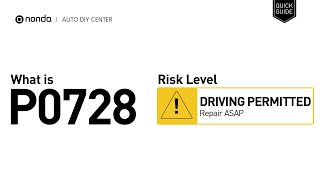
Don’t kid yourself-this isn’t a code you want to ignore. If you let it slide, you’re rolling the dice with serious transmission damage, unpredictable shifting, or even the car refusing to move. Things can spiral fast if the transmission starts slipping or the computer can’t figure out what’s going on. You might end up frying the clutches, damaging the input shaft, or even blowing the transmission control module. Bottom line? If your car starts shifting weird or won’t move, you need to handle this ASAP. It’s a safety issue, plain and simple.
How to repair P0728 code
Here’s what usually fixes a P0728 code, based on what I see in the shop and in OEM repair manuals:
- Repair or replace any damaged wiring or connectors in the input speed sensor circuit
- Clean the magnetic tip of the sensor if it’s covered in metal shavings or debris
- Replace the input speed sensor if it fails resistance or signal tests
- Inspect and, if necessary, replace the reactor ring inside the transmission
- If there’s evidence of internal transmission damage (burnt fluid, lots of debris), a rebuild or major repair may be needed
Always clear the code and test drive the vehicle to make sure the repair worked and the code doesn’t come back.



Conclusion
So here’s the bottom line: P0728 means your transmission isn’t getting a clean signal from the input speed sensor. That can snowball into all kinds of shifting problems and make your car a real headache to drive. You don’t want to put this off-get it checked out sooner rather than later. Start simple: check your fluid, wiring, and sensor. Nine times out of ten, it’s one of those. But don’t let your guard down; if those are fine, be ready for the possibility of bigger transmission trouble. The smartest move is always a step-by-step diagnosis and fixing what you find, no shortcuts. That’s how you keep your transmission-and your wallet-from taking a hit.
 5870
5870 6 minutes of reading