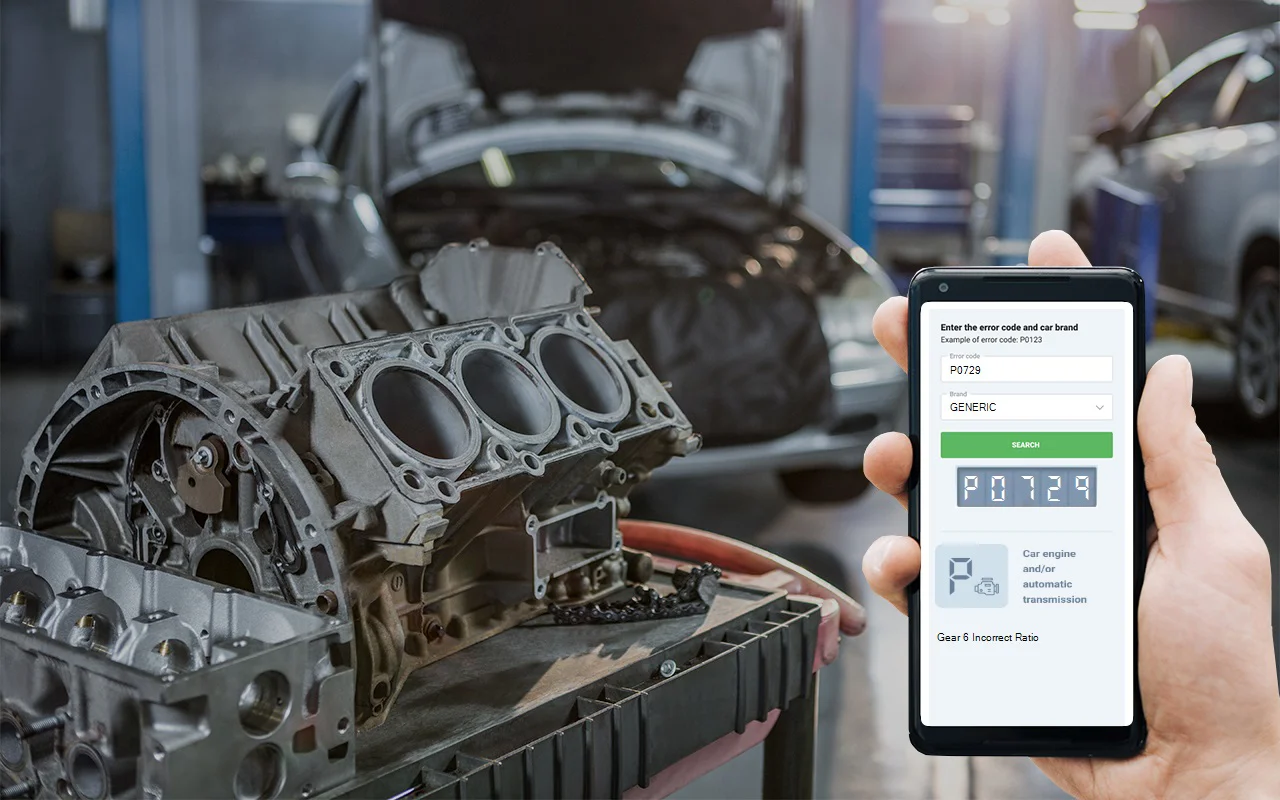
Let me break down what code P0729 means for your vehicle. This code stands for “Gear 6 Incorrect Ratio.” In plain English, your car’s transmission control module (TCM) or powertrain control module (PCM) is keeping an eye on how the transmission shifts through its gears. It uses information from a bunch of sensors to make sure the transmission is actually in the right gear at the right time. If it notices that, say, when you’re supposed to be in sixth gear, the speeds and ratios just don’t add up, it’ll trigger this code. The system is basically saying, “Hey, something’s off with sixth gear - it’s not matching what I expect.” This is all part of how modern transmissions work: they use planetary gearsets, clutches, and hydraulic controls to shift smoothly and efficiently, and the computer is constantly checking that everything lines up. If it doesn’t, you get a code like P0729 to let you know there’s a problem that needs attention.
DTC P0729
 3459
3459 6 minutes of reading
Causes and obd code P0729
From what I see most often in the shop, there are a handful of usual suspects when it comes to a p0729 code. Here’s what tends to be behind it:
- A faulty transmission control module (TCM) - sometimes the brain just isn’t sending or reading the right signals.
- Internal transmission failure - worn clutches, damaged planetary gears, or other internal issues can throw off the gear ratios.
- Low transmission fluid - this is a big one. Not enough fluid can cause all sorts of shifting problems.
- A failed transmission valve body - the valve body controls the flow of hydraulic fluid, and if it’s not working right, gears won’t engage properly.
- Wiring problems - damaged or corroded wiring between the sensors and the control module can send bad data.
In cases like this, it’s usually one of these, so I recommend starting with the basics before diving into the more complex stuff.
Symptoms of obd2 code P0729
If your car has a p0729 code, here’s what you’ll probably notice behind the wheel:
- Poor fuel economy - the transmission isn’t shifting as it should, so the engine might be working harder than necessary.
- Improper or harsh shifting - you might feel the car hesitate, jerk, or shift at odd times, especially when it’s supposed to go into sixth gear.
Sometimes, you might also see the check engine light come on, or the transmission might go into a ‘limp’ mode to protect itself. If you notice these symptoms, don’t ignore them - things can go south quickly if left unchecked.

Diagnosis with P0729 engine code
Here’s how I usually tackle a p0729 code, step by step:
- First, I check the transmission fluid level and condition. Low or dirty fluid is a common culprit and easy to check. Make sure the car is on level ground, and the engine is running at operating temperature. If the fluid is low, top it up - but if it’s dark or smells burnt, that’s a red flag.
- Next, I use a scan tool to look at live data from the transmission sensors. I compare the engine speed and transmission output speed to see if the gear ratios match what they should be in sixth gear. If they’re off, that points to a real issue.
- Then, I visually inspect the wiring and connectors going to the transmission and TCM. Look for any signs of damage, corrosion, or loose connections. It’s better to have someone assist you here, especially if you need to wiggle wires while watching the scan tool for changes.
- If the basics check out, I move on to checking the valve body and internal components. This usually means dropping the transmission pan and inspecting for debris or worn parts. At this point, it’s best to have a professional involved, since it can get technical fast.
- Finally, if everything else looks good, I’ll test or swap the TCM if possible. Sometimes, a faulty module is to blame, but I save this for last since it’s less common and more expensive.
Don’t forget to check for any technical service bulletins (TSBs) related to your vehicle - sometimes there are known issues with specific models that can save you a lot of time.
Common Mistakes When Dealing With P0729
I’ve seen a few pitfalls with this code over the years. Here’s what you want to avoid:
- Jumping straight to replacing the transmission or TCM without checking the basics like fluid level and wiring - that’s a surefire way to waste money.
- Overlooking simple wiring issues or corroded connectors. These can mimic much bigger problems.
- Ignoring the importance of using the right scan tool to read live data - guessing based on symptoms alone can lead you down the wrong path.
- Not consulting the OEM repair manual or TSBs for your specific vehicle - sometimes there are updates or known fixes that make the job much easier.
It’s best to start with something simple and work your way up - don’t skip steps, or you might miss the real issue.

Seriousness of dtc P0729
Honestly, this is not something you want to put off. Driving with a p0729 code can be risky - the transmission might not shift properly, which can leave you stranded or even cause further damage. If the transmission keeps slipping or shifting incorrectly, you could end up with worn clutches, damaged planetary gears, or even a complete transmission failure. That’s a serious hazard, both for your wallet and your safety. The risks just aren’t worth it - get this checked out as soon as possible.
Repair Options for P0729 trouble code
From experience, here are the repairs that usually resolve a p0729 code:
- Top off or replace the transmission fluid if it’s low or contaminated.
- Repair or replace any damaged wiring or connectors between the transmission, sensors, and TCM.
- Replace or repair the transmission valve body if it’s found to be faulty.
- If internal damage is found, rebuild or replace the affected transmission components (like clutches or planetary gears).
- Replace the TCM if it’s determined to be the source of the problem, but only after ruling out everything else.
Always follow the OEM repair procedures and double-check for any TSBs that might apply to your vehicle.
Conclusion
To sum it up, code P0729 means your transmission isn’t hitting the right gear ratio in sixth gear, usually due to issues with fluid, wiring, the valve body, or internal components. This isn’t something to ignore - it can lead to bigger, more expensive problems fast. My advice? Start with the simple checks like fluid and wiring, then move on to more complex diagnostics if needed. Acting quickly and following a methodical approach is the best way to get your car back on the road safely and reliably.