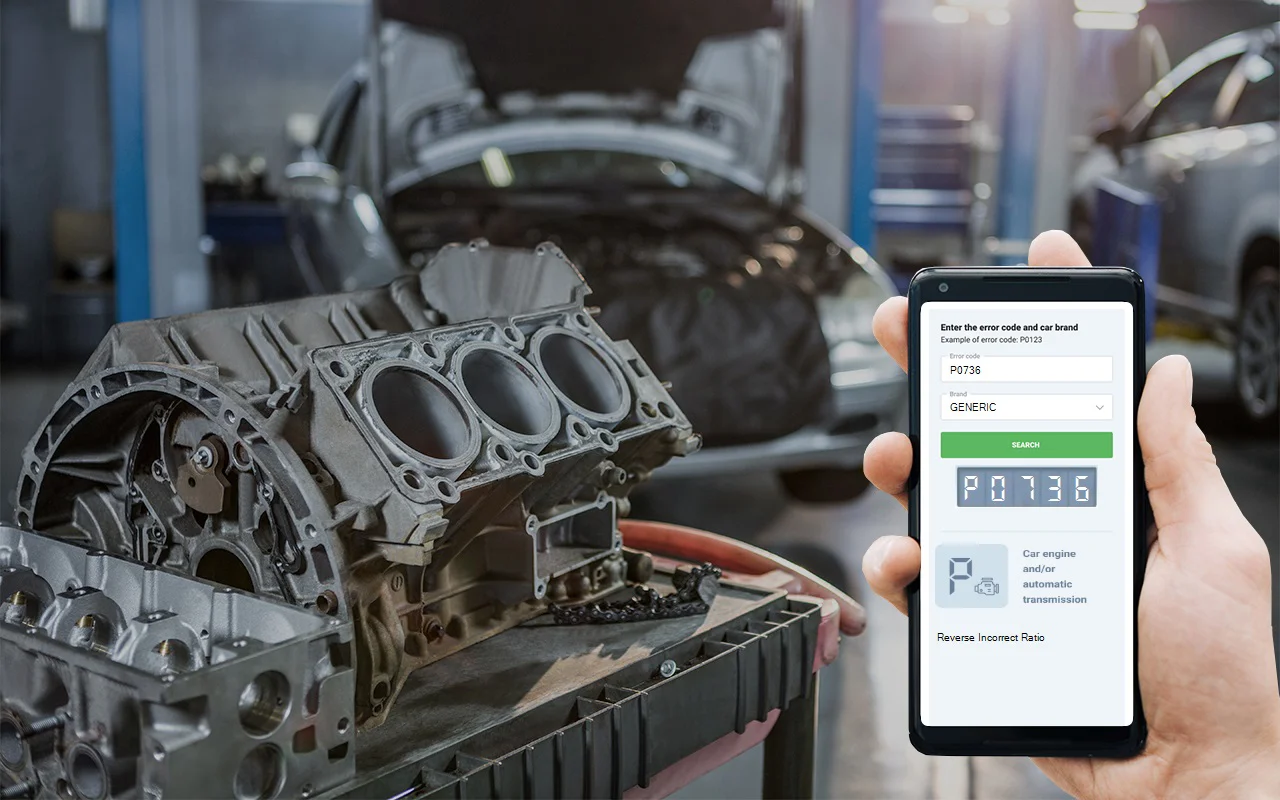
Let me break down what the P0736 code means for your vehicle. This code stands for "Reverse Incorrect Gear Ratio." In plain English, your car’s computer has picked up on something unusual when you try to put the car in reverse. The system uses sensors inside the transmission to watch how fast certain parts are spinning, and it expects a specific relationship between those speeds when you’re in reverse. If the numbers don’t add up-maybe the transmission is slipping, or the reverse gear isn’t engaging properly-the computer flags it and triggers this code. This is all about making sure your transmission is working as it should, especially when you shift into reverse. It’s a system designed to protect your transmission and keep things running smoothly.
DTC P0736
 4162
4162 5 minutes of reading
Causes of obd2 code P0736
From what I’ve seen in the shop and according to the official repair info, there are a handful of usual suspects when it comes to p0736. Most often the issue is something inside the transmission itself, but there are a few other things that can set it off. Here’s what I typically look for:
- Internal transmission failure (like worn clutches or damaged gears)
- Low or dirty transmission fluid
- Problems with the transmission valve body
- Faulty shift solenoid
- Issues with the transmission control module (TCM) or powertrain control module (PCM)
In cases like this, it’s usually best to start with the basics before jumping to conclusions about major transmission problems.
P0736 Symptoms
If you’re dealing with a p0736 code, there are a few things you might notice while driving. The most obvious is the check engine light coming on. But beyond that, you could find that your car just refuses to go into reverse, or it might slip out of reverse unexpectedly. Sometimes, you’ll feel the transmission slipping in general, and you might even notice you’re burning more fuel than usual. From experience, these symptoms can be pretty frustrating and make parking or backing up a real headache.

Diagnosis steps for P0736 code
Let me walk you through how I typically approach a p0736 code in the shop. First off, I always pop the hood and take a good look at the transmission fluid-both the level and its condition. Trust me, low or dirty fluid is a classic culprit and it’s a quick thing to check. Don’t forget, the car should be on level ground and the engine needs to be up to temperature. If the fluid looks dark or smells burnt, you’ve probably found your problem. Next up, I’ll hook up a scan tool-not just to confirm the code, but also to see if there are any related codes lurking in the system. Sometimes, that extra info points straight to a failing solenoid or sensor. After that, I give the wiring and connectors a once-over. Corrosion, broken wires, or loose plugs have tripped up more transmissions than you’d think. If everything looks solid so far, I’ll move to testing the shift solenoids and the valve body. This step usually calls for some specialized equipment, so if you’re not comfortable or don’t have the right tools, it’s best to let a pro handle it. Here’s a pro-tip: always check for technical service bulletins (TSBs) for your specific make and model-manufacturers sometimes put out fixes for known issues, and you don’t want to miss a free or easy repair.
Common Mistakes with obd code P0736
A classic mistake I see is folks going straight for the big, expensive repairs-like replacing the transmission-without checking the obvious first. Skipping the fluid check or overlooking a simple wiring issue can send you down a costly rabbit hole. Another thing I’ve run into more than once: ignoring the scan tool. Sometimes, it’s not the transmission itself, but a lazy sensor or a software glitch throwing the code. And don’t forget those TSBs I mentioned earlier; missing one could mean you’re fighting a battle the manufacturer already solved. My advice? Start with the basics, use your scan tool, and don’t assume the worst right off the bat.

Seriousness of dtc P0736
Let’s be real-this isn’t a problem you can just shrug off. If your car won’t go into reverse when you need it, you’ve got a safety issue on your hands. Plus, driving with a P0736 code hanging over your head can turn a small issue into a major headache. I’ve seen clutches fry, gears get chewed up, and valve bodies take a beating when these sorts of problems get ignored. So what does this mean for you? The longer you wait, the bigger the bill and the risk. Take care of it sooner, not later.
Repair steps for P0736 trouble code
Here’s the approach I’ve found works best for getting to the bottom of a p0736 code:
- Start by topping off or changing the transmission fluid if it’s low, burnt, or just looks nasty
- Track down and fix any leaks in the system-you don’t want fresh fluid just running out
- Inspect and repair any damaged wires or corroded connectors
- If testing points to it, replace a faulty shift solenoid or valve body
- If you find signs of internal damage-like worn clutches or busted gears-you’re probably looking at a rebuild or replacement
- If there’s a software update or reprogramming needed for the TCM/PCM, get that handled
My rule of thumb? Always tackle the simple stuff first. If that doesn’t fix it, then it’s time to dig deeper.
Conclusion
Bottom line: if your car’s rocking a p0736 code, you’re looking at an issue with the reverse gear, usually somewhere in the transmission or its control circuits. Don’t brush it off-waiting can turn a manageable repair into a wallet-buster. My best advice is to start with the basics: check the fluid, look over the wiring, and go from there. The sooner you sort it out, the more likely you’ll dodge a major repair and keep your ride on the road where it belongs.