
Causes of P073F code
From what I’ve seen in the shop, the most common reasons for a transmission problem like this are usually related to the basics-fluid and electronics. Here’s what tends to cause it most often:
- Low automatic transmission fluid (ATF) level
- Dirty or contaminated ATF
- Wrong type of ATF used
- Blockage or restriction in the transmission’s hydraulic circuits
- Faulty or sticking shift solenoid
- Problems with the TCM itself (water intrusion, internal failure)
- Wiring issues-like chafed, melted, shorted, or open wires
- Connector problems-broken tabs, corrosion, or loose pins
In cases like this, it’s usually something simple like fluid or a connector, but you can’t rule out more serious internal issues without a proper check.
Symptoms of obd code P073F
If your car’s got a code like this, you’ll probably notice it right away. Most folks describe:
- Unusual vehicle speed-either it won’t accelerate well or feels sluggish
- Low power, especially when trying to take off from a stop
- Transmission won’t shift or is stuck in one gear
- Strange noises from the engine or transmission area
- Throttle response feels delayed or weak
- Car won’t go as fast as it should, even with the pedal down
- Red fluid leaking under the car (that’s ATF)
Honestly, if you’re seeing these, especially if the car won’t move or is stuck in gear, it’s best not to drive it until it’s checked out.

Diagnosis steps for dtc P073F
Let me walk you through how I’d chase down a P073F in the garage-step by step, just like I do for my own customers:
- Start by checking your ATF level and its condition. With the engine idling in park (and on flat ground), pull the dipstick-if your car has one-and take a close look. Is the fluid low? Is it dark, burnt, or full of grit? That’s your first clue. And don’t forget, always use the specific ATF your manufacturer calls for-using the wrong stuff is a classic pitfall.
- If the fluid’s low, it’s time to get under the car and look for leaks. Red stains or puddles on the driveway? That’s a telltale sign. Seal up those leaks before you move on.
- Next up: wiring and connectors. I always check for frayed wires, corroded pins, or loose connectors-especially anywhere exposed to water or kicked-up road debris. Even a little corrosion can wreak havoc on shift signals.
- If all that checks out, I hook up a scan tool to watch real-time data on gear position and solenoid activity. This helps confirm if the transmission’s even trying to shift or if it’s stuck in a loop.
- Still stumped? At that point, I’ll bench test the shift solenoids and TCM. Solenoids sometimes stick or fail, and I’ve seen more than a few TCMs short out thanks to water sneaking in where it doesn’t belong.
If you’re not 100% comfortable with these steps-especially the wiring checks-don’t go it alone. Grab a buddy or a pro, just to stay safe and avoid costly mistakes.
Common mistakes with the P073F engine code
Here’s something I see way too often: folks skip the basics and go straight to swapping expensive parts. If you haven’t checked the fluid or looked for leaks, you’re just throwing money at the problem. Another trap? Using the wrong ATF. I can’t tell you how many shifting issues boil down to that one mistake. Don’t overlook those connectors, either-corrosion or a bent pin can stop everything cold. And whatever you do, don’t ignore the TCM. Water or corrosion in there is a recipe for headaches down the line.

Seriousness of P073F
Trust me, you don’t want to brush off this code. If your transmission can’t shift right, every mile you drive could be doing more harm. We’re talking burnt clutches, fried solenoids, or worst-case scenario-total transmission failure. Plus, it’s not just about your car: you could end up stranded or, if the car can’t accelerate properly, even cause an accident. In my book, this is one of those issues you fix right away.
Repair options for obd2 code P073F
Here’s what I’d tackle first if a P073F shows up in your car, depending on what’s actually wrong:
- Top off or swap out the ATF for the right kind-if it’s low, dirty, or smells cooked, don’t put it off
- Fix any transmission leaks you spot
- Replace or clean the transmission filter if it’s clogged up
- Swap out shift solenoids that are sticking or dead
- Repair or replace any sketchy wiring or connectors you find
- If the TCM’s the culprit-clean it up or, worst case, put in a new one
- And if you’re really unlucky and there’s internal damage, you might be looking at a rebuild or replacement
My advice? Always start with the easy stuff. Most times, a fluid change or a simple wiring fix does the trick-no point in jumping to the big, expensive repairs unless you have to.

Conclusion
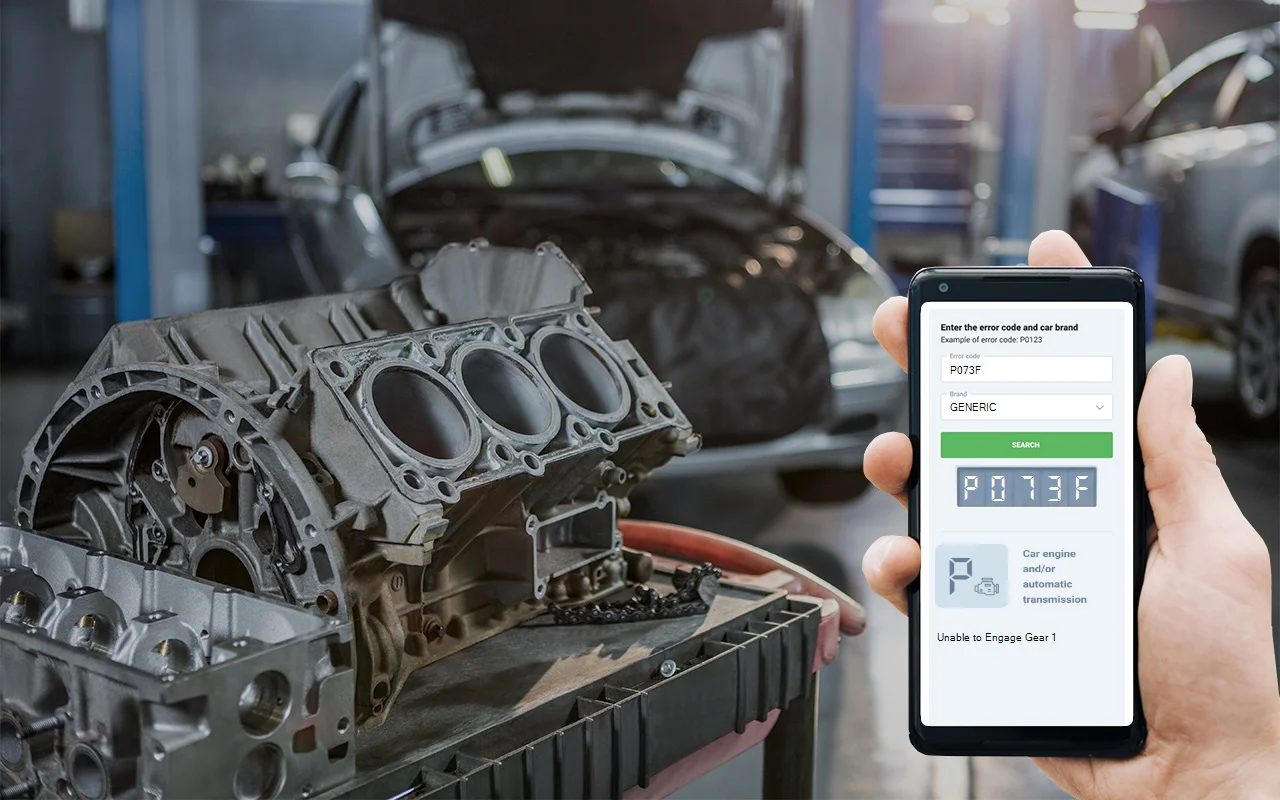
Bottom line: when you see P073F, your automatic transmission just isn’t getting into first gear, and that’s usually thanks to a fluid, wiring, or electronic gremlin. It’s not something to ignore-let it go and you’re asking for a massive repair bill. Always start with the simple checks-ATF, connectors-before you start swapping parts. Take it step by step, and you’ll solve most cases without breaking the bank. Act quickly, and you’ll save yourself a world of headaches (and cash) down the road.
 5862
5862 6 minutes of reading