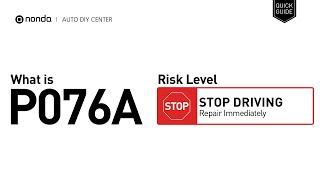
When you see that P076A code show up, let me tell you exactly what you’re dealing with. In my experience, this code means the car’s computer (the PCM) has spotted trouble with the “Shift Solenoid 'H' Control Circuit” inside your automatic transmission. Now, I’ve spent years chasing down these issues, and what’s happening here is your PCM is constantly monitoring a team of shift solenoids-little electronic valves that decide how and when your transmission changes gears. Solenoid 'H' is just one player in that lineup, and it’s responsible for directing fluid so the gears shift smooth as butter. If the wiring, connectors, or the solenoid itself goes sideways, your PCM throws this code and flips on the dreaded Check Engine light. I’ve seen this code on everything from Fords and Toyotas to Hondas and Hyundais-so it’s not picky about brands. At the end of the day, these solenoids keep your shifts crisp, your engine efficient, and your transmission out of trouble.
DTC P076A
 4163
4163 6 minutes of reading
Causes of P076A code
From my time under the hood, the root causes behind a P076A code tend to be pretty consistent. Here’s what usually sets it off:
- Low or dirty transmission fluid-believe me, this simple thing causes more trouble than you’d think.
- A clogged or filthy transmission filter that chokes off fluid flow to the solenoid.
- A shift solenoid 'H' that’s worn out or stuck-these little guys do get tired with age.
- Wiring headaches-broken, corroded, or loose wires and connectors between the solenoid, transmission, and PCM. A classic trouble spot.
- Internal transmission gremlins, like worn clutches, failing bands, or a bad valve body.
- A rare PCM (Powertrain Control Module) malfunction.
Nine times out of ten, you’re looking at fluid or solenoid problems, but don’t sleep on the wiring-one bad wire can wreak havoc and mimic bigger issues.
Symptoms of P076A
If you’re driving around with a P076A code active, trust me, your car will let you know something’s up. Most drivers who come into my shop with this code say they notice:
- Rough or delayed shifting-sometimes it’ll feel like the car is confused or even gives a little jerk between gears.
- Transmission slipping-where the engine revs up but you’re not getting the power to the wheels like you should.
- Transmission overheating-if you catch a whiff of something burning or see a warning pop up, don’t just hope it goes away.
- Worse fuel economy-your ride starts drinking more gas than usual.
- The Check Engine light comes on, and sometimes you’ll get a separate transmission warning, too.
- Every now and then, the car will go into “limp mode,” locking itself in one gear to keep from making things worse.
If you run into slipping or overheating, don’t gamble-get it checked out before you end up with a much bigger repair bill.

Diagnosis steps for P076A engine code
Here’s a real-world playbook for tracking down a P076A code, just like I do in the shop:
- Start by searching for Technical Service Bulletins (TSBs) for your car. Sometimes, the factory has already found a fix and can save you a lot of time.
- Check the transmission fluid-both the level and the condition. If it’s low, looks dark, or smells burnt, that’s a neon sign pointing to trouble. Pro tip: always check it with the engine running and the car on level ground for the most accurate reading.
- Look at the transmission filter (if you can get to it) for any blockages or gunk.
- Inspect every inch of the wiring and connectors between the transmission and PCM. I’m always on the lookout for split wires, corrosion, loose pins, or even a bit of moisture hiding in a connector-those green spots are your enemy.
- Next, hook up a scan tool to see how the solenoids are behaving and run an active test if your tool allows it.
- If you’re not seeing anything obvious, grab a multimeter and check resistance and continuity in the solenoid circuit. Unplug the connectors, make sure there’s no open or shorted wires, and look for readings close to zero ohms-unless your manual says otherwise.
- If the basics check out but you’re still stuck, you might be looking at an internal transmission fault or, rarely, a PCM problem. But don’t jump there until you’ve ruled out the easy stuff.
Always start with the fluid and the wiring before reaching for the expensive parts. That’s saved me-and my customers-a lot of money over the years.
Common mistakes when fixing P076A trouble code
I see it all the time: folks throwing parts at the problem, hoping to get lucky. Here are the mistakes I keep running into in the field:
- Skipping the transmission fluid check, or ignoring fluid that’s clearly past its prime-it’s a surefire way to waste cash.
- Forgetting about the wiring and connectors-a single corroded pin can mimic a dead solenoid.
- Not looking up TSBs-sometimes the solution is already documented and tested by the manufacturer.
- Blaming the PCM without real proof-it’s almost never the actual cause.
Don’t get ahead of yourself-always chase down the basics first. That’s how the pros do it.

Seriousness of obd2 code P076A
Take my word for it-you don’t want to ignore a P076A code. What starts as a minor annoyance can spiral into a serious risk. If the transmission starts slipping or gets too hot, you’re not just risking a breakdown-you could end up frying the clutches, damaging the valve body, or even trashing the whole transmission. I’ve seen it happen. Bottom line: if you notice symptoms like slipping or overheating, don’t wait. The sooner you get it checked, the better your odds of avoiding a wallet-busting repair.
How to repair obd code P076A
From countless fixes in the garage and what the official manuals say, here’s what actually works for a P076A code:
- Swap out the transmission fluid and filter if they’re dirty or plugged up-this alone fixes a surprising number of cases.
- Repair or replace any wiring or connectors that look suspect-clean off any corrosion and make sure everything is snug and dry.
- If the shift solenoid 'H' is toast or sticking, replace it with a good one.
- A full transmission flush can help clear out blocked fluid passages.
- If the valve body is acting up, you may need to repair or replace it-though that’s not as common.
- In rare cases, if all else fails and it’s confirmed, the PCM might need repair or replacement.
- If you find serious internal damage, a rebuild or even a replacement transmission could be on the table-but that’s always the last thing I recommend.
Start with the basics-fluid and wiring-before you consider tearing into the transmission. Most fixes don’t have to break the bank.
Conclusion
At the end of the day, a P076A code means your shift solenoid 'H' circuit isn’t up to snuff, and that opens the door to rough shifting, gear slipping, or even major transmission damage if you let it slide. The smart move is to begin with the simple stuff-fluid, filter, wiring-before going after the big-ticket parts. Trust me, putting off a fix is asking for trouble, and catching it early can save you a pile of money and stress. In my experience, most of these headaches clear up with a fluid service or a wiring repair. Get on it early, and you’ll be back to smooth shifting in no time.