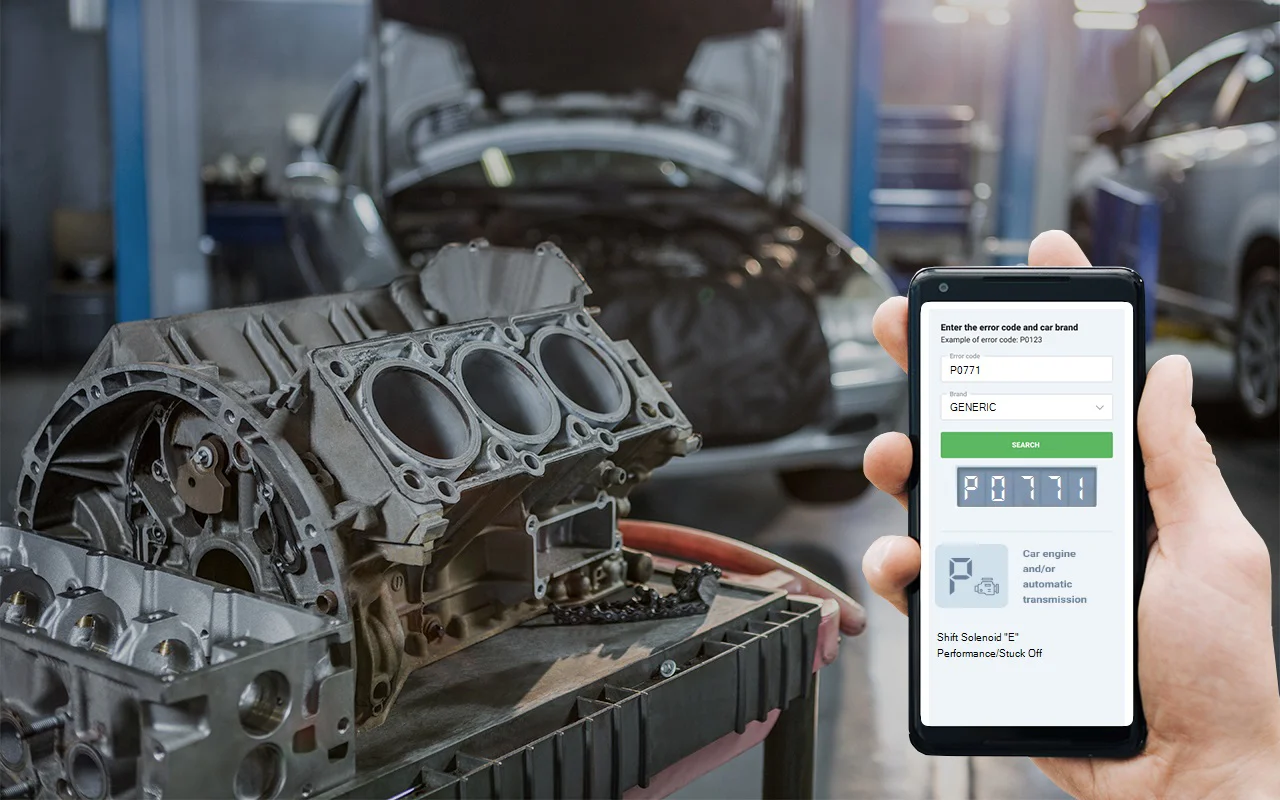
When you see a P0771 code pop up, it means your car’s got a gripe with the shift solenoid “E” performance inside the automatic transmission. Now, in my years working on transmissions, I’ve learned that these solenoids are like the silent conductors of your gear changes-tiny electronic valves that direct fluid flow so your car can shift gears smoothly. The PCM (that’s your car’s computer brain) is always monitoring these solenoids, watching for anything out of the ordinary. If solenoid “E” acts up-maybe it’s sluggish, stuck, or just plain dead-the PCM isn’t going to stay quiet. It’ll trigger the P0771 code, often lighting up your check engine and sometimes your transmission warning lights. Here’s the thing: this system is vital for keeping your shifts crisp and your fuel mileage respectable. If you’re seeing warning lights and things aren’t feeling right, P0771 could be behind it all.
DTC P0771
 5774
5774 6 minutes of reading
Main Causes of obd code P0771
From my time under the hood, I can tell you that P0771 is usually rooted in either fluid problems or electrical gremlins. Here’s what I most often find causing the headache:
- Transmission fluid running low
- Fluid that’s dirty or full of gunk
- A transmission filter that’s clogged up
- Shift solenoid “E” that’s faulty or sticking
- Trouble inside the valve body
- Internal transmission failure (never fun)
- Wiring or connectors that are damaged or corroded, either at the solenoid or PCM
- PCM (powertrain control module) giving up the ghost-though that’s not the usual suspect
Honestly, more times than not, it’s something basic-fluid or wiring. But every once in a while, I run into stubborn ones where it’s the solenoid or, worst case, the transmission itself.
Typical Symptoms of obd2 code P0771
If you’ve got a P0771 code hanging over your head, here’s what you might run into out on the road:
- Transmission starts slipping, like it can’t hold a gear
- Rough, delayed, or ‘grabby’ shifts that just don’t feel right
- Transmission overheating-sometimes you’ll even catch a whiff of burnt fluid
- Noticing you’re burning through more fuel than usual
- Symptoms that mimic an engine misfire
- Car suddenly goes into limp or ‘safe’ mode, limiting how fast and how far you can go
- Check engine light comes on, and sometimes the trans warning light too
Let me be straight with you-any one of these can make your drive nerve-wracking or even risky. Don’t shrug it off.

How to Diagnose a P0771 trouble code
When someone brings me a car with a P0771, this is the process I trust, step by step:
- I always start by checking for Technical Service Bulletins (TSBs) for that make and model. Sometimes there’s a well-known problem with a factory fix already waiting.
- Next, transmission fluid gets my attention. Is it low? Dark? Smelling burnt? Any of those are big warning signs. If it’s not up to snuff, I top it up or swap it out, and I never skip checking the filter.
- After that, I get in there and inspect all the wiring and connectors for the solenoids and PCM. I’m on the lookout for frayed wires, corrosion, loose plugs, or anything that doesn’t look right. Here’s a pro tip: have someone wiggle the connectors while you watch for intermittent faults.
- If the basics look good, I plug in a scan tool and check how the solenoids are behaving. Sometimes you can command solenoid “E” on and off with the tool and see if it actually responds.
- For a deeper dive, I’ll grab my digital multimeter and test the solenoid’s resistance, plus check wiring continuity. Always do this with the ignition off. If you find high resistance or an open circuit, you’re closing in on the problem.
- Should everything above check out, it’s time to take a look at the valve body. Sticking valves or blockages here are sneaky culprits, but getting at them usually means dropping the trans pan.
- If I’m still chasing the fault after all that, only then do I start suspecting the PCM or internal transmission failure-but that’s rare.
Always start with the easy stuff: fluid and wiring. Save the big, expensive jobs for last.
Common Mistakes When Addressing a P0771 code
Here’s where I see folks go sideways when trying to fix P0771:
- Skipping the fluid check-people rush in and replace solenoids without ever looking at the fluid level or condition.
- Forgetting about the wiring-corroded or loose connectors cause more trouble than you’d think, but they’re easy to overlook.
- Ignoring TSBs-sometimes there’s a bulletin with a quick and easy fix, but it never gets checked.
- Jumping straight to the solenoid-assuming it’s bad without testing. Sometimes the real problem is upstream in the wiring or even the PCM.
My advice? Don’t go throwing money at new parts until you’ve ruled out the basics. That’s how you avoid wasting time and cash.

How Serious Is a P0771 Issue
Take it from me: you shouldn’t let a P0771 code sit. What starts as an annoying issue can snowball into a transmission disaster. If your transmission keeps slipping or overheating, you’re risking big-ticket damage-think valve body, clutch packs, or even the whole transmission going out. And if the car decides to shift unpredictably in heavy traffic, you could end up in a dangerous spot. I always tell folks, don’t wait-get it checked out before a minor headache turns into a full-blown crisis.
Recommended Repair Steps for dtc P0771
Once I’ve pinned down the problem, here’s my usual playbook for fixing a P0771:
- Top up or replace the transmission fluid, and swap out the filter if it’s dirty
- Flush out the transmission to clear any blockages
- Repair or replace any damaged wiring or connectors you find
- Clean off any corrosion from electrical contacts
- Swap out shift solenoid “E” if it’s proven faulty
- Repair or replace the valve body if it’s sticking or gummed up
- On rare occasions, you might have to dig deeper-repair or replace the transmission or PCM
Stick to your car’s specific service procedures, but this list covers what’s worked for me again and again over the years.
Conclusion
Bottom line: P0771 means shift solenoid “E” isn’t doing its job, which can leave you with slipping gears, harsh shifts, and-if you ignore it-major transmission damage. Always start with the basics: check your fluid and wiring before moving on to the expensive stuff. Don’t let this code linger, because the risk just gets bigger the longer you wait. Follow a step-by-step approach, fix what you find, and lean on the OEM procedures for your ride. That’s the surest way I know to get your transmission back in fighting shape and keep your wheels rolling safely.