
Causes of P0819 trouble code
From what I’ve seen over the years, and what the official repair guides tell us, the real trouble spots for a P0819 code are usually these:
- A worn-out or malfunctioning upshift/downshift switch-those paddles or buttons you flick to grab a higher or lower gear.
- A faulty transmission range sensor (you might hear it called a shift position sensor too)-this little guy tells the computer exactly which gear you’re in.
- Wiring problems-think cracked insulation, corroded pins, chafed wires, or even loose connections in the circuits running to the paddles or range sensor. Honestly, in cars that’ve seen some miles or water, this is a lot more common than you’d expect.
- On rare occasions, the PCM or TCM itself kicks the bucket-either from a hardware failure or a glitchy bit of software.
In my experience, nine times out of ten, the issue is with either the switches or the wiring-not the computer. Still, you’ve got to check each part step by step if you want to avoid costly guesswork.
Symptoms of P0819
If your ride’s throwing a P0819 code, here’s the kind of trouble you’re likely to run into:
- Your manual shifting-whether it’s paddles or a sport mode button-just stops dead. You try to shift, but nothing happens.
- The gear indicator on your dash gets weird. Maybe it shows the wrong gear, flickers, or seems possessed.
- Sometimes, you won’t notice anything at all except for that annoying check engine light staring back at you.
Take it from me-if you’re used to rowing through gears and suddenly that function’s gone, or your dash is acting up, this code’s a prime suspect.

Diagnosis steps for P0819 engine code
Here’s how I’d tackle a P0819 code in the shop, and you can do some of this at home before calling in a pro. First off, don’t just ignore the check engine light-if you do, you’re gambling with bigger headaches down the line. Start with the basics: make sure your shift paddles or buttons aren’t jammed or stuck. Sometimes it’s just a bit of gunk or a sticky button causing all the fuss. Next, pop the covers and take a close look for obvious wiring issues-loose plugs, frayed wires, anything that looks out of place around the steering wheel or down at the transmission. I like to gently wiggle connectors and watch if the dash responds or the problem changes-sometimes that alone points you right to the culprit. If you’ve got a scan tool handy, pull all the codes, not just P0819. Always grab freeze-frame data before clearing anything-you’ll thank yourself later. If you’re comfortable with a voltmeter, check for proper voltage and ground at the upshift/downshift switch and the range sensor, following the wiring diagram for your model. If either switch fails your test, you’ve found your answer. If all the wiring looks good and the switches check out, then it’s time to check signals right at the PCM or TCM-but honestly, that’s the kind of job best left to someone with a bit more experience and the right equipment. Oh, and don’t forget to look up technical service bulletins-manufacturers sometimes put out updates or revised parts for issues just like this.
Common mistakes when dealing with P0819 code
A classic mistake I see all the time? Folks jump straight to swapping out the PCM or TCM, thinking it’s some deep computer issue, without even checking the basics. That’s a quick way to empty your wallet for nothing. Another misstep is ignoring the wiring. Corroded or broken wires are sneaky-they hide out of sight, but they’re the root cause more often than you’d think. Also, don’t just clear the code and cross your fingers; unless you actually fix what’s wrong, that light’s coming right back. Always start with the switches and connectors before you start throwing expensive parts at the problem.

Seriousness of dtc P0819
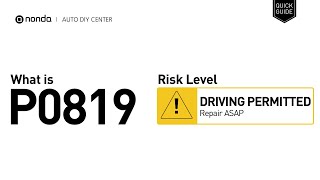
Don’t brush this one off. Sure, you might still be able to drive, but losing the manual shift feature can catch you out-especially if you need it for passing, hills, or engine braking. And if the computer can’t trust the gear signals, it might stick the transmission in limp mode or start shifting badly, which could snowball into bigger, pricier problems. I’ve seen wiring faults start out small and end up causing bigger electrical gremlins, too. Bottom line: get this sorted out sooner rather than later. Your transmission-and your wallet-will thank you.
Repair solutions for obd code P0819
Here’s what usually gets a P0819 code off your back, straight from the repair manual and my own time at the workbench:
- Swap out the upshift/downshift switch or paddles if they flunk the test.
- Replace the transmission range sensor if it’s giving bad readings.
- Fix or replace any damaged wiring or dodgy connectors you find in the circuits-honestly, this is the fix more often than not.
- Only after all that, if you’re still chasing your tail, reflash or replace the PCM/TCM if you’ve confirmed it’s truly the source of the trouble.
My advice? Always start with the straightforward stuff-switches and wiring-before you dig into the expensive or high-tech fixes.

Conclusion
So, here’s the deal: P0819 means your car’s brain has picked up on a glitch with the manual shift controls or the gear position signals. It’s vital to jump on this quick, since it can mess with both the safety and longevity of your transmission. Begin with the simple checks-your paddles, switches, and all the wiring. Only look at the computer if everything else comes up clean. In my own experience, most of these problems end up being a bad switch or a wiring fix. Don’t procrastinate-getting this fixed now is the best way to keep your car shifting crisp and trouble-free.
 4712
4712 6 minutes of reading