
Causes of P0865
From experience, the most common reasons I see for a p0865 code are usually electrical in nature. Here’s what tends to go wrong most often:
- Faulty transmission sensor - these can fail and mess up the signals.
- Vehicle speed sensor issues - if this sensor isn’t working, the computers can’t sync up properly.
- Broken or shorted wiring in the CAN (Controller Area Network) harness - sometimes wires get pinched, corroded, or damaged.
- Mechanical failure inside the transmission - not as common, but it does happen.
- Faulty TCM or PCM, or even a programming error - sometimes the computers themselves are the culprit.
In cases like this, wiring and sensor problems are the usual suspects, but I never rule out a computer issue, especially if the car has a history of electrical gremlins.
Symptoms of P0865 code
If your car has a p0865 code, you’ll probably notice some changes in how it drives. Here’s what drivers usually report to me:
- Rough or unpredictable shifting - the transmission might bang into gear or hesitate.
- Failure to shift at all - sometimes it just won’t go into the next gear.
- Poor fuel economy - the engine and transmission aren’t working together efficiently.
- Transmission slipping - feels like the car loses power for a moment.
- Delayed engagement when shifting - a lag before the car actually moves after you shift.
- Other warning lights, like ABS, might come on too.
Honestly, if you’re feeling any of these, it’s best not to wait. Things can go south quickly if overlooked.

Diagnosis process for obd2 code P0865
Here’s how I usually tackle an obd2 code p0865, step by step:
- First, I connect a diagnostic scanner to the car and pull all the stored codes, not just p0865. I always jot down the freeze frame data - that’s a snapshot of what was happening when the code set.
- Next, I clear the codes and take the car for a test drive to see if the code comes back or if it was just a fluke.
- If the code returns, I start with a thorough visual inspection of all the wiring and connectors related to the transmission and TCM. I’m looking for anything obvious: frayed wires, loose plugs, corrosion, or signs of water intrusion. Don’t forget to check the fuse box for blown fuses - it’s a simple thing, but it gets missed a lot.
- After that, I use a digital volt/ohm meter to check for proper voltage and ground at the TCM and PCM connectors. If there’s no power or ground, I trace the wiring back to find the break or short.
- If the wiring checks out, I’ll use the scanner to monitor live data from the sensors. Sometimes, a failing sensor will show up as a weird reading or no reading at all.
- If everything electrical looks good, but the problem persists, I start to suspect the TCM or PCM itself, or a software issue. At this point, it’s best to check for any technical service bulletins (TSBs) that might point to a known fix for your specific car.
It’s better to have someone assist you during these checks, especially when wiggling wires or connectors to see if the problem is intermittent.
Common mistakes when fixing dtc P0865
Over the years, I’ve seen a few common pitfalls when dealing with dtc p0865:
- Jumping straight to replacing the TCM or PCM without checking the wiring first - that’s an expensive mistake.
- Overlooking simple things like blown fuses or loose connectors.
- Ignoring other related codes - sometimes the real problem is hiding behind another code.
- Not checking for TSBs - manufacturers sometimes know about these issues and have specific fixes.
Take your time and work through the basics before replacing any expensive parts.

How serious is the P0865 trouble code
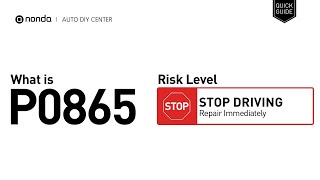
This isn’t something you want to put off. A p0865 code can lead to harsh shifting, slipping, or even total loss of gear engagement. That’s a serious hazard, especially if you’re driving in traffic or on the highway. If ignored, you risk damaging the transmission itself, which can be a wallet-busting repair. Other parts that can suffer include the TCM, PCM, and even the wiring harness. Honestly, the risks just aren’t worth it - get this checked out as soon as you can.
Repair steps for obd code P0865
Here’s what usually fixes an obd code p0865, based on what I see in the shop and the official repair info:
- Repairing or replacing damaged wiring or connectors in the transmission or CAN network harness.
- Replacing a faulty transmission sensor or vehicle speed sensor.
- Replacing blown fuses and addressing the root cause of the electrical issue.
- Reprogramming or, in rare cases, replacing the TCM or PCM if they’re found to be faulty.
- Following any manufacturer-issued TSBs for your specific vehicle - sometimes a software update is all it takes.
It’s best to start with the simple stuff and only move to module replacement if you’re sure everything else checks out.

Conclusion
To sum it up, P0865 means your car’s computers aren’t communicating properly about the transmission, and that’s a big deal for how your vehicle drives. It’s a high-priority issue that can cause unsafe driving conditions and expensive damage if ignored. The most reliable way to fix it is to start with a careful check of the wiring, sensors, and fuses, then move on to the computers and software if needed. Don’t put this off - prompt diagnosis and repair will save you headaches and money down the road.

 5939
5939 6 minutes of reading