
Causes and P0870
When I’m chasing down a P0870, most of the time it traces back to an electrical hiccup in the sensor’s circuit. Here are the usual suspects I run into in the shop:
- Wiring to the transmission fluid pressure sensor (TFPS) that’s broken, rubbed through, or chewed by mice
- Shorts-either to power or ground-somewhere along the sensor’s wiring harness
- A TFPS that’s simply given up the ghost
- Connectors at the sensor that are loose, full of corrosion, or just plain dirty
- Internal transmission gremlins, like leaky seals or sticky valves-less common, but don’t rule them out
- On rare occasions, the PCM or TCM itself can be the problem, but that’s way down my list
Nine times out of ten, it’s a wiring or connector issue, especially on vehicles where that sensor’s getting hammered by the weather and road grime.
Symptoms and dtc P0870
When P0870 shows up, you’re not just dealing with a light on the dash. First thing you’ll spot is the check engine light glaring at you. Beyond that, you might notice the transmission isn’t as smooth as usual-shifts could feel rough, delayed, or generally off. Sometimes the car will stubbornly start off in second or third gear instead of first, making it feel like you’re dragging an anchor when you try to accelerate. Every once in a while, you won’t spot any symptoms at all, but trust me, leaving this unchecked is just asking for costlier headaches later.

Diagnosis and P0870 code
When I tackle a P0870, here’s my playbook:
- First thing I do is check for any technical service bulletins (TSBs) that might be out for your vehicle-sometimes the engineers already know about these issues and have a fix lined up.
- Next, I hunt down the transmission fluid pressure sensor, usually found on the side of the transmission or at the valve body.
- I get in there with a flashlight and eyeball the wiring and connectors-looking for frayed wires, melted insulation, busted clips, or that telltale green corrosion inside the plug. Don’t underestimate a little corrosion; it’s a common troublemaker.
- If I spot any gunk or rust, I’ll clean the terminals with some electrical contact cleaner and a soft brush, let it dry out, then dab on some dielectric grease to keep moisture at bay.
- After cleaning, I clear the code and see if it returns. If it’s gone, odds are the problem was just a lousy connection.
- If the code’s still hanging around, I grab a digital voltmeter and check for the right voltage at the sensor connector (usually 5 or 12 volts, depending on the system). I’ll also test the sensor’s resistance and compare it to factory specs.
- If the wiring and voltage are good but the sensor’s readings are way off, it’s time for a new sensor.
- If all that checks out and you’re still getting the code, now you’re looking at possible transmission issues inside the unit, or in rare cases, a bad PCM or TCM.
My advice? Always start with the simple stuff-wiring and connectors-before you start replacing sensors or tearing into the transmission.
Common Mistakes with P0870 engine code
I see folks jump the gun all the time with this one. A classic mistake is swapping out the sensor right away without even glancing at the wiring or connectors-when, truthfully, it’s usually just a crusty connection or a frayed wire to blame. Skipping the TSB check is another big one; sometimes the manufacturer’s already got a fix on record. And don’t turn a blind eye to related codes that pop up-they can be the breadcrumbs that lead you to the real problem. Clearing the code and hoping it won't come back? That’s wishful thinking. If you don’t fix what’s causing it, you’ll be right back where you started.

Seriousness and obd code P0870
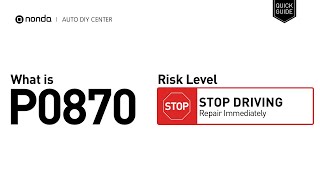
This isn’t one of those codes you should shrug off. If your transmission isn’t getting accurate pressure readings, you’re flirting with rough shifting or even limp mode, where the car stays stuck in higher gears. Not only is that a huge pain-especially if you need to get moving in a hurry-it can also be a real safety risk. And if you keep driving with this problem, you’re gambling with serious transmission wear or even full-blown damage, which will cost a whole lot more than fixing the wiring. Things can go bad fast if you let it slide, so don’t wait around on this one.
Repair Procedures and P0870 trouble code
Based on what I see in the garage, these fixes usually do the trick for P0870:
- Patch up or replace any busted wiring or sketchy connectors going to the TFPS
- Clean up any corrosion on terminals and slap on some dielectric grease for protection
- Swap out the transmission fluid pressure sensor if it’s testing bad
- If you find anything wrong inside the transmission, like a sticky valve or a leak, you’ll need to address that too
- As a last resort, if everything else checks out, you might need to reprogram or replace the PCM/TCM-but only after ruling out everything else first
Stick to the factory repair procedures, and make sure you’ve double-checked all the basics before shelling out for big-ticket parts.


Conclusion
Bottom line-when you see P0870, your car’s computer isn’t happy with the signal from the transmission fluid pressure sensor “C” circuit. Nine times out of ten, it’s an electrical snafu: a bad wire, crusty connector, or a sensor that’s finally had enough. Don’t ignore it. You risk lousy shifting, limp mode, or worse-expensive transmission repairs. My advice? Start with a careful inspection and cleaning of the wiring and connectors, then check the sensor itself. Nip it in the bud, and you’ll save yourself a pile of grief and cash in the long run.

 5395
5395 6 minutes of reading