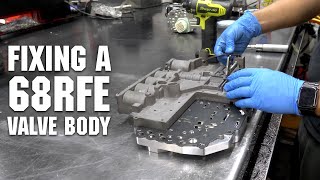
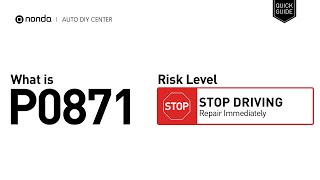
When you see a P0871 code pop up, it’s your car’s way of telling you there’s trouble brewing with the transmission fluid pressure sensor or switch “C” circuit. Let me make this clear: your vehicle’s computer-whether it’s called the PCM or TCM-is constantly monitoring what’s happening inside the transmission. It relies on a special sensor to turn the actual hydraulic pressure of your transmission fluid into an electrical signal. That signal tells the computer everything’s running as it should. If what the sensor’s reporting doesn’t line up with what the computer expects, boom-you’ve got a P0871. Most of the time, you’ll find this sensor bolted to the side of the valve body inside the transmission, but sometimes it’s threaded right into the transmission case. Its main job? Making sure your transmission shifts smoothly and right on time. If the computer gets a reading that’s out of whack, you might get weird shifting-or the car could even force itself into ‘limp mode’ just to keep from making things worse. I’ve traced this code back to electrical faults, sensor failures, and sometimes even issues deep inside the transmission.
DTC P0871
 3933
3933 6 minutes of reading
Common Causes of P0871 code
From my time under the hood, these are the usual suspects when I’m chasing down a p0871:
- The transmission fluid pressure sensor (TFPS) itself goes bad-that’s what I run into most.
- Wiring or connectors that are broken, chewed up, or corroded-especially if the car’s spent time in salty or wet environments.
- Wiring that has shorted out-sometimes insulation wears through and lets the wire touch metal.
- Internal problems in the transmission, like a stuck valve, leaking passage, or missing check ball in the valve body-this doesn’t happen every day, but don’t rule it out.
- On rare occasions, a faulty PCM or TCM-but honestly, that’s way down the list.
Nine times out of ten, it’s the sensor or wiring, but I’ve seen stubborn cases where something deeper was causing all the trouble.
Symptoms Associated with P0871 trouble code
So, what should you watch for? Here’s what drivers usually notice when a P0871 shows up:
- The check engine light comes on-always the first giveaway.
- Shifting that feels rough, slow, or downright odd-maybe a hard bang into gear, or a hesitation that wasn’t there before.
- The car might skip first gear and start in second or third, making it feel like it’s dragging its feet when you hit the gas (that’s what we call ‘limp mode’).
- Sometimes, you might not feel anything obvious at all, but ignoring this code can set you up for bigger headaches later.
If you’re spotting any of these, don’t just shrug it off. Trust me-you want to get ahead of it.

How to Diagnose dtc P0871
Here’s how I dig into this issue when it lands in the shop:
- I always start by checking for Technical Service Bulletins (TSBs) for your make and model-manufacturers sometimes know about quirks and have a fix ready.
- Next, I hunt down the TFPS-usually found on the transmission or valve body. I take a close look at the wiring and connector, searching for broken wires, signs of corrosion, burnt spots, or anything that doesn’t look right. Don’t skip checking inside the connector for that telltale green corrosion.
- If I spot any dirt or corrosion, I’ll clean things up with electrical contact cleaner and a small brush, let it dry, and dab on a bit of dielectric grease before plugging it back in.
- Once everything’s clean, I clear the code using a scan tool, then see if it comes back. If it doesn’t, odds are the issue was a bad connection.
- If the code returns, it’s time to test the sensor and wiring. With the key off, I unplug the sensor and use a digital voltmeter to check voltage at the connector-usually I’m looking for 5 or 12 volts, depending on your car. I’ll wiggle the wires while watching the meter; if the numbers jump, that’s a sign of a wiring issue.
- If voltage looks solid, I check the sensor itself for correct resistance (ohms), comparing to the specs in the service manual. If it’s out of range, that sensor’s toast.
- If everything checks out and the code still won’t quit, that’s when I start suspecting problems inside the transmission, or, once in a blue moon, a computer module gone bad.
Some of these checks require a steady hand and a bit of know-how. If you’re not comfortable with electrical work, don’t hesitate to call in someone with experience.
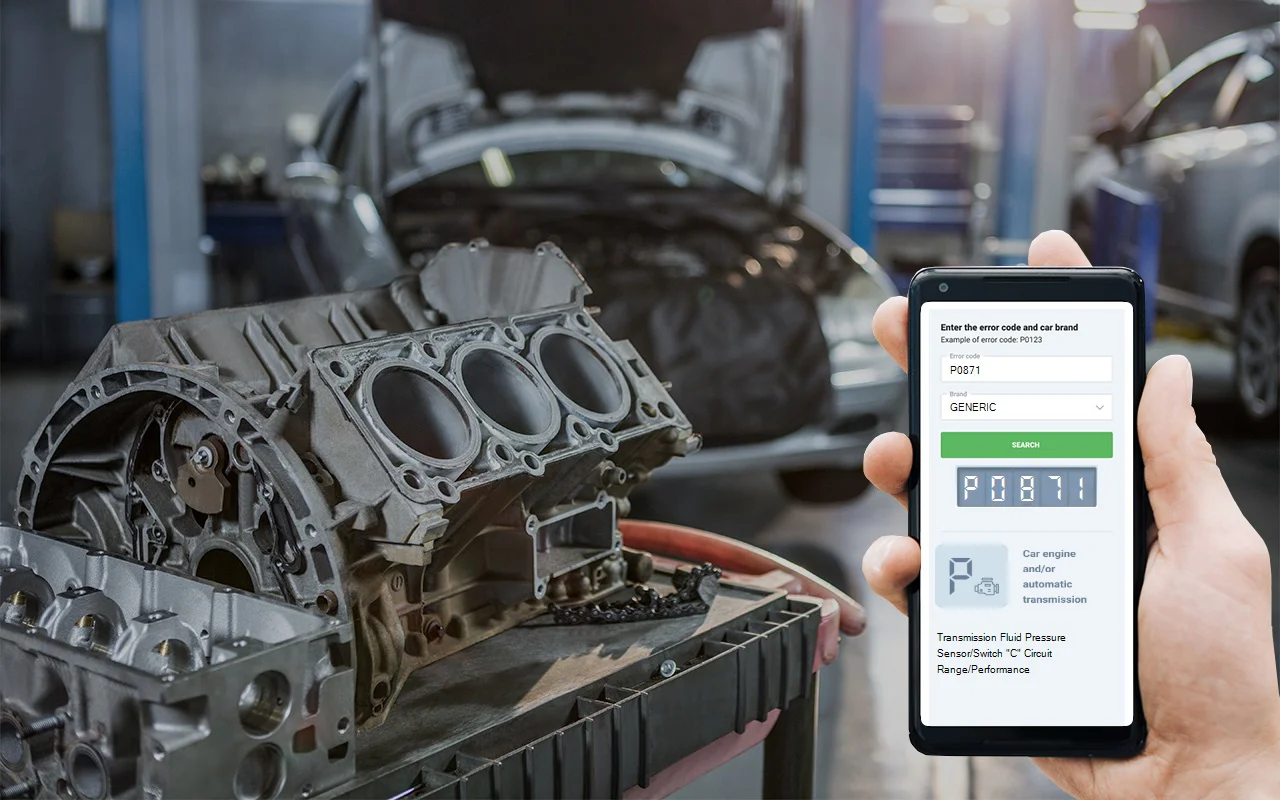
Common Mistakes When Dealing With obd code P0871
Let me save you some frustration-I’ve watched folks fall into these traps more than once:
- Swapping out the sensor first thing without checking the wiring or connector-easy way to throw money down the drain.
- Missing corrosion or loose pins in the connector-these tiny details can wreak havoc.
- Not scanning for related codes or hunting for TSBs-sometimes the real problem is hiding in plain sight.
- Forgetting about internal transmission problems once the sensor and wiring check out-it doesn’t happen often, but it does happen.
If you try to shortcut the process, you’re almost guaranteed to miss something-and end up right back at square one.

How Serious is a P0871 engine code
Here’s the bottom line: you don’t want to ignore P0871. When the sensor or wiring goes bad, your transmission might refuse to shift right, or get stuck in a gear that leaves you crawling in traffic. That’s more than an inconvenience-it’s a real risk if you need to accelerate on short notice. Plus, driving around with this code lingering can chew up your transmission, solenoids, or valve body. I’ve seen repairs balloon from a simple sensor swap to a full transmission rebuild just because someone waited too long.
Repair Steps for obd2 code P0871
Here’s my go-to game plan when fixing a P0871:
- Find and repair any damaged wiring or connectors at the transmission fluid pressure sensor-don’t overlook the basics.
- Clean, tighten, and secure every electrical connection you touch.
- If the sensor flunks its resistance or voltage tests, swap it out for a new one.
- If you’re still seeing the code after all that, dig deeper-sometimes you’ll need to drop the transmission pan to check for stuck valves or leaks inside.
- And in rare cases, if everything else checks out, you might be looking at reprogramming or replacing the PCM/TCM-but that’s a last resort.
Start simple and work your way up. I can’t tell you how many times that approach has saved someone from a wallet-busting repair.
Conclusion
Bottom line: when you see P0871, your car’s computer is warning you about a problem with the transmission fluid pressure sensor “C”. Usually, it’s the sensor or wiring acting up, but sometimes there’s a bigger issue inside the transmission. Don’t let this one slide. Start by checking the wiring and connectors, then test the sensor itself. If those pass, it’s time to look deeper. The sooner you tackle it, the better your chances of dodging major transmission trouble and keeping your ride on the road.