
Causes of P0880 code
From experience, the most common reasons I see for a P0880 code are pretty straightforward, but there are a few sneaky ones too. Here’s what usually triggers it:
- A faulty relay that’s supposed to send power to the TCM - these can wear out over time.
- A blown fuse in the TCM or transmission circuit - sometimes caused by a short or just age.
- A bad vehicle speed sensor - if it’s not sending the right signals, it can confuse the system.
- Wiring issues - like open or shorted circuits, which can be tricky to spot unless you look closely.
- Mechanical failure inside the transmission itself - less common, but it happens.
- Problems with the TCM or PCM - sometimes a programming glitch, sometimes the module itself fails.
Most often, it’s something electrical like a relay or fuse, but I always keep an open mind and check everything step by step.
Symptoms associated with P0880
When a car comes into my bay with a p0880 code, the symptoms are usually pretty telling. Right off the bat, odd shifting is the big giveaway-maybe it won’t shift at all, or it jumps gears at the wrong times. Sometimes, the transmission sticks in one gear, which we call ‘limp mode’ in the trade. You’ll often see warning lights for traction control or ABS lighting up the dash, and those features might quit working altogether. The check engine light is a usual suspect, and sometimes you’ll get a cluster of other codes tagging along for the ride. If your car suddenly feels off-sluggish, stuck in gear, or missing some electronic helpers-don’t overlook this code. I’ve seen this especially on Hyundai, but Ford and Renault owners shouldn’t get too comfortable either; it can hit them as well.

Diagnosis steps for dtc P0880
Here’s how I tackle a P0880 code in the shop, and you can follow a similar process if you’re handy. First, I always start with the basics: check the fuses related to the TCM and transmission. Sometimes it’s as simple as a blown fuse. Next, I’ll listen and feel for the relay - you can have someone turn the key while you touch the relay to see if it clicks. If it doesn’t, that’s a clue. After that, I inspect the wiring harnesses going to the TCM for any obvious damage, corrosion, or loose connections. Don’t forget to check for water intrusion or rodent damage - you’d be surprised how often that comes up. If everything looks good, I’ll use a multimeter to check for power and ground at the TCM connector. If you’re comfortable with a wiring diagram, trace the circuit from the fuse and relay to the TCM. Finally, if all the wiring checks out, I’ll scan for other codes and consider testing or reprogramming the TCM or PCM. It’s best to have someone assist you, especially when checking relays and fuses, so you don’t miss anything simple.
Common mistakes when fixing P0880 trouble code
A classic mistake I see, especially with DIYers, is rushing straight to swapping out the TCM or even the transmission without checking the simple stuff first. That’s a quick way to burn through your budget. Another one? Ignoring the obvious-a blown fuse or sketchy relay. These are inexpensive fixes, but folks overlook them all the time because they’re in a hurry or assume it’s something bigger. Skipping a scan for related codes is another blunder. Those codes can be like breadcrumbs, pointing you straight to the real issue. And whatever you do, don’t gloss over the wiring. Corrosion or a nicked wire can cause headaches that’ll have you chasing your tail for days. My advice? Slow down and work methodically-you’ll save yourself a lot of frustration.

Seriousness of P0880 engine code
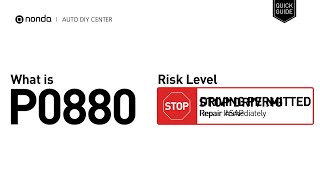
Let me be blunt: you don’t want to mess around with a P0880 code. When the TCM isn’t getting the right power, your transmission can act up in ways that leave you stranded or, worse, put you in a dangerous spot. Imagine losing the ability to shift or having your car stuck in a single gear in traffic-it’s not pretty. Plus, if traction control or ABS go offline, you’re taking a big risk, especially when the roads are slick. Keep driving like this and you could end up doing real damage to the transmission, and trust me, that’s a repair bill nobody wants. Don’t put this off-get on it right away.
Repair steps for obd code P0880
Once you’ve tracked down what’s causing the p0880 code, here’s what usually gets things back on track:
- Pop in a fresh fuse if you find one blown in the TCM or transmission circuit.
- Swap out a tired relay for a new OEM unit. Don’t cheap out here-aftermarket relays can be hit or miss.
- Repair or replace any wiring that’s frayed, corroded, or just looks suspect. Clean up all the connectors; a little dielectric grease goes a long way in keeping corrosion at bay.
- Replace a faulty vehicle speed sensor if that’s what’s tripping the code, then clear it and see how the system responds.
- If it turns out the TCM or PCM is the culprit, reflash or replace as needed. Sometimes a simple software update solves the whole mess.
- On the rare occasion it’s a mechanical issue inside the transmission, that’s when I tell folks to get a transmission specialist involved. That’s not a job for the faint of heart.
Here’s a pro-tip from the garage: always start with the straightforward stuff-fuses, relays, wiring-before you start digging into the big-ticket items. Nine times out of ten, that’s where you’ll find your fix.



Conclusion
So, here’s the bottom line: p0880 means your transmission control module isn’t getting the power it needs, and that can snowball into shifting problems and safety issues fast. Don’t ignore it-this is the kind of problem that can turn a simple fix into a major headache if you let it fester. Start with the basics: check your fuses, relays, and wiring before you even think about swapping out expensive modules. From my own time on the bench, most of these cases get sorted with a simple electrical repair, but you’ve got to be thorough. If you’re not comfortable poking around with wiring and modules, don’t hesitate to bring in a pro. Either way, the sooner you tackle this, the better off you-and your transmission-will be.
 5519
5519 7 minutes of reading