
Main Causes for obd code P0883
From experience, I can say that p0883 is most often caused by electrical issues rather than a mechanical failure inside the transmission. Here’s what I usually see as the main culprits:
- A faulty relay or a blown fuse in the transmission control circuit
- A bad vehicle speed sensor
- Wiring problems-like a broken wire, corroded connector, or a short in the CAN network
- Mechanical problems inside the transmission (less common, but possible)
- A malfunctioning TCM or PCM, or even a software glitch
It’s usually something simple like a relay or fuse, but I’ve seen wiring issues and sensor failures cause this too. Don’t rule out a module problem, especially if other codes are present.
Recognizing Symptoms for obd2 code P0883
If you’re dealing with a p0883 code, you’ll probably notice a few things right away. Most drivers report:
- The transmission shifts much rougher than usual, or might not shift at all
- The traction control or ABS warning lights may come on
- The car might refuse to go into certain gears, or the shifting feels unpredictable
- Other warning lights or codes, especially related to the transmission or stability systems
It’s not something you can easily ignore-your car will let you know something’s up, and it won’t feel right when you drive.

How to Diagnose P0883 engine code
Let me walk you through how I usually track down a p0883 code in the shop-step by step, just like I’d show a fellow tech or a buddy working in their own garage:
- I always begin by hunting for Technical Service Bulletins (TSBs) for the exact make and model. You’d be surprised how often there’s a documented fix sitting out there.
- Next, I grab my scan tool and pull every code, jotting down the freeze frame data. Even if the code seems to clear up, those details can be gold if the problem pops up again later.
- I’ll clear the codes, then take the car for a test drive. If the code comes back, now we’re chasing something real.
- Then, it’s time to pop the hood and do a close visual inspection of all the wiring and connectors running to the TCM and PCM. I’m looking for burnt insulation, crusty corrosion, or wires that look like a mouse had a snack. Fuses and relays are always on my checklist, too-sometimes the fix is as easy as swapping out a five-dollar part.
- Now, I grab my digital volt/ohm meter (DVOM) and check for proper voltage and ground at the TCM and PCM plugs. No voltage? I backtrack to the fuse box and relays.
- If everything looks solid electrically, I’ll move on to testing the sensors-especially the vehicle speed sensor. I’ve seen those little guys throw this code more often than you’d think.
- When all else fails and the basics check out, then-and only then-I start suspecting a bad TCM or PCM, or maybe even a software issue. If it gets to this point, a professional scan and possible reprogramming may be your next move.
I’ve found that having an extra set of hands really helps, especially when you’re tracing wiring under the car or probing connectors in tight spots.
Common Mistakes to Avoid with P0883 code
A classic mistake I see-whether it’s in the shop or from DIYers-is to immediately blame the TCM or PCM and replace expensive modules without checking the basics. Here’s where most folks trip up:
- They skip checking for a blown fuse or bad relay-seriously, it happens all the time
- They overlook little things like chewed-up wiring or green, corroded connectors. These tiny gremlins are often the real troublemakers.
- They ignore other trouble codes that could point right to a sensor or communication issue
- They assume it’s a mechanical failure inside the transmission when it’s actually an electrical hiccup
Here’s a pro-tip from the garage: start with the easy stuff. It’ll save you a lot of time and money.

How Serious Is P0883
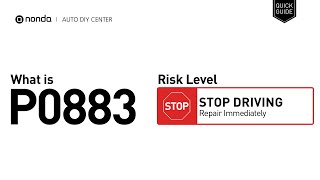
P0883 isn’t something to shrug off. From my time under the hood, I can tell you this code can leave you stranded in the wrong gear, knock out traction control, and even sideline your ABS. That’s not just inconvenient-it’s downright dangerous if you’re caught in lousy weather or heavy traffic. Keep driving with this code active, and you’re inviting damage to everything from transmission modules to the wiring harness. Things can spiral fast, so don’t put off getting to the bottom of it.
Repair Tips for dtc P0883
When it comes time to fix p0883, here’s what usually works for me, based on real-world repairs:
- Swap out any blown fuses or sketchy relays in the transmission control circuit-sometimes, that’s all it takes
- Patch up or replace any damaged wiring or crusty connectors between the TCM, PCM, and related sensors
- If you find a faulty vehicle speed sensor, toss in a new one
- If every electrical check passes, then it’s time to consider reprogramming or swapping out the TCM or PCM
- Once you’ve made a repair, always clear the codes and take the car for a solid test drive to be sure the issue’s knocked out for good
Don’t forget to check for TSBs-sometimes the answer is a simple software flash or a well-known wiring fix the manufacturer already knows about.
Conclusion
Bottom line: P0883 means your car’s computers aren’t talking to the transmission like they should, and it’s almost always an electrical issue. It’s a big deal for both safety and driveability. My advice? Always start with the basics-fuses, relays, and wiring-before shelling out for pricey sensors or modules. Don’t let this one linger; tackling it early keeps your car reliable and saves you from a much bigger headache (and wallet-ache) down the road.
 4235
4235 6 minutes of reading