
Causes of Transmission Issues Related to dtc P0991
From what I’ve seen in the shop and what the official manuals say, the most common reasons for a P0991 code are:
- Intermittent open circuit in the wiring to the transmission fluid pressure sensor (TFPS)
- Intermittent short to voltage or ground in the TFPS wiring
- A faulty TFPS sensor itself-honestly, this is what I run into most often
- Internal mechanical issues in the transmission, like leaks, cracks, or stuck valves
- Very rarely, a problem with the PCM/TCM (the car’s computer), but that’s the last thing I’d suspect
In my experience, wiring and connector issues-especially corrosion or loose pins-are the usual suspects, but you can’t rule out a bad sensor or, in trickier cases, something mechanical inside the transmission.
Typical Symptoms When Facing obd2 code P0991
When this code pops up, here’s what you might notice while driving:
- The check engine light comes on-that’s usually the first sign
- You might feel the transmission shifting differently, maybe rougher or at odd times
- Sometimes, the car will start off in second or third gear instead of first, making it feel sluggish (this is called ‘limp mode’ or ‘fail-safe mode’)
Basically, the car’s computer is trying to protect the transmission by changing how it shifts, so you’ll probably notice something isn’t right pretty quickly.

Step by Step Diagnosis Using obd code P0991
Here’s how I’d go about diagnosing this, step by step:
- First, I always check for any Technical Service Bulletins (TSBs) for your specific vehicle. Sometimes, the manufacturer already knows about this issue and has a fix.
- Next, I look for other codes, especially ones related to power or other transmission sensors. If there are multiple codes, I start with the one that seems most basic or related to power supply.
- Then, I find the TFPS sensor itself. It’s usually on the side of the transmission or valve body. I carefully inspect the wiring and connector for any signs of damage-look for rubbed wires, corrosion, burnt spots, or loose pins. Don’t forget to check for greenish corrosion inside the connector; that’s a common troublemaker.
- If I spot corrosion or dirt, I clean the connector with electrical contact cleaner and a soft brush, let it dry, and apply a little dielectric grease to protect it.
- After cleaning, I clear the code with a scan tool and see if it comes back. If it doesn’t, the problem was likely a bad connection.
- If the code returns, I use a digital voltmeter to check for proper voltage at the sensor connector (usually 5 or 12 volts, depending on your car). I gently wiggle the wiring while watching the meter to see if the voltage drops or jumps-if it does, there’s a wiring issue.
- If voltage checks out, I test the sensor’s resistance with an ohmmeter, comparing it to the specs in the service manual. If the readings are off, or if they change when I wiggle the connector, the sensor is probably bad.
- If all the wiring and the sensor test fine, but the code keeps coming back, then I start to suspect something mechanical inside the transmission, or in rare cases, a problem with the computer itself.
It’s best to take your time and check each step carefully-sometimes the smallest thing, like a corroded pin, is all it takes to set this code off.
Avoiding Common Mistakes with P0991 engine code
Let me give you a heads-up about mistakes I’ve seen over the years:
- Jumping straight to replacing the sensor without checking the wiring and connectors first-that’s a surefire way to waste money
- Overlooking corrosion or loose pins in the connector, especially if the sensor is mounted outside the transmission
- Ignoring related codes or not checking for TSBs, which can lead you down the wrong path
- Assuming it’s a computer problem before ruling out the simple stuff-PCM/TCM failures are rare
It’s always better to start with the basics and work your way up. Don’t skip the visual inspection; it’s saved me and my customers a lot of headaches.

How Serious Is a P0991 trouble code
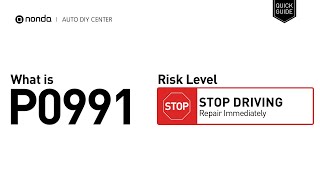
I can’t stress this enough-don’t ignore this code. If you keep driving with a P0991, you risk the transmission going into limp mode, which can leave you stuck in a higher gear and make the car sluggish or even unsafe in traffic. Worse, if the problem is mechanical and you keep driving, you could end up with serious internal damage to the transmission-things like burnt clutches, stuck valves, or even a complete transmission failure. That’s a repair bill nobody wants. The risks just aren’t worth it, so it’s best to get this checked out as soon as possible.
Effective Repair Solutions for P0991
Here’s what usually fixes this code, based on what I’ve seen and what the manuals say:
- Cleaning and tightening the sensor connector and wiring-this solves the problem more often than you’d think
- Repairing or replacing damaged wiring or corroded terminals
- Replacing the TFPS sensor if it fails the resistance or voltage tests
- In rare cases, addressing internal transmission issues like a stuck valve or low pressure, which might require opening up the transmission
- Very rarely, replacing or reprogramming the PCM/TCM, but only after everything else has been ruled out
It’s always best to start simple and only move to the big repairs if you have to.


Conclusion
To sum it up, P0991 is a code that points to trouble with the transmission fluid pressure sensor circuit, usually caused by wiring or sensor issues, but sometimes by something mechanical inside the transmission. It’s not something to put off-acting quickly can save you from a much bigger headache down the road. Start with a careful inspection of the wiring and connector, then test the sensor itself. Most of the time, it’s a simple fix, but if you ignore it, you could end up with serious transmission damage. My advice? Get it checked and sorted before it turns into a major repair.

 4715
4715 6 minutes of reading