
Causes of obd code P0992
From experience, the most common reasons I see for a p0992 code are electrical problems in the wiring or connector going to the TFPS sensor. Here’s what typically causes it:
- A break or open circuit in the signal wire to the TFPS sensor
- A short to voltage or ground in the sensor’s wiring
- A faulty TFPS sensor itself
- Internal mechanical issues in the transmission, like leaks, cracks, or stuck valves
- Very rarely, a problem with the PCM or TCM (the car’s computer), but that’s not common
Honestly, most of the time it’s a wiring or connector issue, especially if the sensor is mounted outside the transmission where it’s exposed to the elements.
Symptoms of obd2 code P0992
If you’re dealing with a p0992 code, here’s what you might notice while driving:
- The check engine light will definitely be on
- You might feel the transmission shifting differently-maybe it’s rough, delayed, or just not as smooth as usual
- Sometimes the car will start off in second or third gear instead of first, which makes it feel sluggish or slow to accelerate
In some cases, you might not notice much at all, but ignoring it can lead to bigger problems down the road.

Diagnosis using P0992 engine code
Here’s how I usually tackle a p0992 code, step by step:
- First, I always check for any Technical Service Bulletins (TSBs) for your specific vehicle. Sometimes the manufacturer already knows about a common issue and has a fix.
- Next, I look for any other trouble codes, especially ones related to power or other transmission sensors. If there are multiple codes, I start with the one related to power or the one that seems most critical.
- Then, I find the TFPS sensor on your vehicle. It’s usually on the side of the valve body inside the transmission, or sometimes on the outside of the case.
- I do a thorough visual inspection of the wiring and connector. I’m looking for things like frayed wires, corrosion, melted plastic, or loose connections. Don’t forget to check for greenish corrosion on the terminals-that’s a common culprit.
- If I see any dirt or corrosion, I clean the connector with electrical contact cleaner and a plastic brush, let it dry, and apply a bit of dielectric grease to keep moisture out.
- After cleaning, I clear the code and see if it comes back. If it doesn’t, the issue was likely just a bad connection.
- If the code returns, I use a digital voltmeter to check for proper voltage at the sensor’s connector. I check the manufacturer’s specs, but usually I’m looking for 5 or 12 volts with the key on. I also wiggle the wires to see if the voltage drops or jumps-sometimes a wire is broken inside the insulation.
- If the voltage checks out, I test the sensor’s resistance with an ohmmeter, comparing it to the specs. I gently move the connector while testing to see if the reading changes, which would mean a bad connection or sensor.
- If the sensor fails the resistance test, I replace it. If all the wiring and the sensor check out but the code still comes back, then I start looking at the PCM/TCM or possible internal transmission issues.
It’s best to have someone help you if you’re not comfortable with electrical testing, but these steps cover the basics.
Common Mistakes when fixing P0992 trouble code
One thing I see a lot is folks jumping straight to replacing the TFPS sensor without checking the wiring or connector first. That’s a surefire way to waste time and money. Another common mistake is not checking for TSBs or related codes-sometimes the root cause is elsewhere, and you end up chasing your tail. Also, skipping the step of cleaning and inspecting the connector can lead to missing a simple fix. Don’t forget to check for corrosion or loose pins, especially if the sensor is exposed to the weather.

Seriousness of P0992 code
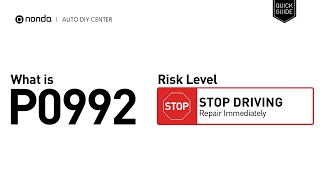
This isn’t something you want to ignore. If you keep driving with a p0992 code, your transmission might not shift properly, which can be a real hazard-especially if it suddenly starts in the wrong gear or shifts harshly. Over time, this can cause extra wear on the transmission, and if there’s an internal mechanical problem, it could get worse and lead to expensive repairs. Parts that can be damaged include the valve body, internal seals, or even the transmission control module. Bottom line: things can go south quickly if you put this off.
Repair steps for P0992
Here’s what I typically do to fix a p0992 code:
- Repair or replace any damaged wiring or connectors going to the TFPS sensor
- Clean corroded terminals and apply dielectric grease
- Replace the TFPS sensor if it fails electrical tests
- If there’s evidence of internal transmission problems (like leaks or stuck valves), those need to be addressed-sometimes that means removing the valve body for inspection
- In rare cases, reprogram or replace the PCM/TCM, but only after everything else checks out
Always follow the manufacturer’s procedures and double-check the wiring diagrams for your specific vehicle.


Conclusion
To sum it up, P0992 means your transmission isn’t getting the right fluid pressure reading, usually because of an electrical issue with the sensor or its wiring. It’s important to diagnose this promptly-start with the simple stuff like checking connectors and wiring before moving on to the sensor itself. Don’t put this off, because driving with this code can cause shifting problems and lead to bigger, more expensive repairs. The most reliable fix is to methodically check each part of the circuit, clean and repair as needed, and only replace parts when you’re sure they’re the culprit. That’s the best way to keep your transmission-and your wallet-safe.

 5207
5207 6 minutes of reading