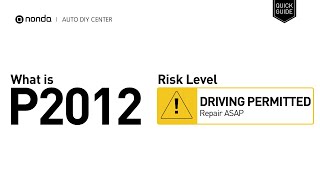
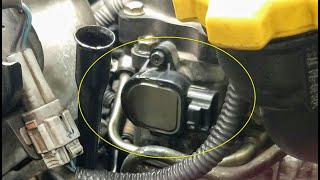
When you see the p2012 code pop up, it’s the car’s way of telling you there’s a hiccup with the intake manifold runner control (IMRC) system-specifically on bank 2 of your engine. Let me break it down: the IMRC is a clever bit of engineering that uses special flaps or plates inside your intake manifold, opening and closing to manage airflow depending on your engine’s RPMs. The big goal here? Keeping your engine running smooth and efficient across different speeds. If this system isn’t behaving, your engine could be starved for air when it needs it, or flooded when it doesn’t. In the shop, I see this code all the time on Chrysler, Ford, and Jeep vehicles. What it really means is the control circuit for the IMRC on bank 2 isn’t doing its job-maybe those runner plates aren’t moving, or the computer isn’t getting the signals it expects. Under the hood, you’ve got a motor or actuator, some vacuum lines, and a solenoid all working together to move those plates. The powertrain control module (PCM) keeps tabs on the whole setup, making sure everything’s moving in sync. When it’s not, that’s when p2012 rears its head.
DTC P2012
 5207
5207 7 minutes of reading
Causes and dtc P2012
From my time in the garage, I can tell you that p2012 usually traces back to a few usual suspects. Here’s what I run into most:
- The IMRC actuator or motor has given up the ghost or is sticking.
- The IMRC solenoid (the part that’s supposed to control vacuum to the actuator) isn’t doing its job.
- Vacuum hoses tied to the IMRC system are brittle, leaking, blocked, or have simply popped off-sometimes you find one dangling loose during a quick once-over.
- You might have a wiring gremlin-broken wires, corroded connectors, or a shorted harness going to the IMRC or solenoid.
- Every now and then, it turns out to be the PCM itself, but that’s a rare beast.
For Chrysler, Ford, and Jeep, these are the main culprits you’ll find in their own repair manuals. So if you’re staring at a p2012, odds are, you’re looking right at one of these root causes.
Symptoms and P2012
When p2012 is active, you’ll probably run into a few telltale signs behind the wheel:
- The check engine light’s almost always on-sometimes that’s your only clue.
- The engine might feel a bit rough, especially when you’re getting on the gas or hitting certain RPMs.
- You could notice it’s a bit sluggish, losing power when you try to accelerate, especially if you’re up in the higher speed range.
- Your fuel economy might start to tank, since the engine isn’t breathing like it’s supposed to.
Every so often, you won’t feel a thing-no changes at all. But don’t let that fool you; ignoring this code can lead to bigger headaches later.

Diagnosis steps for P2012 code
When I’m chasing down a p2012, here’s how I approach it-step by step, just like I would in the shop:
- I always start with a visual inspection. Take a good look at the wiring and connectors running to the IMRC actuator and solenoid. I’m hunting for broken wires, loose or corroded plugs, or connectors with bent pins. Don’t just glance-wiggle things, pull gently, and look close at both ends.
- Next, check out those vacuum hoses feeding the IMRC. Look for cracks, splits, or hoses that have slipped off. Here’s a pro-tip: give each hose a little tug; if one pops off easily, you’ve found a problem.
- After that, I test the actuator and solenoid. If you’ve got a scan tool handy, you can sometimes command the actuator to move and watch what happens. No scan tool? A handheld vacuum pump will do-see if you can move those runner plates by hand.
- If everything checks out so far, I break out the multimeter to check for continuity in the wiring. This helps sniff out hidden breaks or shorts that aren’t obvious just by looking.
- If I’ve gone through all that and still haven’t found the issue, then-and only then-I’ll start thinking about the PCM. But honestly, it’s almost never that.
Save yourself the headache: work through the basics first-wiring and vacuum lines-before you start worrying about expensive parts. If any of this feels over your head, don’t be shy about calling in someone with more experience. Better safe than sorry.
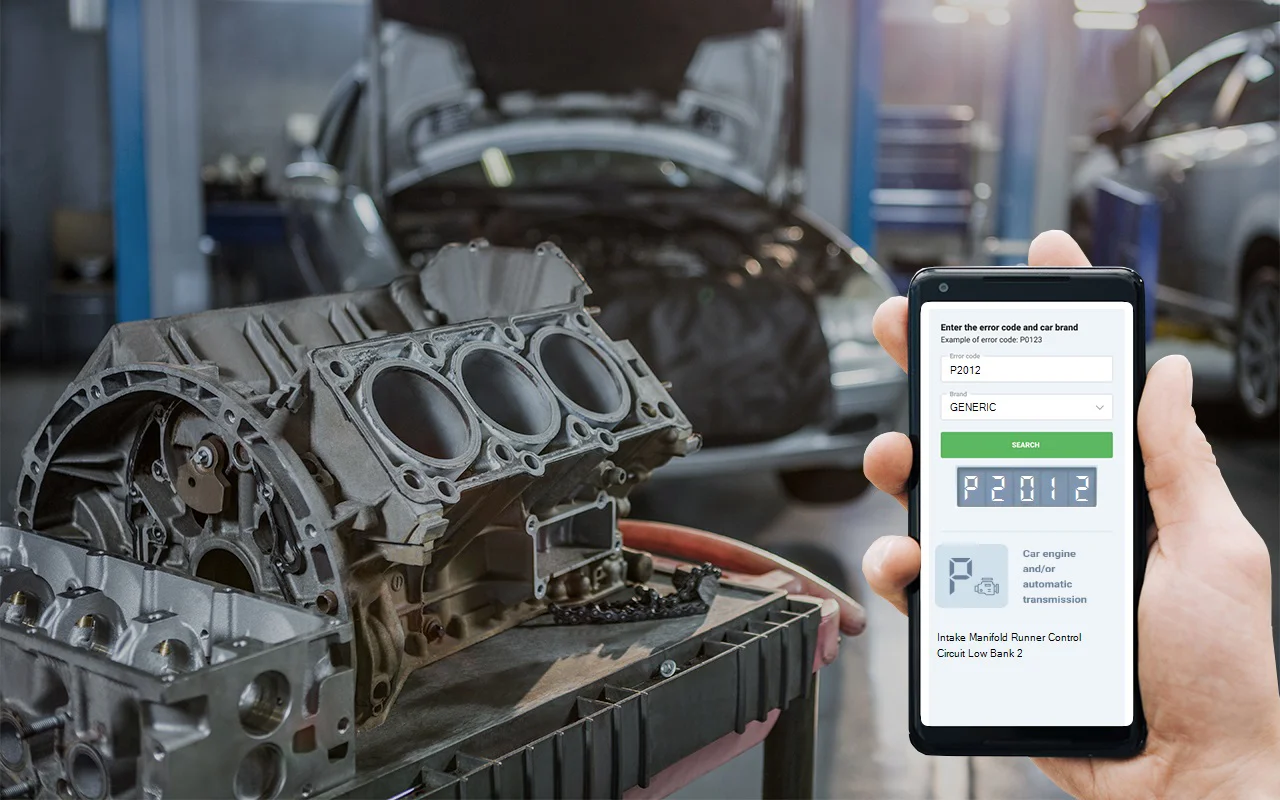
Common Mistakes with obd2 code P2012
I’ve watched plenty of folks throw parts at this code before checking the basics. Here are the top mistakes I see:
- Swapping out the IMRC actuator or solenoid before making sure the wiring and vacuum hoses are good. That’s a quick way to drain your wallet and still have the same problem.
- Missing a simple vacuum hose issue-these little lines crack or slip off all the time, but they can cause big trouble.
- Overlooking connector issues. Sometimes all it takes is a bit of corrosion or a bent pin to throw the whole system out of whack.
- Forgetting to clear the code and take the car for a spin after making repairs. The computer needs to see the fix before it’ll turn that light off for good.
Slow down and double-check the basics before you reach for the parts catalog. Your wallet will thank you.

Seriousness of the P2012 trouble code
Let me be straight with you-this isn’t one to ignore. Sure, you might be able to drive for a bit without disaster, but a bad IMRC system means your engine isn’t running like it should. That can mean poor performance, lousy gas mileage, and over time, you could end up with much bigger problems-think carbon buildup in the intake, misfires, or even a fried actuator or solenoid. I’ve seen engines come in running rough as a cob thanks to a gummed-up IMRC. Bottom line: fix it sooner rather than later, or you’ll be looking at a much bigger repair bill down the line.
Repair steps for the P2012 engine code
Here’s what usually gets the job done with p2012, based on years of hands-on fixes and what the manufacturer says:
- Fix or swap out any busted wiring or connectors leading to the IMRC actuator or solenoid.
- Replace any vacuum hoses that are cracked, blocked, or dangling loose.
- If the actuator or solenoid’s dead, put in a new one-don’t try to patch it; just replace.
- If, by some slim chance, the PCM is the culprit, you might have to reprogram or replace it-but don’t jump to this unless you’ve ruled out everything else.
- Once you’ve made your fix, clear the code and take it for a good test drive. Make sure the code stays gone and the engine’s running smooth.
Always track down the real cause before you start changing parts. That way, you know your repair will actually last.
Conclusion
If I had to sum up p2012, I’d say it’s your intake manifold runner control on bank 2 not doing its job, which can mess up how your engine runs and drinks fuel. Don’t just shrug it off-tackle it head-on and you’ll dodge bigger headaches (and bills) later. Always start simple: check wiring, connectors, and vacuum hoses before you even think about swapping expensive parts. Careful, step-by-step diagnosis beats guesswork every time. Get to the bottom of it, fix what’s broken, and you’ll be back on the road with a healthy engine and peace of mind.