
Causes of P205C code
From my time under the hood-and believe me, I’ve seen this a lot-the main culprits behind a P205C code tend to be:
- The DEF tank temperature sensor itself has given up the ghost. Nine times out of ten, it’s just plain worn out or internally shorted.
- The wiring running to the sensor is damaged-sometimes pinched, chewed, or corroded. Watch those spots where the harness bends or at the connectors; those areas catch a lot of grief.
- The connector at the sensor might just be loose, gunked up, or holding moisture. A little water in there can wreak havoc.
- On rare occasions, the Engine Control Module (ECM) could be at fault, but honestly, that’s the exception, not the rule, in my experience.
Honestly, you’ll want to start by zeroing in on the sensor and the wiring-they’re usually the troublemakers here.
Symptoms related to P205C
When this code is active, there’s no missing it. You’ll usually spot a warning light-sometimes the good old check engine light, sometimes something pointing right at the DEF system. Occasionally, the vehicle decides to play it safe and limits your power, dropping you into limp mode to protect itself. Messages about the DEF system needing a look pop up, too. From what I hear from drivers, you typically won’t get any odd smells or noises, but you’ll definitely notice the warning lights and maybe a sluggish feel behind the wheel.

Diagnosis steps for dtc P205C
When I’m chasing down a P205C code, here’s my go-to process:
- First thing-pull the codes and see if anything else is riding along. Sometimes, a cluster of codes paints a clearer picture.
- Next, I get hands-on with a visual inspection. Take a good look at the DEF tank and every inch of its wiring harness. I’m hunting for broken wires, loose or corroded connectors, and any sign that road debris has chewed up the harness-especially underneath the vehicle where damage likes to hide.
- With the ignition off, I unplug the DEF tank temperature sensor and take a close look at the connector. Any moisture or corrosion? That’s a red flag. If you’re not keen on crawling under your rig, get a helping hand.
- Out comes the multimeter. I check the sensor’s resistance and compare it to what the factory manual says it should read at room temp. If it’s way off, there’s your issue-the sensor’s toast.
- Don’t skip checking for continuity and shorts to ground between the sensor and the ECM. This is where a lot of folks get tripped up-bad wiring can masquerade as a bad sensor.
- If all that checks out and the code still won’t quit, then-and only then-I start thinking ECM problems. But like I said earlier, that’s pretty rare.
Pro-tip from the garage: always start with the easy stuff-look, touch, test-before you start swapping parts.
Common Mistakes with obd code P205C
I can’t tell you how many times I’ve seen someone throw a new DEF tank temp sensor at this code without ever looking at the wiring or connectors. Sometimes, all that’s wrong is a loose plug or a bit of corrosion. Another classic mistake? Skipping the resistance check on the old sensor and just assuming it’s bad. And don’t forget-after any fix, clear the code and take the truck for a spin to see if it returns. Overlooking the basics can cost you time and money, and you might just replace a perfectly good part for nothing.

Seriousness of the P205C trouble code
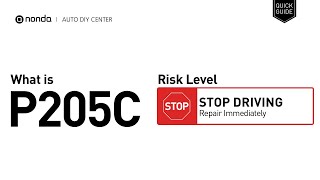
This one’s not to be brushed off. If your DEF system can’t keep tabs on its own temperature, the emissions gear can’t do its job, plain and simple. That’s when you risk being forced into limp mode-reduced power, maybe stuck on the side of the road. Let it go long enough, and you could end up damaging the SCR system or the catalytic converter. Those aren’t cheap fixes. Bottom line: don’t gamble with this code. Things can go south fast if you ignore it.
Repair options for the P205C engine code
Here’s what I’ve found to work best-and what the OEMs tend to spell out:
- If the DEF tank temperature sensor tests bad or is out of spec, swap it out.
- Repair or replace any wiring or connectors that look damaged between the sensor and the ECM.
- Give all connectors a good cleaning and make sure they’re tight for a solid electrical connection.
- Clear the code, then take your vehicle for a test drive to make sure you’ve solved the problem.
On the off-chance that all this checks out and you’re still fighting the code, the ECM might need to be reprogrammed or replaced. But unless you’ve got solid proof pointing there, that’s almost never the answer.


Conclusion
So here’s the bottom line: a P205C code means your DEF tank temperature sensor isn’t sending a believable signal-most likely thanks to a bad sensor or a wiring hiccup. This isn’t a back-burner issue. If you put it off, you’re rolling the dice on bigger bills and the risk of getting stranded. Start with a careful look and some basic electrical checks-nine times out of ten, that’ll lead you right to the culprit. Fix it fast, and you’ll keep your emissions system, and your ride, running like it should.

 5280
5280 6 minutes of reading