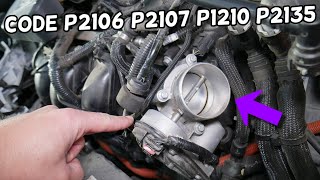
When you see the P2106 code pop up, you’re dealing with a problem in your car’s electronic throttle control system. From my time under the hood, I can tell you this setup is a far cry from the old cable-driven throttles-now, it’s all sensors, wiring, and a compact electric motor that regulates airflow into your engine when you press the accelerator. No cables, no mechanical link-just your vehicle’s computer calling the shots. If anything starts acting up, the system can clamp down and limit your engine’s power, all in the name of safety. Depending on what you drive, you’ll see this code described as 'Throttle Actuator Control System - Forced Limited Power' (for Ford and Hyundai) or 'Throttle Actuator Control System Performance - Throttle Limitation Active' (on GM models like Chevy, GMC, or Cadillac). The whole point is to stop your engine from running away or behaving unpredictably when the throttle system’s not up to par. This system also ties into things like cruise control and stability, so it’s not something you want to ignore-it’s right at the heart of your car’s operation.
DTC P2106
 5891
5891 6 minutes of reading
Causes of P2106 code
In my experience, the P2106 code usually boils down to trouble with the electronic throttle actuator or its wiring. Here’s what tends to set it off most often in the shop, combining both what I see firsthand and what the official documentation says:
- A bad throttle actuator motor or its built-in sensors-these are notorious weak points in GM and Ford models
- Wiring or connectors in the throttle control circuit that are broken, shorted, or just plain corroded
- Weak or unreliable electrical connections at the throttle body or any related sensors
- A failed accelerator pedal position sensor (I’ve replaced plenty of these on Hyundais)
- Less commonly, a glitchy powertrain control module (PCM)
- For Ford, sometimes the throttle plate actually gets stuck-either open or closed-because of a mechanical or electrical hiccup
Here’s a pro-tip from the garage: always check the wiring and connections first before you start throwing expensive parts at the problem. Nine times out of ten, the p2106 code is trying to tell you to look for issues here before you go deeper.
Symptoms related to P2106
When this code is active, you won’t have to hunt for clues. The check engine light is the first thing you’ll notice, but the real kicker is the sudden drop in power-your car might barely accelerate, or it’s stuck in what we call ‘limp mode.’ Sometimes the cruise control will quit, or you’ll feel like the engine isn’t listening to the gas pedal at all. I’ve seen cars idle rough or even stall out completely when this code is in play. If you’re running into any of these symptoms, it’s your car’s way of telling you the throttle system is being restricted for your own safety.

Diagnosis steps for dtc P2106
Here’s how I’ve learned to tackle a P2106 code, step by step:
- First thing I do is check for other codes stored alongside P2106. Odds are, there’s another code that’s pointing to the real trouble spot.
- Next, I’ll open the hood and take a close look at the wiring and connectors feeding the throttle body. Loose plugs, frayed wires, corrosion-anything out of the ordinary stands out. If you’ve got a buddy around, have them gently wiggle the harness while you watch for any changes in readings or engine response.
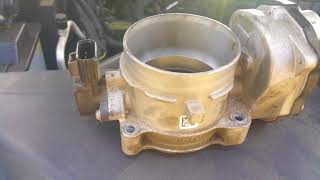
- Then I check the throttle body itself for dirt, carbon buildup, or anything gumming up the throttle plate. A good cleaning can work wonders here-don’t overlook this step.
- Now I’ll plug in a scan tool to see what the throttle position and accelerator pedal sensors are telling me. I’m looking for readings that jump around or don’t match what your foot’s doing on the pedal.
- If everything checks out so far, I’ll use the scan tool (if possible) to command the throttle actuator to open and close. If it’s jerky or unresponsive, that’s a big hint something’s wrong.
- Still no luck? I move on to check for power and ground at the throttle body, and if it’s still not adding up, I start thinking about the PCM-but only as a last resort.
A quick heads-up: always disconnect the battery before unplugging anything to avoid unwanted surprises. And if you’re not comfortable diving into electrical testing, don’t be afraid to call in a pro. This methodical approach is vital whenever dtc p2106 ford or other makes crop up in your diagnostics.
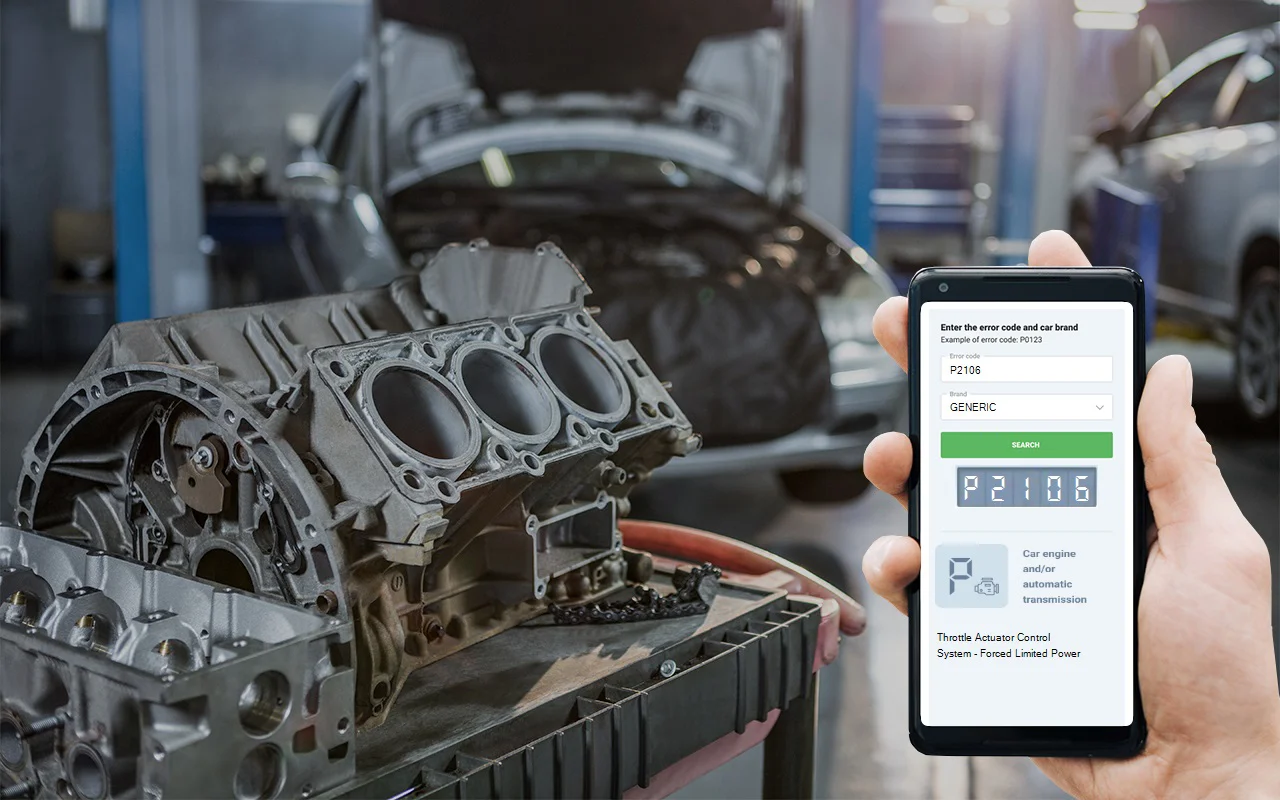
Common Mistakes with P2106 engine code
A classic mistake I see is folks jumping straight to swapping out the throttle body or PCM without looking at the basics. That’s a quick way to throw money down the drain. Another misstep? Ignoring related trouble codes-remember, P2106 is almost always a symptom, not the cause. Skipping a careful check of wiring and connectors is another pitfall. Believe me, a loose or crusty connector is behind more of these headaches than most people realize. Always start simple before you reach for the pricey parts.

Seriousness of obd2 code P2106
This is not one of those issues you can put off for another day. When the car limits engine power, it’s protecting you from a potentially dangerous scenario-like a stuck throttle or no throttle response at all. Keep driving with this code active and you could end up stranded, or worse, unable to accelerate out of harm’s way. Letting it go can also cause extra wear or even damage to the throttle actuator, sensors, or the PCM itself. Trust me, you don’t want to gamble with this-fix it before it turns into a bigger problem.
Repair solutions for obd code P2106
Here’s what’s worked for me and other techs in the shop, using both real-world experience and what the factory recommends:
- Fixing or swapping out damaged wiring or connectors in the throttle circuit
- Cleaning or, if necessary, replacing the throttle body when it’s dirty or sticking
- Replacing a flaky throttle actuator motor or throttle position sensor
- On Hyundais, I’ve had to replace the accelerator pedal position sensor a few times
- Very rarely, it’s the PCM that needs attention-but only after ruling out everything else
Don’t ignore any other codes that show up with P2106-they usually point you right to the root cause. Once you’ve sorted out obd code p2106, you should see your vehicle snap back to normal behavior.
Conclusion
Bottom line? When you get a P2106 code, your car’s electronic throttle system is putting itself in safe mode because something’s off. This isn’t a low-priority fix-take it seriously. Begin with a close look at wiring and connectors, chase down any related codes, and only swap out parts if the basics check out clean. Tackling it quickly and methodically is your best bet to keep your car reliable and keep bigger headaches at bay.