
Causes of P2113 code
From my time under the hood, there are a few usual suspects behind a p2113:
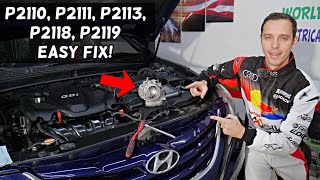
- A throttle actuator that’s gone bad (that’s the electric motor that moves your throttle plate)
- Wiring in the throttle actuator harness that’s broken, shorted, or eaten up by corrosion
- Sloppy, loose, or dirty electrical connections at the throttle actuator plug
With Hyundai and Kia, these are the headaches I see most often. Sometimes, it’s as simple as a connector that’s worked itself loose or gotten wet; other times, the actuator itself just gives up. Every now and then, I’ll find wiring that’s been pinched or damaged somewhere along the harness-something you can’t spot unless you really look for it.
Symptoms and obd code P2113
When this code trips, your check engine light’s almost always on. I’ve had a lot of customers tell me their car suddenly drops into ‘limp mode’-that’s when the engine barely lets you accelerate, just enough to get you off the road or into the shop. You might notice the idle getting rough, the engine hesitating when you hit the gas, or just not responding the way you expect. In the worst cases, I’ve seen engines stall or struggle to start. If you’re driving a diesel, you might catch the engine running on for a few seconds even after you turn the key off-definitely not normal.

How to Diagnose a P2113 trouble code
Here’s how I typically chase down a p2113 code, step by step:
- First thing I do is check for any other codes that might be hanging around. Sometimes, another code can help you zero in on the real issue.
- Next, I pop the hood and give the throttle actuator and its wiring a close look. I’m hunting for loose connectors, wires that look chewed up, corrosion, or anything that just seems out of place. Here’s a pro-tip: have someone wiggle the harness while you watch for any changes.
- Then I unplug the throttle actuator connector and check for bent, pushed-out, or corroded pins. Any green or white gunk? That’s corrosion, and it needs to be cleaned up or the connector replaced.
- If it all looks good so far, I grab my multimeter and check for continuity and the right voltage at the actuator connector, following the wiring diagram from the manual. This is how you catch broken wires or bad grounds.
- If the wiring checks out, I test the throttle actuator itself. Sometimes you can actually hear or feel it trying to move when you turn the key on. If it’s dead silent or stuck, that’s a huge clue.
- Last step, if I’m still chasing the problem, I use a scan tool to command the throttle plate open and closed, then watch the sensor feedback. If what I see doesn’t line up with what the computer expects, the actuator or sensor is probably toast.
Don’t skip the basics-more than once I’ve found the real culprit was just a grimy or loose connector, not an expensive part.
Common Mistakes with dtc P2113
A classic mistake I see is folks jumping straight to swapping out the throttle actuator without ever looking at the wiring or connectors. That’s a quick way to burn through cash for no reason. Another pitfall is missing corrosion inside the connector-it’s sneaky, but it can wreak havoc. I’ve also seen people clear the code and hope for the best, but that’s just putting a band-aid on the problem. Always dig into the wiring harness before you start replacing parts.

Seriousness of P2113
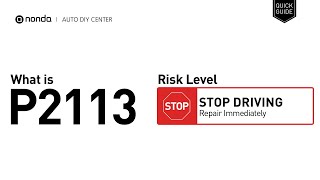
Take it from me-don’t brush this one off. If your throttle actuator isn’t working right, you could suddenly lose power or even have the engine stall, which is flat-out dangerous, especially if you’re in the middle of traffic. Sometimes the car will put itself in ‘limp mode’ to protect things, but you don’t want to be surprised by that. If you let it go, you risk frying the actuator, damaging the wiring, or even hurting the engine control module. Things can spiral fast, so get on top of it before it turns into a bigger mess.
Repairing obd2 code P2113
Here’s what’s fixed p2113 for me in the shop:
- Patch up or swap any damaged wiring or connectors at the throttle actuator
- Clean off any corrosion and double-check that all your connections are snug
- If the throttle actuator’s bad, replace it-no way around it
- Clear the code, take the car for a test drive, and make sure the code stays gone
Sometimes, a quick wiring fix is all it takes. But if the actuator motor or sensor is shot, you’ll need to replace it. Always follow the step-by-step in the OEM service manual when removing or installing parts.

Conclusion
Bottom line-p2113 means your car’s throttle actuator isn’t doing what the computer wants, usually because of faulty wiring, a bad actuator, or a loose connection. Don’t ignore it; you’re risking both your safety and your car’s long-term health. Start with a close look at the wiring and connectors, then move on to testing the actuator itself. Most of the time, fixing the wiring or swapping out the actuator takes care of it for good. Don’t let this one slide-deal with it now and save yourself from bigger headaches down the road.

 4514
4514 6 minutes of reading