
Causes of dtc P2147
From my time under the hood and digging through factory manuals, I’ve found the usual suspects for a P2147 code are:
- Wiring harness damage-think chafed or pinched wires, especially anywhere the harness runs near hot exhaust parts or gets crammed behind brackets.
- Connector problems-corrosion, loose pins, or water sneaking into the injector or ECM connectors can wreak havoc.
- Bad injector-every now and then, the injector itself shorts out internally.
- Faulty high-side driver circuit inside the ECM-this one’s rare, but I have seen it a couple times.
- Short to ground in the circuit-usually from wire insulation rubbing through and grounding out somewhere on the engine or frame.
Most times, it’s a wiring or connector issue. But don’t rule out the injector or ECM; I’ve chased my tail more than once before finding the problem there.
Symptoms and P2147
When this code’s active, you’re almost guaranteed to feel it. The engine will probably run rough, especially at idle, and it might misfire or hesitate when you hit the gas. Sometimes it’ll even stall on you. The check engine light? Yep, that’s going to be on for sure. You might catch a whiff of raw fuel or see your gas mileage take a nosedive. In some cases, the car will put itself into limp mode to protect the engine. If your ride suddenly feels shaky or seems to have lost its pep, don’t ignore P2147-it’s a real troublemaker.

Diagnosis and P2147 trouble code
Here’s my go-to process for tracking down a P2147 code:
- First, scan for any other codes. Sometimes you’ll get a bonus clue that points you in the right direction.
- Open the hood and eyeball the wiring harness running to injectors 1 and 4. Look for anything obvious-melted spots, worn insulation, or spots where the harness rubs against metal brackets.
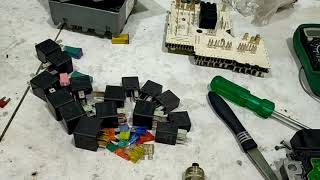
- Unplug the connectors at both the injectors and the ECM. Check for corrosion, bent pins, or any sign of moisture. If you’re not comfortable with connectors, get a buddy to help. It’s easy to miss something if you’re in a hurry.
- Grab your multimeter and check for continuity between the injector’s positive voltage wire and ground. If you get continuity, you’ve got a short somewhere in the harness.
- If the wiring and connectors pass the test, measure the injector’s resistance. Most shop manuals list the spec-if yours reads way off, that injector’s probably toast.
- And if you’ve checked everything else but the code won’t go away, the ECM’s internal driver circuit could be fried. Not common, but it happens.
Always clear the code and take it for a spin after repairs. You want to make sure that pesky light doesn’t come back on.
Common Mistakes with P2147 code
A classic mistake I see all the time: folks rush to replace the injector or ECM without checking the wiring first. That’s a wallet-draining move. Another one? Failing to inspect both ends of the connector for corrosion or water-sometimes the trouble’s hiding right in the connector, out of plain sight. Skipping a good, close visual inspection will bite you. More often than not, the fix is staring you in the face if you just slow down and look carefully.

Seriousness of obd code P2147
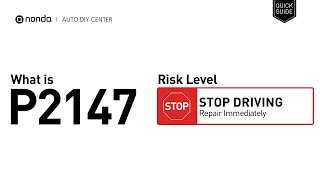
Let me be clear: you don’t want to put this off. When your injectors aren’t getting the juice they need, you’re risking misfires, rough running, or a stall-possibly in the middle of traffic. That’s not just inconvenient, it’s dangerous. Plus, driving like this can wreck your catalytic converter, foul out the spark plugs, and rack up a much bigger repair bill. Things go from bad to worse fast if you ignore this code. Handle it as soon as you can.
Repair options for P2147 engine code
Here’s what usually fixes a P2147 code in my experience:
- Patching up or replacing damaged wiring in the injector harness.
- Cleaning and securing the connectors at the injectors and ECM.
- Swapping out a faulty injector if it’s shorted inside.
- In rare cases, replacing the ECM if its internal high-side driver circuit has failed.
Start with the basics-wiring and connectors. Nine times out of ten, that’s where you’ll find your problem.
Conclusion
To wrap things up, P2147 means your engine computer’s detected a voltage problem on the power side for injectors 1 and 4, usually thanks to a short to ground. Treat it like a high-priority repair, because it can cause rough running, performance loss, and even put your safety at risk if left alone. The best approach? Start by scrutinizing the wiring and connectors, then move to the injectors and ECM only if needed. Don’t drag your feet-sorting this out quickly will save your engine from bigger headaches and keep you rolling down the road with confidence.
 4328
4328 5 minutes of reading