
Causes and dtc P2182
From my years in the shop (and the official service manuals), I can tell you the main reasons for a P2182 code tend to be:
- Low engine coolant level-honestly, you’d be surprised how often a simple leak or just old age lets the coolant drop enough to cause sensor drama.
- A bad engine coolant temperature sensor, especially that second one (ECT2) if you’re working on a Ford.
- A thermostat that’s stuck open or leaking, which throws the whole cooling process out of whack.
- Wiring problems: corrosion, broken wires, or a connector that’s come loose. I’ve chased down my fair share of electrical gremlins on these circuits.
- Electrical issues inside the sensor circuit, like an open or a shorted wire somewhere along the line.
Some makes like to blame the sensor itself, others point the finger at wiring, and a few have their own quirks, but these troublemakers are what I see most often. Ford and Renault are a couple of brands where I see this pop up again and again.
Symptoms and P2182 trouble code
When P2182 shows up, the check engine light is pretty much a given. Sometimes, that’s all you’ll notice. But if things are worse, you might get rough running, lousy gas mileage, or a temperature gauge that doesn’t move-or worse, jumps around like it’s got a mind of its own. I’ve seen cars go into limp mode to protect themselves, too. If your coolant is low, you might see real overheating or get a high-temp warning. Sometimes it’s subtle; other times, you’re stranded on the side of the road. Keep an eye out for these signs, especially if you spot the p2182 code on a scan.

Diagnosis steps and obd2 code P2182
Here’s how I’ve learned to tackle a P2182 over the years:
- First thing, always check the coolant level (engine cool, of course). If it’s low, top it off and check for leaks. Sometimes, the fix is that easy.
- Next, I get in there and inspect the wiring and connectors for the coolant temp sensors. I’m looking for corrosion, broken wires, or anything that looks off. A good flashlight and maybe a buddy to wiggle the harness can help spot hidden issues.
- If nothing obvious turns up, I’ll hook up the scan tool and compare both sensor readings (assuming your ride has two). When the engine’s cold, they should be pretty close. If one’s way off, you’ve found your next clue.
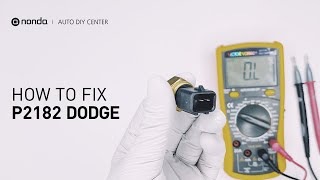
- Suspicious readings mean it’s time to test the sensor itself-grab a multimeter and check resistance at different temps. Sometimes, on certain cars, swapping sensors side-to-side (if they’re identical) helps nail down the problem.
- If the sensors are good, I move on to the wiring-checking for continuity and shorts. Don’t rush through this; a hidden break can drive you nuts.
- Finally, I always check the thermostat. If it’s stuck open or closed, it’ll mess with the readings and make the computer throw this code.
After every repair, clear the code and take it for a drive. If it comes back, you know there’s still work to do.
Common Mistakes when troubleshooting P2182 code
A classic mistake I see is folks replacing the sensor right away, skipping over basic checks. If you don’t check the coolant level or ignore the wiring, you’re just guessing-and that gets expensive. Another one? Not comparing both sensor readings. Sometimes the sensor is fine, but the wiring or thermostat is the real villain. And please, don’t just clear the code and hope for the best. If you don’t fix what’s actually wrong, that light is coming back.

Seriousness of obd code P2182
I wouldn’t mess around with this one. If your engine’s temp isn’t being watched properly, you’re risking a big headache-overheating can cook the head gasket or even wreck your engine for good. Running too cold isn’t great either; it hurts your gas mileage and bumps up emissions. It can get ugly fast if you ignore it. Worst case, you’re looking at damage to the engine, the head gasket, and even the catalytic converter if things spiral out of control.
Repair solutions for P2182
Here’s what’s worked best in my experience for knocking out P2182:
- Top up the coolant and fix any leaks you find.
- Swap out the bad coolant temperature sensor (usually ECT2, if you’re dealing with a Ford).
- Repair or replace any busted wiring or connectors in the sensor circuit.
- Install a new thermostat if the old one’s stuck or leaking.
- Clear the code and take the car for a good test drive, then double-check with a scan tool to make sure it’s really fixed.
Start with the quick wins-coolant and wiring-before going after the sensor or thermostat. It’ll save you time and money in the long run.

Conclusion
Bottom line: P2182 tells you your car’s computer doesn’t like what it’s hearing from the coolant temp sensors. It’s not just an annoyance-it can lead to serious trouble if you blow it off. The best move is to start simple: check the coolant, look over the wiring and connectors, then dig into the sensors and thermostat if you have to. Don’t sit on this one; catch it early and you’ll dodge some pricey repairs down the road.
 3674
3674 6 minutes of reading