
Causes and P2274 trouble code
From what I've seen in the bay, P2274 boils down to a few usual suspects. Here’s my real-world checklist, built on years of diagnostics and straight from factory info:
- A worn-out or faulty oxygen sensor-by far the most common, especially if it’s original or has racked up a lot of miles.
- Wiring issues-broken, shorted, or corroded wires feeding the sensor. Honestly, don't underestimate how often just a bad wire can throw this code.
- Bad connections at the sensor plug-bent pins, corrosion, or terminals pushed out of place can all wreak havoc.
- Exhaust leaks before the sensor-these pull in extra air and trick the O2 sensor into thinking things are leaner than they really are.
- Less often, a glitchy PCM or a problem in the sensor’s control circuit.
With Fords, the official bulletins always point you right back to the O2 sensor, the wiring harness, or poor connections as the top offenders.
Symptoms Related to obd code P2274
Most folks first spot this code when the check engine light pops on. That’s the big giveaway. You might not feel anything off with the way the car drives, at least at first. But every now and then, you’ll catch a rough idle, notice you’re filling up the tank more than usual, or feel a little stumble when you hit the gas. Sometimes, the engine might actually run too rich or too lean, depending on how the PCM tries to compensate for the bad signal. But I’ll tell you, more often than not, it’s just that check engine light staring you down, with no obvious symptoms to go with it.

Diagnosis Process for P2274
If you want to track down P2274 the way I do, here’s my playbook. First up, get under the hood and do a good visual inspection. Follow the wiring to the oxygen sensor in question-on Fords, that's Bank 1, Sensor 3. Look for cracked wires, melted insulation, or a connector that's hanging on by a thread. Pop the plug apart and check the pins for green corrosion or bent terminals. Next, check for exhaust leaks near that sensor. Sometimes you'll hear a little tick or see black soot-dead giveaways. If that all checks out, grab a scan tool and see what the sensor’s reporting. You want to see it switching between rich and lean as the engine runs. If it flatlines, you’re closing in on the problem. Got a multimeter? Check the sensor’s voltage and the heater circuit-an open circuit or no voltage is a red flag. When all else fails, I’ll swap in a known-good sensor, just to verify before replacing parts. Always chase down the simple stuff first, or you’ll end up replacing things you didn’t need to.
Common Mistakes When Addressing obd2 code P2274
A classic mistake I see is folks throwing a new oxygen sensor at the car without ever checking the wiring or looking for exhaust leaks. That’s a quick way to burn cash if the real problem is just a loose connector or a broken wire. Another one? Overlooking corroded or damaged connector pins. Those tiny contacts can cause major headaches. And don’t forget, exhaust leaks upstream of the sensor can be sneaky-they’ll cause this code too if you’re not hunting for them. Best advice? Always double-check the basics. Chasing ghosts in the wiring or jumping to the most expensive fix is just asking for trouble.

Seriousness of dtc P2274
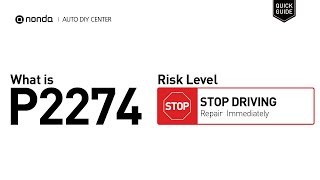
I wouldn’t brush this code off. Sure, your car might seem to run fine for a stretch, but a stuck O2 sensor can push your engine to run either too rich or too lean. That’s the fast track to cooking your catalytic converter, and trust me, that’s a repair you don’t want to pay for. Your emissions will climb, and if you’re due for inspection, you’re not going to pass. If the engine starts running rough or you lose power, things can snowball fast. My advice-don’t let this code sit. Take care of it before you wind up with a much bigger bill.
Repair Steps for P2274 code
Based on what I see in the trenches (and what the manuals say), here’s what usually takes care of P2274:
- Swap out the oxygen sensor if it fails the checks.
- Repair or replace any damaged wiring or plug connections leading to the sensor.
- Seal up any exhaust leaks upstream of the sensor-skip this, and the code’s coming right back.
- Clear the code and test drive to make sure it stays gone.
On rare occasions, if you’ve checked everything else and still can’t shake the code, you might be looking at a PCM or control circuit fault. But honestly, that’s not where I’d bet first.
Conclusion
So, P2274 means your O2 sensor isn’t switching the way it should, and your emissions system suffers for it. It’s not a problem to ignore, since it can lead to major headaches (and big repair bills) down the line. The fix? Start with a detailed inspection-wiring, sensor, exhaust leaks-then replace the sensor if you’ve ruled everything else out. Jump on it early, and you’ll save yourself money and keep your car running clean. If you’re not sure where to go next, don’t be afraid to call in a pro-they’ll make sure you’re back on the road without any second guessing.

 4634
4634 6 minutes of reading