
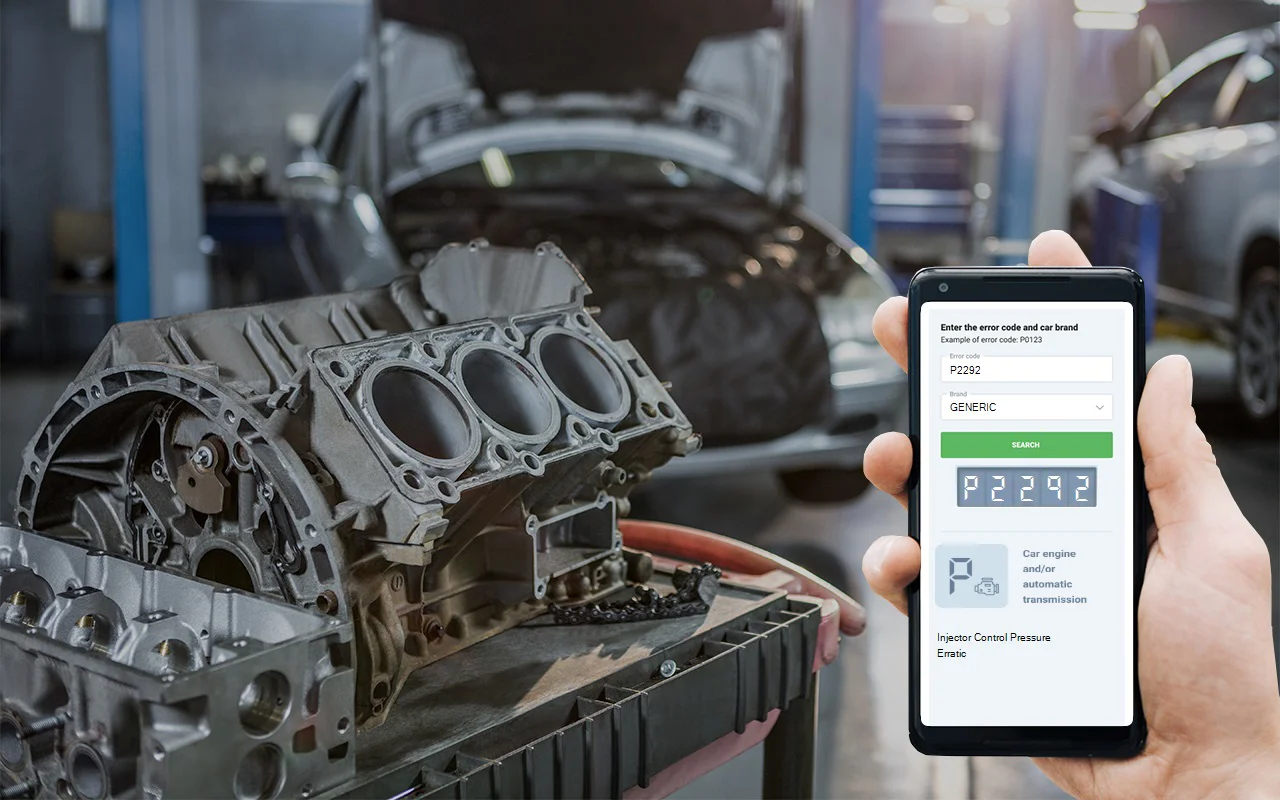
Causes and obd2 code P2292
After years in the shop, I can tell you that P2292 almost always comes down to one of these issues:
- The ICP sensor itself is toast-sometimes the internals just quit, or the sensor starts feeding the computer wacky numbers.
- Wiring harness troubles-maybe the wires are brittle, chewed up, or water’s made its way into the connectors causing shorts or open circuits.
- Bad connection at the sensor plug-corrosion, bent pins, or connectors that just aren’t seating right can all cause headaches here.
With Ford diesels, these are the big three. Other makes might throw you a curveball, but on a Power Stroke, I always start with the sensor and its wiring. That’s where the smart money is.
Symptoms and dtc P2292
Now, what’s it actually feel like when you’ve got a P2292 lurking in your system? First thing you’ll probably notice is that pesky check engine light. Sometimes, you might also get a rough idle, hesitation when you hit the throttle, or even a no-start. Maybe everything still feels mostly normal, but don’t get comfy-if the warning light’s on, the system’s not happy. Let things slide too long, and you could see power loss or sluggish throttle response. My advice? Don’t write it off just because the truck still rolls down the road. That light means something’s out of whack.

Diagnosis and P2292 code
Here’s how I like to get to the bottom of a P2292 code, step by step:
- Start by scanning for any other codes. Sometimes, a pattern shows up that points you in the right direction.
- Next, get your eyes on the ICP sensor and its wiring. Look for anything obvious-broken wires, cracked insulation, or connectors that look sketchy. Don’t overlook the plug itself; a single bent pin can ruin your day.
- If nothing jumps out, I’ll hook up a scan tool and watch the ICP readings while the engine’s running. If the numbers are bouncing all over or way outside the spec, you’re onto something.
- Here’s a trick: unplug the sensor and see how the vehicle responds. If nothing changes, you’re probably dealing with an issue in the sensor or the wiring itself.
- For a deeper dive, check the reference voltage (should be a rock-solid 5 volts) and the ground at the sensor’s connector. If you’re comfortable with a multimeter, go for it-but if you’re new to this, don’t be shy about asking for help.
Bottom line: always start with the simple stuff-bad wires, loose connections-before you start throwing new parts at the problem.
Common Mistakes and obd code P2292
One thing I see all the time? Folks swapping out the ICP sensor right away, only to find out later it was just a crusty connector or a busted wire. It’s an easy way to burn cash for nothing. Another trap: ignoring other codes that pop up alongside P2292. Sometimes, the real issue is upstream, and you miss it if you’re too focused. Always check the basics first. It’ll save you time, money, and headaches.

Seriousness and P2292 trouble code
Trust me, you don’t want to let a P2292 code linger. Letting this one go can mean rough running, hard starts, or stalling at the worst moments. Even worse, if the injector control pressure stays off for long, you risk frying your injectors or the high-pressure pump-and that repair bill stings. Nobody wants to be stranded or risk engine damage, especially with a heavy-duty diesel. Take this one seriously and get it handled before it snowballs.
Repair and P2292
Here’s what’s worked best for me (and plenty of other techs) when fixing a P2292:
- Patch up or replace any damaged wires or dodgy connectors at the ICP sensor. Don’t just eyeball it-wiggle and tug to make sure everything’s solid.
- Clean up corroded pins and double-check they’re seating like they should. Sometimes a little contact cleaner does wonders.
- If you’ve ruled out the wiring and connections, go ahead and swap in a new ICP sensor. If it was the culprit, you’ll know pretty quick.
Once you’ve made your fix, clear the code and get the truck out for a solid test drive. If P2292 pops back up, take another look-it might be time for a more in-depth electrical check.
Conclusion
Here’s what it all boils down to: If you see P2292, you’ve likely got trouble with your injector control pressure system-usually the sensor or its wiring, especially on Ford diesels. Don’t put it off. This is a problem that can grow into much bigger headaches if ignored. Start with a careful look at the wiring and connectors, then move to the sensor itself. Take care of it early, and you’ll save yourself money, downtime, and a whole lot of hassle down the road.
 4713
4713 5 minutes of reading