
Common Causes of dtc P2295
From my time under the hood and flipping through more service manuals than I can count, here’s what usually triggers a P2295 code:
- Wiring gremlins-damaged, frayed, or corroded wires in the solenoid harness are notorious for shorting out to ground.
- A faulty Fuel Pressure Regulator Solenoid 2-sometimes the coil inside the solenoid bites the dust and shorts internally.
- Loose or dodgy electrical connections at the solenoid or the engine control module (ECM)-a classic weak link.
- Issues inside the ECM itself-rare, but if you’ve got water intrusion or a history of electrical problems, don’t rule it out.
Honestly, most times you’ll find the culprit in the wiring or the solenoid. My advice? Start your detective work there before you go chasing the pricier stuff.
Recognizing Symptoms of P2295 code
If P2295 is in play, here’s what you’ll probably notice: The check engine light will almost always make an appearance. Beyond that, you might feel the engine running rough, have to crank it longer to start, or feel like you’ve lost some muscle when you step on the gas. Sometimes the car’s computer will throw it into limp mode to protect itself, and you’ll know it-performance drops off a cliff. And if the fuel pressure drops far enough, stalling isn’t out of the question. That’s a heart-stopper if it happens in traffic, so don’t ignore these warning signs.

Step by Step P2295 engine code Diagnosis
Here’s my go-to process for tracking down a P2295 problem:
- Start by scanning for any other codes-P2295 might just be one piece of a bigger puzzle.
- Visually check the wiring and connectors at Fuel Pressure Regulator Solenoid 2. Keep an eye out for broken, pinched, or corroded wires. Don’t overlook the connector pins-sometimes all it takes is a loose pin to cause chaos.
- With the ignition off, gently tug on the harness and look for any spots where the insulation’s rubbed through and might be touching metal. I’ve seen plenty of shorts hiding in plain sight like this.
- If nothing stands out, grab a multimeter and check for continuity between the solenoid’s signal wire and ground. If you get continuity, you’ve found a short somewhere in the harness.
- Test the solenoid itself-unplug it and check the resistance. If it’s way off compared to what the manual says, chances are the solenoid’s toast.
- If the wiring and solenoid check out, start considering the ECM. It’s rare, but if everything else looks good, you can’t rule it out.
Here’s a pro-tip: have someone help you by wiggling the harness while you watch the meter. Intermittent faults love to hide until you move things around. And always clear the code and see if it comes back after each step-sometimes all it takes to fix the issue is reseating a connector.
Common Mistakes When Handling obd code P2295
A classic mistake I see all the time is folks running straight to swap out the solenoid without checking the wiring first. That’s a quick way to burn cash with no fix. Another one? Only checking one end of the harness-when sometimes the real trouble is lurking at the ECM connector. Corrosion inside connectors is another sneaky culprit; it can cause voltage drops and oddball problems that’ll have you chasing your tail. My advice: go over every single connection before you start replacing parts. It’ll save you time and money, trust me.

How Serious is obd2 code P2295
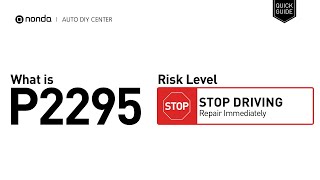
Let me be clear-this isn’t something you can just ignore and hope it goes away. If the fuel pressure regulator circuit is acting up, your engine can end up running lean or rich, causing rough idling, stalls, or even long-term engine damage. Driving around with unpredictable fuel delivery is downright risky. I’ve seen engines stall out at the worst possible times, and that’s a dangerous situation, especially in traffic. Ignore it long enough and you could take out your fuel pump or injectors, too. Bottom line: don’t put this one off. Get it checked and fixed ASAP.
How to Repair P2295
This is how I usually tackle a stubborn P2295 code:
- Repair or swap out any damaged wiring or connectors in the solenoid’s circuit. That’s usually where the gremlins hide.
- If the solenoid fails the resistance test, replace Fuel Pressure Regulator Solenoid 2.
- Clean and secure all electrical connections-sometimes just unplugging and plugging back in will do the trick.
- If, after all of that, you’re still staring at the code, consider the ECM as the last resort. But only after you’ve ruled everything else out.
Don’t forget-after every repair, clear the code and take the car for a spin. If the code stays gone, you’ve nailed it. If not, it’s back to the drawing board.

Conclusion
So here’s the bottom line: P2295 means your car’s computer is seeing low voltage in the control circuit for Fuel Pressure Regulator Solenoid 2. Most of the time, it’s a wiring short or a bad solenoid at fault. Don’t sit on this code-fuel delivery issues can mess up how your engine runs and even put your safety at risk. Start with a good, thorough look at the wiring and connectors, then check the solenoid, and only start suspecting the ECM if you’ve checked everything else. The sooner you get on top of it, the less chance you have of ending up with a much bigger-and more expensive-repair bill down the road.

 3750
3750 6 minutes of reading