
Causes of the P22A5 engine code
From what I’ve seen in the shop and what the official repair info tells us, the most common reasons for a P22A5 code are:
- A short to battery (12V) on the heater supply wire going to the NOx Sensor 2
- Damaged or melted wiring harness near the exhaust system-heat and vibration can wear these wires down over time
- Corroded or loose connectors at the sensor or along the harness
- Internal failure of the NOx sensor’s heater circuit itself
- Less often, a problem with the engine control module (ECM) output for the heater circuit
Most often the issue is with the wiring or the sensor itself, especially if the vehicle has seen a lot of road salt or off-road use.
Symptoms associated with P22A5
When this code is active, you’ll probably notice the check engine light is on. In many cases, there aren’t any obvious drivability problems right away, but you might see:
- Reduced engine power or limp mode if the computer gets unhappy enough
- Worse fuel economy over time
- Failed emissions test
Sometimes, you won’t feel any difference at all, but the light is your warning that something’s not right in the emissions system.

Diagnosis process for obd code P22A5
Here’s how I usually go about tracking down a P22A5:
- First, I always start by visually inspecting the wiring and connectors for the downstream NOx sensor. Look for any obvious damage, melted insulation, or corrosion. It’s best to do this with the car cool-those exhaust pipes get hot!
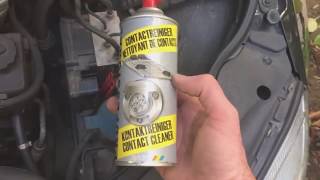
- Next, I check the connector at the sensor itself. Unplug it and look for bent pins, green corrosion, or signs of water intrusion. Don’t forget to check both sides of the connector.
- With a multimeter, I’ll test the heater supply wire (usually labeled H+) for voltage with the ignition on. If you see battery voltage when you shouldn’t, that’s a sign of a short to power somewhere along the harness.
- If the wiring looks good, I’ll check resistance across the heater circuit in the sensor. If it’s open or way out of spec, the sensor’s heater is likely toast.
- It’s also smart to check for any related technical service bulletins-sometimes manufacturers update the harness or sensor design if there’s a known issue.
It’s better to have someone assist you when checking under the car, and always make sure the exhaust is cool before touching anything.
Common mistakes when troubleshooting the P22A5 trouble code
I’ve seen folks jump straight to replacing the NOx sensor without checking the wiring first. That’s a surefire way to waste money if the real problem is a melted wire or bad connector. Another common mistake is not checking for shorts to battery along the entire length of the harness-sometimes the problem is further up, not right at the sensor. Skipping the resistance check on the heater circuit is another one I see a lot. Don’t forget to check the basics before replacing expensive parts.

How serious is the P22A5 code
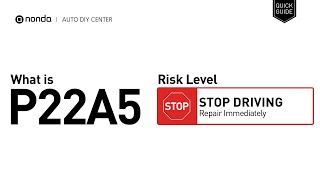
This isn’t something you want to ignore. If the NOx sensor heater isn’t working, your emissions system can’t do its job, and you risk failing an emissions test. Over time, running with a faulty sensor can cause the engine to run less efficiently, and in some cases, it can damage the catalytic converter. Honestly, it’s dangerous to ignore this-things can go south quickly if the wiring shorts out further or causes other electrical issues. Don’t put this off for later.
Repair steps for obd2 code P22A5
Here’s what I personally recommend for fixing a P22A5, based on what’s worked in the field:
- Repair or replace any damaged wiring or connectors you find during your inspection
- If the sensor’s heater circuit is open or shorted internally, replace the NOx sensor 2 with an OEM-approved part
- Clear the code and test drive the vehicle to make sure it doesn’t come back
- If the problem persists and all wiring and the sensor check out, further diagnosis of the ECM output may be needed, but that’s rare
Always use proper heat-resistant wiring and connectors if you’re doing any repairs near the exhaust.

Conclusion
To sum it up, P22A5 means your vehicle’s computer has found a high voltage issue on the heater circuit for the downstream NOx sensor. This is a key part of your emissions system, and ignoring it can lead to bigger problems down the road. I recommend starting with a careful inspection of the wiring and connectors, since most issues are found there. If that checks out, the sensor itself is the next likely culprit. Don’t delay-fixing this promptly is the best way to keep your car running clean and avoid costly repairs later on.

 5232
5232 5 minutes of reading