
Main Causes of obd code P22A6
From what I’ve seen in the shop and what the official repair info says, the most common reasons for a P22A6 code are:
- A broken or disconnected wire going to the NOx Sensor 2 heater
- Corrosion or damage at the sensor’s connector
- A failed NOx Sensor 2 heater element itself
- Issues with the wiring harness-sometimes it gets pinched or rubbed through
- Less often, a problem with the engine control module (ECM) or its pins
Most often, it’s a wiring or connector issue, not the sensor itself, but I always check both.
Typical Symptoms of P22A6 engine code
If this code is active, you’ll probably notice a check engine light on your dash. Sometimes, you might also see a warning about the emissions system. Usually, you won’t feel any difference in how the car drives right away, but if you ignore it, the emissions system can’t do its job, and that can lead to bigger problems down the road-like poor fuel economy or even the car going into a reduced power mode if things get worse.

Diagnosis Process for dtc P22A6
Let me walk you through how I tackle this type of code in the shop:
- First thing I do is pop the hood and get under the car to visually inspect the wiring and connector for NOx Sensor 2. I’m hunting for broken wires, loose or pushed-back pins, or any greenish corrosion or burnt marks around the connector-those are dead giveaways something’s off.
- Here’s a pro-tip from the garage: give those wires a gentle tug. Sometimes a wire looks fine but is hanging on by a thread inside the insulation. If you can, have a buddy wiggle the harness while you watch the live data on a scan tool; if anything flickers or changes, you’re close to the culprit.
- If everything looks solid, I grab my multimeter and check for continuity in the heater circuit. You want a closed circuit from the sensor back to the ECM-any sign of an open, and you’ve got a problem spot to chase down.
- Next, I’ll measure resistance across the heater pins at the sensor. If it reads open or something wildly out of spec, the heater element itself is done for.
- Last, if I’m still chasing ghosts, I’ll check the ECM side for bent pins or signs of moisture. It’s rare, but I’ve seen a few odd cases where water found its way in and caused havoc.
Once any repairs are made, don’t just assume you’re done-clear the code and take the car for a spin. If the code stays gone, you nailed it. Sometimes just cleaning a connector is all it takes.
Avoiding Common Mistakes with P22A6 code
A classic mistake I see-folks tossing in a new NOx sensor before checking the wiring. That’s tossing money out the window if it’s just a corroded connector or a broken wire. Another one: missing sneaky corrosion hiding in the connector itself. You’d be surprised how often a bit of green fuzz is the only thing standing between you and a clean bill of health. And don’t overlook the fuses for the heater circuit-blow one of those, and you’ll chase your tail for hours. Taking shortcuts here just leads to frustration and wasted cash.

How Serious is P22A6
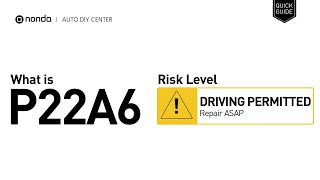
I wouldn’t call this code an emergency, but trust me, you don’t want to let it ride. Without a working NOx sensor heater, your emissions system can’t keep things dialed in. Let it go long enough, and you risk cooking your catalytic converter or watching your fuel economy nosedive. Some cars will even put you into limp mode if things get bad enough-imagine trying to merge onto the highway with half your power. So, tackle it sooner rather than later. It’s not worth the risk.
Repair Solutions for obd2 code P22A6
Here’s what gets this one fixed, based on what I see come through the bays and what the manuals say:
- Patch up or replace any busted wiring or dodgy connectors at NOx Sensor 2
- Scrub and tighten up the sensor connector if you spot any corrosion-sometimes a little cleaning is all it takes
- If the heater element inside the sensor is toast (open or way out of spec), swap out the NOx Sensor 2 itself
- On rare occasions, if the ECM’s the root of the problem, you might need to repair or replace it-but that’s not common
Always finish by clearing the code and taking the car for a test drive to make sure everything’s working as it should. Don’t skip this step-it’s your peace of mind.


Conclusion
When you see P22A6, what you’re really dealing with is a downstream NOx sensor heater circuit that’s letting you down-and that spells trouble for your emissions and, eventually, your engine’s health. My advice? Start by getting your eyes on the wiring and connector, since that’s where most problems hide. Don’t drag your feet on this one; the headaches only get bigger the longer you wait. Nine times out of ten, fixing up the wiring or popping in a new sensor sorts it out. Take care of it now, and you’ll keep your ride running clean for the long haul.

 4673
4673 6 minutes of reading