
Main Causes of obd2 code P22A7
From what I’ve seen in the shop and based on official repair info, there are a few usual suspects when it comes to this code:
- Most often the issue is a faulty downstream NOx sensor itself-the heater element inside can burn out or go open circuit.
- Wiring problems are also common, like damaged wires or corroded connectors leading to the sensor. Road salt and moisture can do a number on these connections.
- Sometimes, the problem is with the sensor’s harness-broken or pinched wires can mess with the resistance readings.
- Less commonly, a fault in the engine control module (ECM) or a blown fuse for the sensor heater circuit can be to blame.
In cases like this, it’s usually best to start with the sensor and its wiring before suspecting the control module.
Recognizing dtc P22A7 Symptoms
When this code pops up, you’ll probably notice the check engine light is on. Most drivers won’t feel any difference in how the car runs at first, but you might see:
- Check engine or emissions warning light illuminated.
- Possible reduction in fuel efficiency over time, since the emissions system isn’t working at its best.
- In some vehicles, you could eventually get a message about emissions system faults or even experience the car going into a reduced power or 'limp' mode if the problem is ignored for too long.
Honestly, you might not notice much right away, but that doesn’t mean it’s safe to ignore.

Step-by-Step P22A7 code Diagnosis
Here’s how I usually tackle a P22A7 code, step by step:
- First, I always start by clearing the code and seeing if it comes back. Sometimes, a one-off glitch can set it off, but if it returns, it’s time to dig deeper.
- Next, I visually inspect the NOx sensor and its wiring harness. Look for obvious signs of damage-melted wires, corrosion, or loose connectors. Don’t forget to check where the harness runs near hot exhaust parts or moving suspension pieces.
- With the engine off and cool, I disconnect the sensor and check the resistance of the heater circuit using a multimeter. Compare the reading to the spec in the service manual. If it’s way off, the sensor’s heater is likely bad.
- If the sensor checks out, I move on to the wiring. I check for continuity and look for shorts to ground or power. Sometimes, wiggling the harness while watching the meter can reveal an intermittent problem.
- If everything looks good up to this point, I’ll check the fuse and relay for the sensor heater circuit. A blown fuse can be a clue to a deeper wiring issue.
- Only after all these checks would I suspect a problem with the ECM, but that’s pretty rare in my experience.
It’s better to have someone assist you if you’re not comfortable with electrical checks-safety first!
Avoiding P22A7 trouble code Mistakes
I’ve seen a few common slip-ups with this code:
- Jumping straight to replacing the NOx sensor without checking the wiring or connectors. Sometimes it’s just a bad connection, not the sensor itself.
- Overlooking a blown fuse or a damaged harness, especially where it runs near hot or moving parts.
- Assuming the ECM is bad without ruling out all the simpler causes first. Control modules are expensive and rarely the culprit here.
Don’t skip the basics-those simple checks can save you a lot of money and headaches.

How Serious is obd code P22A7
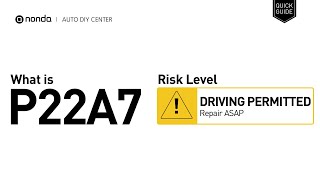
This is something you don’t want to put off. While it might not leave you stranded right away, driving with a faulty NOx sensor heater can lead to bigger problems. The emissions system can’t do its job, which means you could fail an emissions test, and in some vehicles, the engine might eventually go into reduced power mode. Over time, unaddressed issues here can cause damage to the catalytic converter or other emissions components, and that’s a much more expensive fix. Honestly, it’s dangerous to ignore this-things can go south quickly if overlooked.
Repair Tips for P22A7
Here’s what I personally recommend for fixing a P22A7 code, based on what works in the field:
- Replace the downstream NOx sensor on Bank 1 if the heater circuit is out of spec.
- Repair or replace any damaged wiring or connectors you find during inspection. Make sure connections are clean and tight.
- If a fuse or relay is blown, replace it-but only after finding and fixing the root cause, or it’ll just blow again.
- In the rare case the ECM is at fault, it may need to be reprogrammed or replaced, but that’s almost never needed if the other steps are done right.
After repairs, always clear the code and test drive to make sure it doesn’t come back.

Conclusion
To sum it up, P22A7 means your car’s emissions system isn’t getting the right signal from the downstream NOx sensor heater, and that can cause a cascade of problems if left unchecked. It’s best to prioritize this repair-start with a careful inspection of the sensor and wiring, and don’t overlook the simple stuff. The risks just aren’t worth it, and the most reliable fix is usually replacing the faulty sensor or repairing the wiring. Get it sorted sooner rather than later to keep your car running clean and trouble-free.
 4268
4268 6 minutes of reading