
Causes of obd code P2330
Over the years, I’ve learned that the main culprits behind a P2330 code are usually pretty straightforward, but every one of them deserves a close look. Here’s what I usually track down in the shop:
- A failed ignition coil-on Volkswagens, you’re almost always dealing with coil number 11
- Wiring that’s broken, shorted, or completely open in the harness feeding that coil
- A poor electrical connection at the coil’s plug-sometimes those pins get bent, corroded, or even pushed back out of place
- And, though it’s rare, sometimes the ECM itself is the problem, not sending the right command to the coil
If you’re working on a VW, these are your prime suspects. With other makes, the code might be assigned to a different coil or cylinder, but the underlying issues are usually a close match.
P2330 Symptoms in Your Vehicle
From my time in the shop, when this code triggers, you’ll usually spot a few things right off the bat. The check engine light is the obvious one, but more often than not, you’ll feel the engine stumble or misfire-especially when you hit the gas or let it idle. Sometimes, the car hesitates or even stalls out at a stop. There are cases where you barely notice anything, but trust me, ignoring a P2330 is asking for trouble down the road.

Diagnosis Steps for P2330 code
Let me walk you through how I’d track down a P2330 code in your driveway or garage:
- Start with your eyes-pop the hood and give the wiring and connector for ignition coil 11 a good look. Watch for chewed-up wires, cracked insulation, or plugs hanging loose.
- Unplug the connector from the coil and inspect the pins. Are any bent, green with corrosion, or pushed back? A small pick tool and a flashlight go a long way here.
- If everything checks out, I swap coil 11 with another one from a different cylinder (if your engine design lets you). If the code follows the coil, that’s your bad part. If it stays put, you’ve got wiring or ECM trouble.
- Grab a multimeter and check continuity on the wires running from the ECM to the coil. Any open or shorted circuits will set this code off.
- If you still haven’t nailed it, the last step is checking the ECM’s signal itself-usually a job for a pro with the right scan tools.
Honestly, having a buddy around to help swap coils or hold a light makes this whole process smoother and a lot safer.
Common Mistakes When Dealing with obd2 code P2330
A classic mistake I see all the time? Folks rush to swap out the ignition coil without even glancing at the wiring or the connector. That’s a quick way to burn through cash and still end up with the same problem. Another one: not swapping coils to see if the code moves. And don’t overlook connector corrosion or water sneaking in-these little gremlins cause more headaches than you’d think, and they’re easy to miss if you’re not looking closely.

Seriousness of P2330 trouble code
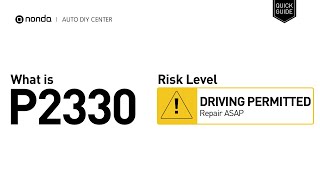
Let me be straight with you-this isn’t a code to brush off. A misfiring coil means unburned fuel can slip into your exhaust, which chews up your catalytic converter fast (and that part’s never cheap). Plus, running with a misfire tanks your performance, spikes emissions, and, if you let it go long enough, can even hurt your engine. If the car’s stumbling or stalling, you’re looking at a situation that can turn dangerous quick. Don’t wait-P2330 can cost you a lot more if you ignore it.
Repair Solutions for P2330 engine code
Based on what I’ve fixed over the years-and what the factory recommends-here’s what usually gets a P2330 sorted:
- Swap out the bad ignition coil (number 11 for VW folks)
- Patch up or replace any suspect wiring or broken connectors in that coil’s circuit
- Clean up all the electrical contacts at the coil, and make sure everything’s tight
- On the rare chance the ECM’s at fault, repair or replace it as needed
Once you’ve made the fix, clear the code and take the car for a spin. If the light stays off and everything runs smooth, you’re in the clear.


Conclusion
Bottom line, P2330 is your warning that something’s wrong in the ignition coil’s control circuit-most times it’s just a bad coil, a wiring gremlin, or a lousy connection. Don’t drag your feet on this one. Leaving it will only pile up bigger bills and risk your safety. Start with a close-up inspection, confirm what’s really wrong, and only then swap or repair the right parts. Fixing it sooner rather than later is the smartest move you can make for your car-and your wallet.

 5630
5630 5 minutes of reading