
Causes of P2339
From what I've seen in the shop and according to the official repair info, the most common reasons for a p2339 code are:
- A faulty knock sensor itself - this is often the main culprit.
- Problems with the wiring harness or connectors for the knock sensor - things like corroded pins, broken wires, or loose connections can easily cause trouble.
- An open or short circuit in the knock sensor wiring - sometimes wires get pinched or damaged over time.
- In rare cases, a malfunctioning engine control module (ECM) can be to blame, but that's not where I’d start.
Most often, the issue is with the sensor or its wiring, not the computer. I recommend starting with the basics before jumping to conclusions about expensive parts.
Symptoms of P2339 engine code
When this code pops up, here’s what you’re likely to notice as a driver:
- The check engine light will come on - that’s usually the first sign.
- You might feel a loss of power or the engine not running as smoothly as usual.
- In some cases, you could hear a knocking or pinging noise from the engine, especially under load or acceleration.
Sometimes, the symptoms are subtle, but ignoring them can lead to bigger headaches down the road.

Diagnosis steps for dtc P2339
Here’s how I tackle a P2339 code, step by step:
- First, I always start with a visual inspection. Pop the hood and look at the knock sensor wiring and connectors around cylinder 4. Check for any obvious damage, corrosion, or loose plugs. It’s better to have someone wiggle the wires while you watch for changes.
- Next, I use a scan tool to clear the code and see if it comes back right away. If it does, that’s a strong hint the problem is still active.
- After that, I check the knock sensor itself. Using a multimeter, I’ll measure the resistance of the sensor and compare it to the specs in the service manual. If it’s way off, the sensor is likely bad.
- If the sensor checks out, I move on to the wiring. I’ll check for continuity and shorts between the sensor and the ECM. Don’t forget to inspect the connector pins for signs of being bent, pushed out, or corroded.
- Only after all the above checks out do I consider the ECM as a possible cause, but that’s pretty rare in my experience.
Take your time with the basics - most fixes are found in the first few steps.
Common Mistakes when troubleshooting obd code P2339
I’ve seen a few common slip-ups when folks try to tackle this code:
- Jumping straight to replacing the knock sensor without checking the wiring or connectors first. That’s a surefire way to waste money.
- Overlooking corrosion or loose pins in the connectors - these tiny details can cause big problems.
- Not using a scan tool to confirm the code is active after repairs. Always clear the code and see if it returns.
Don’t rush - a careful inspection saves time and money in the long run.

Seriousness of obd2 code P2339
This isn’t something you want to put off. A knock sensor problem means your engine might not be protected from knocking, which is a serious hazard. If left unchecked, you risk damaging pistons, valves, or even the cylinder head. Things can go south quickly if overlooked, and the repair bill can skyrocket. Honestly, it’s dangerous to ignore this - you don’t want this kind of trouble on the road.
Repair solutions for P2339 trouble code
Here’s what usually fixes a p2339 code, based on verified repair cases and OEM procedures:
- Repair or replace any damaged wiring or connectors for the knock sensor.
- Replace the knock sensor itself if it’s out of spec or not responding.
- In rare cases, repair or replace the ECM if all other causes are ruled out.
Always finish by clearing the code and taking the car for a test drive to make sure the issue is resolved.


Conclusion
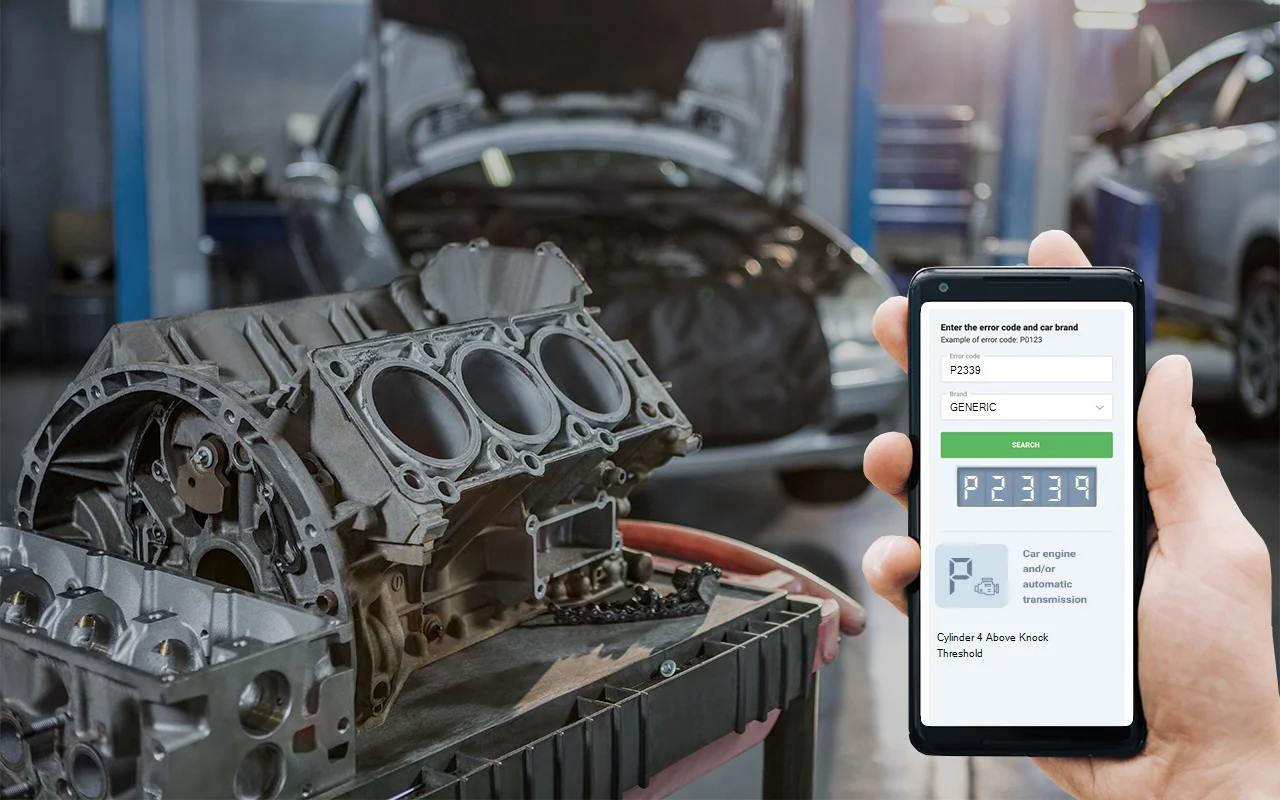
To sum up, P2339 means your engine’s knock sensor system has picked up too much knock in cylinder 4, which can lead to serious engine damage if ignored. The most common causes are a bad sensor or wiring issues, so start your checks there. This is a high-priority fix - don’t delay. The most reliable way to resolve it is a thorough inspection and repair of the sensor and its wiring, followed by a test drive to confirm everything’s back to normal. Your engine’s health depends on it!
 6656
6656 5 minutes of reading