
Causes of P2427 trouble code
From my time under the hood, three culprits show up more than any others when I’m chasing a P2427:
- The EGR cooler bypass valve itself goes bad-honestly, these things get full of carbon, wear out, or just plain fail after enough miles.
- Wiring problems are big-open circuits, shorts, or wires that have gotten chafed up against something hot or sharp under the hood. Seen more than a few harnesses with insulation rubbed clean through.
- Crusty or loose electrical connections at the valve’s plug-corroded pins, bent terminals, or a connector that’s barely hanging on can trip this code fast.
If you’re working on a Ford, these are the big hitters, but don’t forget to check your particular vehicle’s service info. Some brands throw a few curveballs of their own.
Symptoms of P2427 engine code
When you get a P2427, the most obvious sign is that check engine light staring you down. A lot of drivers won’t notice much else right away, but I’ve seen cases where you’ll get a rough idle, lose a little power, or see the temp gauge run higher than normal-especially if the EGR system’s acting up. Sometimes there’s a hint of extra exhaust smell, or a little extra smoke out the tailpipe, especially on diesels. But honestly, most folks just spot that dreaded warning lamp and wonder what’s up.

Diagnosis steps for obd code P2427
Let me walk you through how I’d tackle this problem in the shop:
- Kick things off with a solid visual inspection. Pop the hood and eyeball the harness going to the EGR cooler bypass valve. Look for split wires, brittle insulation, sloppy connectors, or any sign of corrosion.
- Next, unplug the connector at the valve. Take a look at the pins-bent, pushed out, or green with crusty stuff? Get someone to wiggle the harness while you watch for movement or intermittent contact.
- If the basics look good, grab your multimeter and check for proper power and ground at the connector. If you know your way around a meter, you can handle this-otherwise, it’s worth letting a seasoned tech take over.
- Move on to the valve itself. Sometimes a gentle tap can wake up a stubborn valve, but don’t get carried away. If you’ve got a scan tool, try commanding the valve open and closed to see if it’s actually moving.
- If everything checks out and you’re still stuck, dig into technical service bulletins (TSBs) for your vehicle-there could be a pattern failure or a factory fix you don’t want to miss.
Start with the easy stuff and work your way up. And don’t forget: after each step, clear the code and take a short drive to see if it comes back.
Common mistakes with obd2 code P2427
A classic mistake I see? Folks jumping right to swapping out the EGR cooler bypass valve before they’ve even looked at the wiring or connectors. That’s a quick way to burn cash for nothing. Skipping over connector corrosion is another one-sometimes, a little cleanup is all it takes to get things back on track. And never overlook checking for TSBs; missing a known issue can send you chasing your tail for hours.

Seriousness of P2427
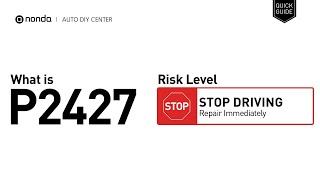
Don’t brush this one off. While your car might run fine for a bit, a bad EGR cooler bypass valve can spike engine temps, crank up emissions, and in the worst cases, lead to real engine damage. If the valve jams closed, you’re flirting with overheating and costly repairs. Things can head south in a hurry if you ignore the warning signs. Parts at risk? The EGR cooler, the valve itself, and even your engine if things get too toasty.
Repair solutions for dtc P2427
Here’s what’s worked for me and most techs I know:
- Fix or replace any chewed-up wires or suspect connectors going to the EGR cooler bypass valve.
- Take care of corroded connectors-clean ‘em up, make sure pins are straight and connections are tight.
- If the valve is shot or stuck, swap it out for a new OEM unit. Don’t cheap out on this part.
- Once repairs are done, clear the code and run the vehicle to confirm the fix. No comeback means you nailed it.
Stick to the manufacturer’s repair steps for your ride-cutting corners now is just asking for another round in the shop.

Conclusion
Bottom line? P2427 means there’s trouble with your EGR cooler bypass valve control circuit-usually a bum valve, a wiring issue, or a bad connection. Ignore it and you’re risking bigger headaches down the line. Start your troubleshooting with a careful look at the wiring and connectors, then move on to the valve if needed. Taking action early and working through the right diagnostic steps keeps your engine happy and spares your wallet from nasty surprises later.
 4414
4414 5 minutes of reading