
Causes and obd2 code P2444
From my time under the hood, the p2444 code almost always boils down to either a wiring issue or a mechanical failure in the air injection system. Here’s what typically trips folks up:
- Short circuit somewhere in the air pump wiring
- Air injection pump itself stuck or faulty-it happens more than you’d think
- Pressure sensor in the air injection system has gone bad
- Open or shorted wiring harness going to the pressure sensor
- Loose or corroded electrical connections at the pump or sensor
Plenty of times, it’s just a simple corroded connector or a wire that’s worked loose over the years. But I’ve seen my fair share of pumps that fail internally, leaving them running nonstop. No matter which badge is on your grille, these are the usual suspects behind a p2444 code.
Symptoms and obd code P2444
The most obvious red flag? That check engine light glaring at you from the dash. Sometimes, you’ll actually hear the air pump humming away longer than it should after startup-or even running when the engine’s off. Most drivers won’t feel much difference in the way the car drives, but every now and then, you might catch a rough idle right after firing up, especially on cold mornings. Still, that warning light is your main tip-off-and trust me, it’s not something you want to shrug off.

Diagnosis and P2444
When I’m chasing down a p2444 code, here’s how I go about it step by step:
- First thing-pop the hood and give all the wiring and connectors a close look around the air pump and pressure sensor. Keep your eyes peeled for corrosion, broken wires, or a connector that’s barely hanging on. Don’t be afraid to wiggle things around-sometimes a buddy and a good flashlight make this job easier.
- Next up, check the fuses and relays tied to the air injection system. A fuse that’s blown or a relay that’s stuck can keep that pump spinning non-stop.
- Then I’ll grab a scan tool to monitor what the pump and pressure sensor are doing in real time. If the pump’s running when it shouldn’t or the sensor’s throwing out weird numbers, you’re closing in on the problem.
- If things still aren’t adding up, I’ll unplug the pump and see if that changes anything. If the pump keeps spinning even after pulling the relay, it’s likely stuck inside and needs replacing.
- Last, but not least, I’ll break out the multimeter to check the pressure sensor’s wiring for shorts or breaks. If electrical testing isn’t your thing, you might be better off letting a pro take it from here.
One thing you don’t want to overlook: water or dirt getting into the connectors or the pump itself. These systems are often mounted low, right in the line of fire for road grime and puddles.
Common Mistakes and P2444 engine code
A classic mistake I see is folks rushing to replace the air pump without even glancing at the wiring or relays first. That’s a quick way to spend money you didn’t need to. Another one? Ignoring the pressure sensor or its wiring-sometimes, all you need is to clean up a connector, not swap out the whole pump. Skipping that initial visual inspection is another big one; a few minutes looking things over can save you hours and a lot of frustration down the line.

Seriousness and dtc P2444
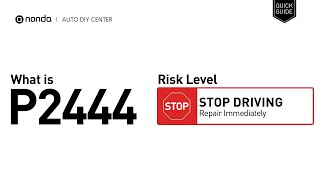
Here’s the deal: this isn’t a code you want to drag your feet on. Even if the car seems to run fine, a pump that’s stuck on can quickly overheat, fry itself, or take out some wiring and relays with it. I’ve seen batteries drained overnight because the pump kept running long after the engine was off. Leave it long enough, and you might even do real damage to your catalytic converter-and that’s a repair you don’t want to pay for. Trust me, things can spiral fast if you let this one slide, so get on it as soon as you can.
Repair and P2444 trouble code
Here’s how I typically get a P2444 code sorted, both from my own garage work and what you’ll find in the official repair manuals:
- Fix or swap out any damaged wiring or connectors in the air injection circuit
- Replace the air injection pump if it’s locked up or won’t shut off
- Install a new pressure sensor if the readings are off the mark
- Clean up or replace connectors that are corroded or loose
- Put in new fuses or relays if the originals are blown or stuck
Don’t forget-a job’s not done until you clear the code and double-check that everything’s working just like it should. I always run a quick test drive to be sure.
Conclusion
So, if you’re staring down a P2444 code, you’re looking at a secondary air injection pump that just won’t turn off. Most of the time, it’s down to bad wiring, a faulty pump, or a pressure sensor that’s given up. Start with a careful visual once-over, then break out the test tools if you need to dig deeper. Ignore this one and you risk bigger headaches-like a cooked pump, fried wiring, or a ruined catalytic converter. Get to the root of it, whether that means fixing some connections, swapping a sensor, or putting in a new pump. Handle it soon and you’ll save yourself a lot of hassle-and a chunk of cash-down the line.
 6653
6653 6 minutes of reading