
Causes of dtc P2465 in Diesel Vehicles
After years under the hood, I can tell you: 9 times out of 10, P2465 comes down to a DPF that’s choked up with soot-exhaust just can’t get through like it’s supposed to. But don’t overlook the sensor itself. I’ve chased my tail before, only to find a pressure sensor that’s given up the ghost, or wiring that’s rubbed through, corroded, or just hanging by a thread. Sometimes, it’s a faulty internal circuit in the sensor. Here’s what usually lands this code on your dash:
- DPF is clogged up or restricted
- DPF differential pressure sensor has failed
- Wiring harness to the sensor is shorted or open
- Connectors on the sensor are corroded, bent, or not making good contact
- Internal fault in the sensor circuit
Every now and then, you’ll get a double whammy with a couple of these issues working together. That’s why I always take my time and check each possibility thoroughly.
Symptoms of obd code P2465 to Watch For
The first thing you’ll probably catch is the check engine light glaring back at you. Some trucks will throw an extra warning about the exhaust system or the DPF. If the DPF is really backed up, get ready for things like sluggish acceleration, a noticeable loss of power, or even the dreaded limp mode where the engine limits itself to avoid damage. I’ve seen engines start running rough or the fuel mileage suddenly nosedive. But here’s something a lot of folks miss-the only clue might be that check engine light, and nothing else. Don’t let that lull you into a false sense of security; ignoring the light can set you up for bigger headaches later.

Step by Step Diagnosis for obd2 code P2465
Let me walk you through how I approach this code. Step one, always: visual inspection. Pop the hood, get a good light, and really look over the wiring and connectors at the DPF pressure sensor. I can’t tell you how many times I’ve found a bad pin or a wire chewed up by rodents. If you can, have a buddy wiggle the harness while you watch for changes. Next, grab a scan tool if you’ve got one, and check live data for the DPF pressure. If you’re seeing crazy numbers while the engine’s off, that’s a dead giveaway the sensor’s gone bad. Don’t forget to inspect the sensor hoses-tiny cracks or blockages here will throw everything off. After the hoses, I give the DPF itself a look. Sometimes a gentle tap on the filter will give a dull thud, telling you it’s packed full of soot. If all that checks out, break out the multimeter and check for correct voltage and ground at the sensor. Only after running through these basics do I start thinking about replacing parts. Trust me, start simple-you’ll save yourself a lot of hassle.
Common Mistakes When Resolving P2465 engine code
One classic mistake is rushing out and swapping the DPF or sensor first, forgetting to check the wiring and connectors. Happens all the time, especially in a rush. Folks also miss the hoses-those little lines can hide cracks or get clogged, but they’re easy to overlook. And here’s another: just clearing the code without fixing what caused it. That just kicks the can down the road; the warning will come right back and you’ll be doing the same job twice. Take care of the basics, or you’ll find yourself stuck in a frustrating (and expensive) loop.

How Serious Is a P2465 trouble code
This code isn’t one you can shrug off. If your DPF is plugged, you can lose power or-worse-your engine might shut itself down for protection. That’s a dangerous situation if you’re driving, especially with heavy loads or on the highway. Drag your feet, and you could end up damaging the DPF, pressure sensor, or even the turbo and engine because of excessive backpressure. I’ve seen things get ugly fast when this is ignored. Get it sorted sooner rather than later.
Repair Solutions for a P2465 code
Here’s what’s worked for me time and again:
- Clean or replace the DPF if it’s clogged up
- Swap out the DPF differential pressure sensor if it’s acting up
- Repair or replace any damaged wires or connectors
- Clear out any blockages in the sensor hoses
- Once repairs are done, reset the code and run a regeneration cycle if your system needs it
Don’t just erase the code and hope for the best. Make sure you’re fixing the actual problem so it doesn’t come back and bite you later.
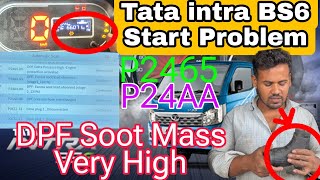
- Tata Intra V10 bs6 pick up low dtc P2465 engine high production activate # regeneration work 👍 done

- DPS, DPF sensor, Differential pressure sensor. pure details me. #BS6_Engine_technology.

- fault code P24A4, P2463, P2000 | particulate filter soot to high | DPF soot high problem | majoka

- Tata Intra Bs6 V10 Starting Problem/Tata intra Bs6 Regeneration/Nahi ho Raha hai/P2465
Conclusion
Bottom line: P2465 means your diesel’s DPF system is struggling with too much backpressure-usually thanks to a clogged filter or a bad sensor. Ignore it, and you’re asking for much bigger (and pricier) trouble. The best move is to start with a detailed inspection of the wiring, sensor, and filter, and only then replace or clean what’s necessary. Don’t drag your feet; acting fast keeps your truck on the road and keeps repair bills from spiraling out of control.
 3756
3756 6 minutes of reading