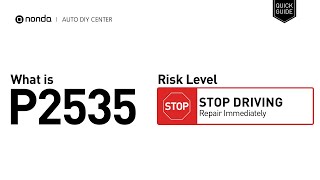
Let me walk you through what the P2535 code really means-straight from someone who’s seen it plenty of times on the shop floor. This one’s all about the ignition switch circuit: the wire path that lets your car’s computer (that’s the PCM, or Powertrain Control Module) know exactly what you’re doing with your key or push-button. Every time you turn that key to start her up or just to run the accessories, the PCM expects a precise signal. If it sees anything out of the ordinary-say, a voltage reading that’s higher than normal or just plain doesn’t match the expected value-it’ll trigger this code. I see this a lot on Cadillacs, Chevrolets, and GMCs. The ignition switch circuit’s whole job is to communicate with the PCM so it can control fuel, spark, and all those other vital systems. Get a bad signal and the computer gets confused, which is when that check engine light decides to join the party.
DTC P2535
 5031
5031 6 minutes of reading
Causes and P2535 Explained
From my time under the hood, the p2535 code usually traces back to a handful of trouble spots. Here’s where I’d start looking, based on what I run into most often and what those factory service bulletins spell out:
- Worn out ignition switch - That’s the part you twist with the key or press with a button. If it’s tired or failing internally, it can throw off the signal to the PCM.
- Damaged, loose, or corroded wires in the ignition switch circuit - These wires take a beating, especially around the steering column where they bend and flex every time you steer or tilt the wheel.
- Bad electrical connections at the switch or its connectors - Sometimes it’s as simple as a bent pin, a corroded terminal, or a connector that’s not fully seated causing havoc.
On rare occasions, you might be dealing with a deeper PCM issue, but nine times out of ten it’s something simple with the switch or wiring. Always start there.
Symptoms Associated with the P2535 Code
If you’re wondering what you’ll actually notice when p2535 pops up, here’s what I’ve seen firsthand:
- The check engine or service engine soon light comes on and stays on. No mystery there.
- Starting the car becomes a hassle-sometimes it won’t crank on the first try, or you have to jiggle the key.
- Oddball electrical issues crop up: maybe your radio won’t turn on right away, or the dash lights act weird when you cycle the key.
But here’s the catch-sometimes, all you get is that warning light. Everything else seems fine, at least for now. Don’t let that lull you into ignoring it.

Diagnosis Steps for the P2535 Engine Code
Let me give you my go-to steps for tracking down a p2535 code:
- I always kick things off with a good, old-fashioned visual inspection. Pull the covers off the steering column and eyeball every inch of wiring going to the ignition switch. Look for broken wires, corrosion, or plugs that aren’t fully seated.
- Give the wiring harness a gentle tug in different spots-sometimes a wire looks fine but is actually broken inside the insulation. Check connections at both the switch and where it meets the main harness.
- Next up, I’ll grab my multimeter and check for voltage at the ignition switch terminals as I turn the key through all its positions. You’re watching for readings that are way off what the service manual calls for.
- If the wiring and connectors check out, I move on to the ignition switch itself. Internally, these do wear out and just stop making reliable contact.
- If I’m still stumped, I’ll use a scan tool to watch the PCM’s input to see if it’s getting the signal it’s supposed to from the ignition switch. Truth be told, though, it’s usually something simple long before you have to start suspecting the computer.
Here’s a pro-tip: have a buddy turn the key while you test-makes it way easier to catch what’s happening in real time.

Common Mistakes When Working With Obd Code P2535
Over the years, I’ve watched folks make the same mistakes with this code:
- Swapping out the ignition switch right away, without checking the wiring or connectors. That’s one way to drain your wallet fast if a simple fix would’ve solved it.
- Missing corrosion or bent pins in connectors-these tiny issues can cause major headaches if you overlook them.
- Trying to fix it without a wiring diagram. You’ll just chase your tail without knowing the circuit layout.
Take your time, start with the basics, and don’t skip the easy stuff. It’ll save you money and frustration every time.

Seriousness of the Dtc P2535 Issue
P2535 isn’t one to shrug off. If the ignition switch circuit isn’t behaving, you could suddenly find yourself stuck with a no-start, or-worse-lose power to vital systems while driving. That’s a risk you just can’t take. I’ve seen neglected wiring faults snowball, frying the PCM or other pricey electronics. That repair bill climbs fast. So, if you spot this code, get on it quick before it turns into a much bigger problem.
Repair Solutions for the P2535 Trouble Code
From my bench to yours, here’s what usually gets a p2535 sorted out, based on what I see in the shop and what the OEM steps lay out:
- Find and fix any damaged wires or connectors in the ignition switch circuit. Sometimes just a little solder and heat-shrink does the trick.
- Clean up and lock down every electrical connection at the ignition switch and its connectors. Even a little wiggle or corrosion can ruin your day.
- If the switch tests bad, swap it out for a brand-new OEM part. Aftermarket can work, but I trust the originals for this job.
- Clear the code, then cycle the ignition a few times and make sure everything’s back to normal before you button it up.
Don’t rush the reassembly-double-check your work. Saves you from having to tear it all apart again if something’s not quite right.
Conclusion
Bottom line? P2535 means your ignition switch circuit has a problem-usually a worn switch, busted wiring, or a loose connector. You’ve got to tackle it head-on, or you risk getting stranded or facing bigger electrical headaches. My advice? Always start with a careful inspection of the wiring and connectors, then move on to the switch itself. Most times, a patient eye and a methodical approach are all it takes to get you back on the road. Don’t ignore this code-the consequences aren’t worth the gamble.