
Causes of obd code P2567
From experience, the most common culprits behind a P2567 code are pretty consistent across brands. Here’s what I usually find:
- A faulty direct ozone catalyst temperature sensor-these can wear out or fail over time.
- The sensor’s wiring is damaged, broken, or shorted-sometimes heat or road debris can do a number on these wires.
- Poor electrical connections-corrosion, loose pins, or connectors that aren’t seated right can all cause trouble.
- In rare cases, the sensor circuit might be completely open (disconnected) or shorted (wires touching where they shouldn’t).
It’s best to start by checking these basics before diving into anything more complicated.
Symptoms of dtc P2567
Whenever this code pops up, the check engine light is usually the first thing staring back at you from the dash. That's your heads-up. Most of the time, you won’t notice anything out of the ordinary while driving-no big changes in how the car feels. However, sometimes the ECM will play it safe and cut engine power to protect that catalyst, so don’t be surprised if you feel a drop in performance. Every now and then, I’ve seen engines run a bit rough or fuel mileage take a dip, but honestly, the main giveaway is that stubborn warning light. It’s your cue that something under the hood needs attention.

Diagnosis of P2567 engine code
Here's how I go about chasing down a P2567 code, step by step:
- First things first, I always start with a good look under the hood. Take the time to inspect the wiring and connectors going to the direct ozone catalyst temperature sensor. Look for cracked insulation, burned wires, or connectors that just don’t seem to fit right. Corrosion or bent pins at the connector? That’s a red flag right there.
- If nothing jumps out at you, grab a scan tool and check for any related codes. I also like to keep an eye on the sensor’s live data. If the temperature reading seems stuck-either sky-high or pegged at the bottom-that’s a big clue you’re onto something.
- Next up, I’ll pull out the multimeter and check the sensor’s resistance against the specs from the manufacturer. If you’re seeing infinite resistance (open) or zero (short), the sensor’s likely toast.
- If the sensor checks out, I move on to the wiring. Test for continuity and shorts between the sensor and the ECM. Sometimes, just wiggling the harness while watching the readings will uncover those sneaky intermittent faults.
- Here’s a tip: have a buddy help out. While one of you moves the harness, the other can watch the scan tool or meter. Makes life a whole lot easier.
Don’t overlook the simple stuff-a loose or dirty connection can be the root of the problem more often than you’d think.
Common mistakes with P2567 trouble code
A classic mistake I see is folks swapping out the sensor right away, without ever checking the wiring or connectors. That’s a quick way to spend money you don’t need to. Another thing that trips people up? Overlooking intermittent wiring issues. If you don’t flex the harness and watch for changes, you might miss a problem that only shows up when the car’s bouncing down the road. Always double-check the basics before you go buying parts you might not need.

Seriousness of P2567 code
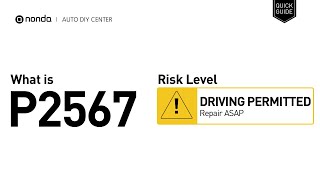
This is one of those codes you don’t want to ignore. Sure, your car might seem fine for a while, but if that sensor’s not working right, the ECM can’t protect the catalyst properly. Next thing you know, the catalyst overheats-and that’s not a cheap fix. Plus, if the ECM decides to limit engine power to save itself, you could find yourself stuck with way less power just when you need it. In short, if you let this ride, you’re gambling with your wallet and your ride’s reliability.
Repair and solutions for P2567
Based on what I see in the shop-and what the factory recommends-here’s what usually gets a P2567 sorted out:
- Fix or replace any damaged wiring or connectors at the direct ozone catalyst temperature sensor. Sometimes all it takes is a few minutes and a fresh piece of wire.
- Clean up and reseat all the electrical connections. Even a little bit of corrosion can throw the readings way off.
- If your sensor fails the resistance test or its readings are stuck, go ahead and replace it with an OEM part. Don’t cheap out here-a quality sensor is worth it.
- Once you’ve done your repairs, clear the code, then take the car for a solid test drive. Make sure that code stays gone.
Very rarely, the ECM itself could be the culprit, but that’s not something I see often. Still, if you’ve checked everything else and you’re still stuck, it’s worth a look.

Conclusion
At the end of the day, P2567 means your car’s emissions system isn’t getting the right info, and that can spell bigger trouble if you ignore it. My advice? Don’t wait. Start with the simple stuff-wiring, connectors, and then the sensor. Nine times out of ten, you’ll find the fix there. Take care of it early, and you’ll save yourself a lot of hassle (and cash) down the line. Trust me, staying ahead of these problems keeps your car running clean and strong.

 4903
4903 6 minutes of reading