
Causes of P2586 Code
From experience, the most common reasons for a P2586 code are pretty straightforward. Most often the issue is a faulty turbocharger boost control position sensor itself. But I’ve also seen plenty of cases where the wiring harness to the sensor is damaged-maybe it’s rubbed through, got pinched, or is corroded. Sometimes, the electrical connector at the sensor gets loose, dirty, or the pins inside get bent or pushed out. In rare cases, the problem can be deeper in the wiring or even a fault in the engine computer, but that’s not where I’d start. Here’s what I usually find:
- Defective turbocharger boost control position sensor
- Open or shorted wiring harness to the sensor
- Poor or corroded electrical connections at the sensor
Symptoms of P2586 Trouble Code
When this code is active, the first thing you’ll probably notice is the check engine light coming on. That’s the car’s way of telling you something’s off. In some cases, you might feel a loss of power, especially when you try to accelerate hard-the turbo might not be working right. Sometimes, the engine can go into a ‘limp’ mode to protect itself, so you might notice it just doesn’t have the get-up-and-go you’re used to. But sometimes, the only sign is that warning light on the dash.

Diagnosis Steps for OBD2 Code P2586
Let me walk you through how I usually handle a P2586 code. First step? I always start with my eyes-do a good visual check. Pop the hood and track down that turbocharger boost control position sensor. If you’re not sure where it hides on your engine, pull out a service manual or search up your make and model. Now, really look at the wiring harness running to the sensor. Any cracked insulation, pinched or chafed wires, or spots where it’s been rubbing? That’s a clue. Don’t overlook the connector-sometimes those little pins get bent, pushed out, or start corroding. A greenish crust or rust is always bad news. I like to unplug the connector (key off, always), inspect the pins, and make sure the connection’s clean and snug. If all that checks out, this is where a multimeter comes in handy-test the voltage and continuity, but only if you’re comfortable poking around with a meter. If the wiring and connector look solid, next up is the sensor itself. Swapping in a known-good one, or following the service manual’s testing steps, will usually tell you if it’s toast. And don’t forget: always clear the code and take the car for a spin before you call the job done. If the code pops back, you missed something.
Common Mistakes When Fixing OBD Code P2586
A classic mistake I see? Folks rush out and buy a new sensor right off the bat, without ever checking the wiring or the connector. That’s a fast way to spend money you didn’t need to. Another one: plugging the connector back in but not making sure it’s fully locked in place-a loose connection will drive you nuts. And here’s a pro-tip from the garage: always look for corrosion inside the connector. It’s easy to miss, but it’ll cause headaches if you overlook it. Skipping the basics turns a simple fix into a wild goose chase every single time.

How Serious is the P2586 Engine Code
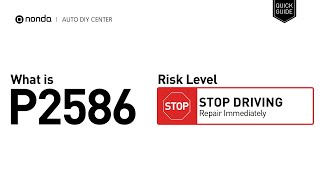
Don’t brush this one off. If your turbo boost control system isn’t working right, you’re flirting with trouble-think low power, higher emissions, and in worst cases, engine damage. I’ve seen engines go downhill fast when the turbo either over-boosts or doesn’t kick in at all. That’s not just an inconvenience; you could end up stranded or facing a fat repair bill for the turbo, engine internals, or even the catalytic converter. My advice? Get on it quick. Waiting will only make things worse-and a lot more expensive.
Repair Solutions for P2586 Code
Most of the time, fixing this isn’t rocket science. You’re usually looking at repairing or replacing damaged wiring, cleaning up or tightening the connector, or swapping out the turbocharger boost control position sensor. I always recommend starting with the simple stuff: check and repair the wiring and connector first. If that doesn’t get it, then it’s time to replace the sensor itself. And here’s something a lot of people forget-clear the code and go for a test drive. If it doesn’t come back, you nailed it. If it does, keep digging.



Conclusion
So there you have it-P2586 means your ECM isn’t seeing what it needs from the turbo boost control position sensor circuit ‘B.’ Left alone, this simple signal problem can snowball into bigger, more expensive headaches. In my years wrenching, the best way to fix it has always been a thorough look at the harness and connector, then replacing the sensor if needed. Don’t drag your feet-sort it now, and you’ll save yourself a lot of grief (and cash) down the road.

 3326
3326 5 minutes of reading