
Common Causes of dtc P2629
Let me break down what usually triggers this code, based on what I see at the shop and what the factory service info lays out:
- Most often, you’re dealing with damaged or corroded wiring or connectors feeding Bank 2 Sensor 1. I can’t count how many times this has been the root of the problem.
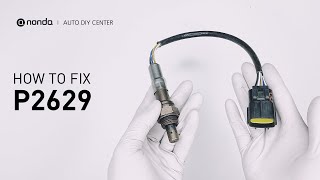
- Sometimes the oxygen sensor itself calls it quits. They do wear out, and internal failures aren’t uncommon as these parts age.
- Every now and then, the engine control module (ECM) acts up, but in my experience, that’s pretty rare compared to the other issues.
- Shorts or opens in the wiring harness can also be to blame-think pinched or broken wires, or even critters chewing through insulation.
When it comes down to it, if you’re seeing this code, odds are it’s a wiring or sensor issue, not the computer itself.
Typical Symptoms of P2629 engine code
When P2629 rears its head, here’s what I usually see-sometimes all, sometimes just one or two:
- The check engine light almost never fails to come on.
- Your engine might start to idle rough, and you may feel it shaking more than usual.
- Gas mileage takes a hit-it’ll start burning more fuel than you’re used to.
- And sometimes, there’s a definite lack of power or a hesitation when you hit the gas.
Honestly, a lot of folks only notice the warning light, but if you let it slide, you’re inviting bigger (and pricier) headaches down the line.

How to Diagnose a P2629 code
Here’s how I go about finding the real culprit behind P2629:
- Start by checking for other trouble codes. Sometimes you’ll find a pattern, and it can lead you right to the source.
- Next step, I pop the hood and give the wiring and connector for Bank 2 Sensor 1 a good visual once-over. Look for anything out of place-frayed wires, crusty connectors, or loose plugs. Pro tip: have a buddy wiggle the harness while you keep an eye on the sensor readings or look for changes.
- If nothing jumps out, I grab the multimeter and check continuity on the sensor’s wiring. If there’s a break, you’ll find it here.
- After that, I’ll test the sensor itself. The factory service manual usually lists a resistance range for the heater circuit-if your reading is off, that sensor’s likely toast.
- If both the wiring and the sensor look good, then-and only then-do I start digging into the ECM, which is hardly ever the problem in these cases.
And don’t forget: once you’ve made a repair, clear that code and take it for a spin. If it stays gone, you nailed it.
Avoiding Common Mistakes with P2629 trouble code
A classic mistake I see all too often: folks tossing in a new oxygen sensor before ever looking at the wiring. That’s an easy way to throw money out the window if the real problem is a chewed or corroded wire. Another slip-up? Skipping steps in the diagnostic process. If you don’t follow the service manual’s procedure, you’re likely to miss what’s really wrong. And here’s something even seasoned techs overlook-always check both ends of the connector. Sometimes, the harness side is the issue, not the sensor itself.

How Serious is obd2 code P2629
Let me be blunt: don’t brush this one off. Sure, your car might limp along, but a busted oxygen sensor circuit can throw the air-fuel mix way off. That means your catalytic converter could take a beating-an expensive part you do not want to replace. You’ll also see your fuel costs creep up and emissions go through the roof. If the engine starts running rough or loses power, things can go downhill fast. My advice? Handle this sooner rather than later to avoid a wallet-emptying repair later on.
How to Repair P2629
Here’s a rundown of what’s worked for me, time and again, when fixing this code:
- First thing, repair or swap out any damaged wiring or connectors going to Bank 2 Sensor 1.
- If the wiring looks solid, your next move is to replace the oxygen sensor with a good OEM-spec unit.
- Once you’ve done the fix, clear the code and take the car for a drive to see if it returns.
- On the rare occasion nothing else works, you might need to check or reflash the ECM, but honestly, I can count on one hand how often that’s been the real issue.
My motto: always start simple-wiring and connectors-before jumping to the sensor or, much less likely, the computer.
Conclusion
Bottom line? P2629 is pointing to a problem with the oxygen sensor’s positive current trim circuit on Bank 2 Sensor 1. This isn’t something to ignore-it’s essential for keeping your engine happy and emissions low. Nine times out of ten, you’re dealing with a wiring fault or a bad sensor, and if you put it off, you risk lousy performance, burning more gas, or wrecking your catalytic converter. The smart move is to check the wiring and connectors first, replace the sensor if you need to, and get it sorted before it snowballs into something worse. Trust me-your car and your wallet will thank you.

 5105
5105 6 minutes of reading