
Causes of P2632 engine code
From my time under the hood, I can tell you that p2632 almost always points back to something electrical in the secondary fuel pump circuit. Here are the main troublemakers I run into:
- An open or short to ground in the FP2PWR circuit-that’s the wire feeding power to the secondary pump.
- An open in the FP2RTN circuit, which is the ground wire for that same pump.
- FP2PWR circuit shorted to battery voltage-this can toast components or confuse the module.
- FP2RTN circuit shorted to voltage, which makes the pump act up.
- A failing or damaged fuel pump module itself.
- A faulty or busted fuel pump control module 2.
- Wiring harness headaches like corrosion, broken pins, or loose connectors.
What I always tell folks: start with the wiring and connectors before throwing money at parts swaps.
Symptoms related to P2632 code
If you’re dealing with a p2632 code, you’ll likely notice at least a few of these classic symptoms:
- The engine turns over but is a bear to start, or might not start up at all.
- Runs rough or stumbles, especially when you’re getting on the gas.
- Stalls out of nowhere, sometimes under load or just at idle.
- Feels gutless, especially at highway speeds or when you need a little extra power.
- The check engine light is glaring at you, naturally.
Sometimes, the problem sneaks up on you, but if the pump quits completely, it’ll leave you stranded in a hurry.

Diagnosis steps for P2632
Let me walk you through how I tackle a p2632 diagnosis in the shop:
- First step? Scan for any other codes-sometimes you get a bonus clue hiding in there.
- Next, I get hands-on with the wiring harness and connectors for the secondary fuel pump and its control module. Look for cooked plastic, green corrosion, or pins that wiggle when they shouldn’t. Having a helper to flex the harness while you watch the scanner can save a lot of time.
- Then I break out the multimeter to check continuity and for shorts in both the FP2PWR and FP2RTN circuits. Make sure neither wire is snapped inside or touching ground/battery where it’s not supposed to.
- After that, eyeball fuel pump control module 2 for water damage, burn marks, or any obvious physical carnage.
- If the wiring and module seem solid, I’ll test the fuel pump module-check its resistance, and if I can, bench run it to see if it actually spins up.
- Don’t overlook the power and ground supplies feeding the control module-sometimes it’s nothing more than a popped fuse or a rusty ground bolt.
My advice? Take it step by step-skipping around is a good way to miss the real cause.
Common Mistakes with P2632 trouble code
A classic mistake I see all the time is folks swapping out the fuel pump right away without even glancing at the wiring or connectors. Nine times out of ten, it’s a sketchy wire or bad plug, not the pump itself. Another thing people skip over is the ground circuit-no solid ground, nothing works right. Don’t forget to check those module connectors for water or corrosion, either; I can’t count how many times that’s been the hidden culprit causing on-again, off-again headaches.

Seriousness of obd code P2632
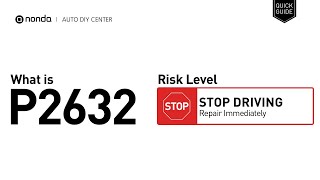
Make no mistake-this isn’t one you want to shrug off. If your fuel pump isn’t doing its job, your engine could shut down out of nowhere-even in the middle of the freeway. That’s not the kind of surprise you want at 70 mph. Plus, running a pump with bad wiring or a flakey control module can fry the pump or the module itself, setting you up for a much bigger repair bill. My advice: get on this fast, before a minor glitch gets ugly.
Repair process for obd2 code P2632
Here’s my go-to process once I’ve nailed down the cause of a p2632:
- Patch up or replace any sketchy wiring or connectors in both the FP2PWR and FP2RTN circuits.
- Clean and tighten every ground connection tied to the fuel pump and control module-don’t cut corners here.
- If diagnostics point to a bad fuel pump control module 2, swap it out.
- If the pump itself isn’t running right (and the wiring/module are good), that’s when you replace the fuel pump module.
- Clear the code, take her for a test drive, and make sure the code stays gone.
Pro-tip from the garage: always stick with OEM parts and proper procedures. Shortcuts just lead to repeat visits.
Conclusion
Bottom line? P2632 means there’s an electrical gremlin in your secondary fuel pump circuit. Ignore it, and you’re rolling the dice on being stranded or facing bigger repairs down the road. The smartest move is to start with a close look at all the wiring and connectors, then move on to the modules and pump if needed. Tackle it methodically and you’ll get your ride back to running strong-and avoid a world of hassle later.

 5413
5413 5 minutes of reading