
Main Causes of obd2 code P2644
From what I’ve seen in the shop, the most frequent culprits for P2644 are pretty consistent across the major brands. Here’s what tends to go wrong most often:
- Faulty engine control module (ECM)
- Faulty transmission control module (TCM)
- Outdated or corrupted software in either the ECM or TCM
- Damaged or broken wiring harness to the ECM
- Electrical circuit issues within the ECM
Most often, it’s a wiring or connector problem, but don’t rule out a module needing a software update or, in rare cases, outright replacement. I recommend starting with the basics before jumping to expensive parts.
Common Symptoms of P2644
When this code is active, the most obvious thing you’ll notice is the check engine light coming on. Sometimes, you might feel rough or delayed shifting, but honestly, a lot of drivers don’t notice anything except that warning light. In some cases, there could be a slight change in how the car accelerates or shifts, but it’s usually pretty subtle unless the problem gets worse.

Diagnosis Steps for P2644 trouble code
Here’s how I usually tackle P2644, step by step:
- First, I scan the vehicle for any other trouble codes. Sometimes, there are related codes that help narrow down the issue.
- Next, I visually inspect the wiring harnesses and connectors going to the ECM and TCM. Look for broken, bent, pushed-out, or corroded pins. It’s better to have someone assist you with moving wires while you check for looseness.
- After that, I check for any signs of water intrusion or physical damage around the modules themselves.
- Then, I test the circuits with a multimeter to make sure there’s proper voltage and continuity.
- If everything looks good physically, I check for available software updates for both the ECM and TCM. Sometimes, a reflash solves the problem.
- If none of these steps find the issue, I’ll consider testing or replacing the ECM or TCM, but only after ruling out simpler causes.
Don’t forget to check the basics before moving on to expensive repairs. A lot of problems come down to a loose connector or a pin that’s just not making good contact.
Avoiding Common Mistakes with P2644 code
I’ve seen folks jump straight to replacing the ECM or TCM without checking the wiring first, and that’s a surefire way to waste money. Another common mistake is ignoring software updates-sometimes, the fix is just a reflash. Skipping the visual inspection of connectors and harnesses is another big one. Honestly, it’s dangerous to ignore the basics, because you might miss a simple fix and end up chasing your tail.

The Seriousness of P2644 engine code
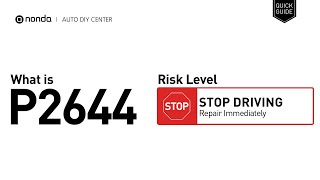
This isn’t something you want to put off for later. While the car might seem to run okay at first, ignoring this code can lead to rough shifting, transmission wear, and even engine performance issues over time. Things can go south quickly if overlooked, especially if the underlying problem is electrical and starts affecting other systems. You don’t want this kind of trouble on the road, and it can get expensive if it leads to transmission or engine damage. Parts at risk include the transmission itself, the ECM, TCM, and wiring harnesses.
How to Repair dtc P2644
Here’s what usually fixes P2644, based on verified repair cases:
- Repair or replace damaged wiring or connectors at the ECM or TCM
- Update the software on the ECM and TCM
- Replace the ECM or TCM if they’re confirmed faulty after all other checks
- Clean and secure all electrical connections to prevent future issues
It’s best to start with something simple, like checking and cleaning connectors, before moving on to module replacement.
Conclusion
To sum it up, P2644 means there’s a hiccup in the communication between your engine and transmission, usually related to torque management during shifting. It’s important to diagnose this promptly, starting with wiring and software checks, because the risks just aren’t worth it-transmission and engine damage can get costly fast. The most reliable way to resolve it is to follow a step-by-step diagnostic process, starting simple and only replacing expensive parts if absolutely necessary. Don’t ignore that warning light; get it checked out soon for peace of mind and safe driving.

 4872
4872 5 minutes of reading