
Causes of dtc P2670
From experience, the most common reasons for seeing a p2670 code are usually related to electrical faults. Here’s what I’ve seen most often:
- Wiring harness damage-like chafed, pinched, or melted wires causing a short to ground.
- Corroded or loose connectors at the control module or at the affected component.
- A failed or internally shorted actuator or solenoid that’s powered by this circuit.
- Faulty control module output driver (the part inside the computer that sends power out).
- Water intrusion in connectors or the module itself.
In cases like this, it’s usually a wiring issue, but I’ve also seen bad components and, less commonly, a failed controller.
Symptoms and obd code P2670
When this code is active, you might notice a few things. Most often, the check engine light will come on. Depending on what the circuit controls, you could also have rough running, loss of certain functions (like shifting issues if it’s transmission-related), or even stalling. Sometimes, you won’t feel anything different, but that doesn’t mean it’s safe to ignore. If you notice any odd behavior-like warning lights, odd shifting, or the engine not running smoothly-this code could be the culprit.

Diagnosis for P2670 engine code
Here’s how I usually approach diagnosing a p2670 code, step by step:
- First, I check for any other codes that might be related. Sometimes, another code can point you right to the problem.
- Next, I visually inspect the wiring and connectors for the Shared High Side Drive #2 circuit. Look for any obvious damage-burnt spots, pinched wires, corrosion, or loose pins. It’s better to have someone wiggle the harness while you watch for changes.
- Then, I use a multimeter to check for continuity to ground on the suspect wire. If you see a short, that’s a big clue.
- Don’t forget to disconnect the affected actuator or solenoid and check if the short goes away. If it does, the component itself may be bad.
- If the wiring and component check out, I’ll move on to testing the control module’s output. This is a bit more advanced, but sometimes the module itself is at fault.
- Finally, I clear the code and see if it returns after repairs. That’s a good way to confirm you’ve fixed the real issue.
It’s best to start with the simple stuff-wiring and connectors-before jumping to expensive parts.
Common Mistakes with P2670 code
I’ve seen a few mistakes pop up with this code. One is replacing the actuator or solenoid right away without checking the wiring first. Another is overlooking corrosion or water in the connectors-sometimes it’s hidden and easy to miss. People also sometimes skip checking for related codes that could point to the root cause. Rushing to replace the control module is another big one; that’s rarely the problem and can get expensive fast. Always take your time with the basics before moving on.

Seriousness of obd2 code P2670
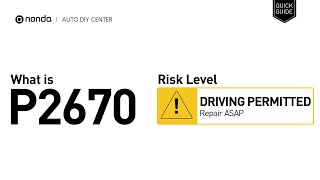
This isn’t something you want to put off. A short to ground in a high side driver circuit can cause loss of critical functions-like shifting, fuel delivery, or emissions controls-depending on what’s powered by this circuit. Honestly, it’s dangerous to ignore this, because things can go south quickly if the wrong system loses power. You could end up stranded, or worse, cause damage to the control module, wiring harness, or connected components. The risks just aren’t worth it.
Repair process for P2670 trouble code
Here’s what I personally recommend for fixing a p2670 code, based on what’s worked in the shop:
- Repair or replace any damaged wiring or connectors you find. Make sure to use proper weatherproofing if you’re working in an area prone to moisture.
- If an actuator or solenoid is shorted, replace it with an OEM part.
- Clean and secure all connectors-sometimes just reseating them can fix the issue.
- If all else fails and the control module output is bad, replacing or repairing the module may be necessary, but that’s the last resort.
Always clear the code and test drive the vehicle to make sure the repair holds up.

Conclusion
P2670 means there’s a low voltage problem in the Shared High Side Drive #2 circuit, usually caused by a short to ground. This can affect important systems and isn’t something to ignore. I recommend starting with a careful inspection of the wiring and connectors, then checking the component itself, and only moving to the control module if everything else checks out. The risk of further damage or getting stranded is real, so don’t put this off for later. The most reliable fix is to track down and repair the root cause, starting with the basics and working your way up.

 4715
4715 5 minutes of reading