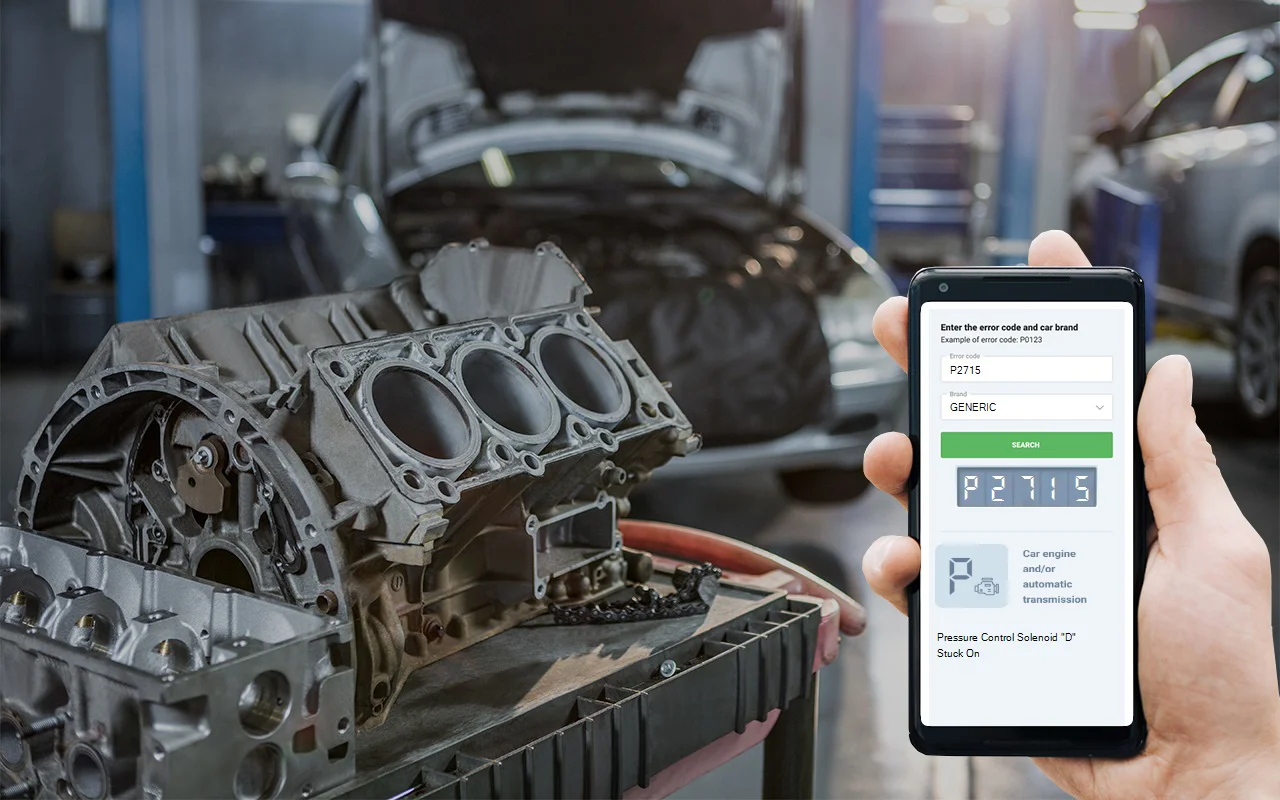
Let me break down what code P2715 means for you. This code stands for “Pressure Control Solenoid ‘D’ Stuck On.” In plain English, your car’s computer (either the PCM or TCM) is keeping tabs on the transmission’s pressure control solenoids. These solenoids are like tiny valves that help manage the flow of transmission fluid, which is crucial for shifting gears smoothly. Solenoid “D” is just one of several in your transmission, and when it’s ‘stuck on,’ it means it’s not responding the way the computer expects. The system relies on these solenoids to apply the right pressure to the clutch packs, so when one gets stuck, it can throw off the whole shifting process. This code can pop up in any vehicle with an automatic transmission that uses multiple pressure control solenoids, and it’s the computer’s way of telling you something’s not right with how your transmission is managing pressure.
DTC P2715
 5195
5195 6 minutes of reading
Causes of P2715
From my experience working in the shop, there are a handful of usual suspects when it comes to p2715. Most often the issue is with the pressure control solenoid itself-it can wear out or get stuck due to debris. But I’ve also seen cases where dirty or contaminated transmission fluid gums up the works, or a blocked transmission filter restricts fluid flow. Sometimes, the problem goes deeper: a faulty transmission pump, a bad valve body, or even constrained hydraulic passages can trigger this code. Don’t overlook the electrical side either-corroded connectors, damaged wiring, or even a failing PCM can be the culprit. And in rare cases, internal transmission failure is to blame.
- Bad pressure control solenoid
- Dirty or contaminated transmission fluid
- Dirty or blocked transmission filter
- Faulty transmission pump
- Faulty transmission valve body
- Constrained hydraulic passages
- Corroded or damaged connector
- Bad or damaged wiring
- Internal transmission failure
- Bad PCM
Symptoms of P2715 trouble code
If you’re driving around with this code active, you’ll probably notice a few things right away. The check engine light is almost always the first sign-it’s your car’s way of saying, “Hey, something’s up!” In cases like this, it’s usually followed by the transmission going into limp mode, which means your car won’t shift gears properly and might feel sluggish. You might also feel the transmission slipping out of gear during shifts, or notice it overheating if you keep driving. Poor fuel economy can sneak up on you too, since the transmission isn’t working efficiently.
- Check engine light illuminated
- Transmission in limp mode
- Slipping out of gear during shifting
- Overheated transmission
- Poor fuel economy

Diagnosis with obd2 code P2715
Here’s how I usually tackle a obd renault, ford, toyota, chevrolet, volkswagen, bmw, kia, hyundai code in the shop. First, I recommend starting with the basics: check your transmission fluid level and condition. If it’s low, dirty, or smells burnt, that’s a red flag. Next, inspect the transmission filter-if it’s clogged or dirty, it can restrict fluid flow and cause solenoid issues. After that, I move on to the electrical connections. Make sure all connectors to the transmission are clean, tight, and free of corrosion. Don’t forget to check the wiring for any signs of damage or wear. If everything looks good so far, I’ll use a scan tool to monitor the solenoid’s operation and see if it’s responding as it should. Sometimes, it’s necessary to remove the transmission pan and physically inspect the solenoids and valve body for debris or sticking. If you’re comfortable with it, you can test the solenoid’s resistance with a multimeter-compare it to the specs in your repair manual. It’s better to have someone assist you if you’re not used to working under the car, and always double-check before moving on to deeper transmission work.
Common Mistakes when fixing P2715 code
Honestly, one of the biggest mistakes I see is jumping straight to replacing the solenoid without checking the fluid or filter first. Another common slip-up is overlooking the wiring and connectors-sometimes it’s just a corroded plug causing all the trouble. People also tend to skip the step of checking for transmission codes beyond p2715, which can give you more clues. And I’ve heard of folks replacing expensive parts like the valve body or even the transmission itself without confirming the solenoid is actually stuck. Don’t make these mistakes; take it step by step and rule out the simple stuff first.

Seriousness of obd code P2715
This is a serious hazard, and I can’t stress enough how important it is to act quickly. If you ignore this code, you risk damaging your transmission-overheating can ruin clutch packs, solenoids, and even the valve body. Things can go south quickly if overlooked, and you don’t want this kind of trouble on the road. Driving in limp mode is not only frustrating, but it can also leave you stranded or cause further internal damage. The risks just aren’t worth it, so don’t put this off for later.
Repair process for dtc P2715
Here’s what I personally recommend for fixing dtc kia, bmw, toyota, ford, renault, chevrolet, hyundai, volkswagen. Start by replacing the transmission fluid and filter if they’re dirty or contaminated-sometimes that’s all it takes. If the solenoid “D” is confirmed to be faulty, swap it out with a new OEM part. Make sure to inspect and clean all electrical connectors and repair any damaged wiring. If the problem persists, you may need to check the transmission pump and valve body for issues, and in rare cases, address internal transmission failure. Always refer to your vehicle’s repair manual for the exact location and specs of solenoid “D.”
Conclusion
To sum it up, P2715 means your transmission’s pressure control solenoid “D” is stuck on, and that’s bad news for smooth shifting and overall reliability. This is a high-priority issue-don’t wait to diagnose it. The most reliable path is to start with simple checks like fluid and filter, then move on to the solenoid and electrical connections. If you follow the step-by-step process and use OEM parts, you’ll get your transmission back in shape and avoid costly damage down the line.