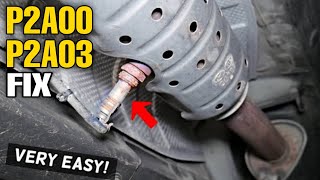
When you see the P2A03 code pop up, your car’s computer is basically telling you that something’s gone sideways with the upstream oxygen sensor circuit on Bank 2. If you’re wondering, that’s the side of your engine where cylinder number 2 lives. This sensor-Bank 2 Sensor 1-sits right before the catalytic converter and keeps tabs on how much oxygen is passing through your exhaust. From my time under the hood, I know the ECM leans on this sensor to make constant tweaks to your air-fuel mix, making sure your engine runs smooth and keeps emissions in check. If the sensor gets lazy, stops cycling like it should, or sends weird signals, the computer throws the P2A03 code. In plain English, this is your vehicle’s way of saying, “Hey, I can’t trust what I’m reading from the exhaust, so something’s not right.” You want to take this seriously if you care about keeping your engine healthy and running efficiently.
DTC P2A03
 5243
5243 6 minutes of reading
Causes of P2A03 engine code
From experience, the most common culprit for a p2a03 is a failing or worn-out O2 sensor on Bank 2, Sensor 1. But that’s not the only thing that can trip this code. Here’s what I usually see:
- Malfunctioning O2 sensor (Bank 2 Sensor 1) - this is the top suspect.
- Wiring or connector issues-sometimes a loose, corroded, or damaged wire can cause bad readings.
- Engine misfires-if the engine isn’t running smoothly, the sensor can’t do its job right.
- Vacuum leaks-extra air sneaking into the engine can throw off the sensor’s readings.
- Problems with the mass air flow (MAF) sensor or manifold absolute pressure (MAP) sensor-these can mess with the air-fuel mix and confuse the O2 sensor.
- Exhaust leaks before the sensor-if exhaust is escaping, the sensor won’t measure things correctly.
Most often, it’s the sensor itself, but I always check the wiring and for any signs of leaks or misfires before calling it done.
Symptoms associated with P2A03 code
When this code is active, you’ll probably notice a few things. The check engine light will almost always come on-that’s your first clue. You might also see your fuel mileage drop, meaning you’re stopping at the pump more often. Some folks notice the engine feels a bit rough or doesn’t have the same get-up-and-go as before. In some cases, you might not feel much at all, but that light on the dash is your warning that something’s not right under the hood.

Diagnosis steps for obd2 code P2A03
Let me walk you through how I tackle a dtc p2a03 nissan, step by step. My rule? Start simple. I always pop the hood and check the wiring and connector at Bank 2 Sensor 1. Look close for any busted, corroded, or loose connections-sometimes, just reseating a connector is all it takes. Next up, I listen for vacuum leaks around the intake; a faint hissing or a cracked hose can play havoc with sensor readings. Before getting too deep, I scan for any other codes, especially misfires, since a rough engine can fool the O2 sensor. If that’s all clear, I fire up the scan tool and watch the O2 sensor’s live data. Its voltage should bounce up and down as the engine runs; if it’s stuck or barely moves, the sensor’s likely toast. If you’ve got a multimeter and know your way around one, check the sensor’s heater circuit resistance-bad heaters mean bad sensors. I never forget to inspect for exhaust leaks ahead of the sensor, either. Even a tiny leak can throw everything off. If all these checks don’t turn up anything obvious, replacing the O2 sensor is usually the fix that gets things back on track.

Common Mistakes during dtc P2A03 troubleshooting
A classic mistake I see is folks jumping straight to swapping the O2 sensor without checking the basics first-like wiring or vacuum leaks. That can cost you money and time if the problem’s just a loose plug or a split hose. Another thing I’ve noticed is people confusing which sensor to replace. Double-check you’re working on Bank 2, Sensor 1-not the downstream sensor or the other bank. Skipping a misfire check or ignoring other codes is another way to waste hours. Take it from me: slow down, rule out the easy stuff, and don’t just throw parts at the problem.

Seriousness of P2A03 trouble code
Trust me, this isn’t the kind of code you want to ignore. Sure, your car might still start and run, but a faulty O2 sensor can kill your gas mileage, make your engine run rough, and if ignored too long, damage your catalytic converter. And that’s a wallet-buster you really don’t want to replace. You’ll also pollute more, and if you live somewhere with emissions testing, your car probably won’t pass. Problems can snowball fast with this one, so I always tell people to get it fixed sooner rather than later.
Repair solutions for obd code P2A03
Here’s what usually fixes a P2A03 code, based on what I see in the shop and the official repair guides:
- Replace the faulty O2 sensor (Bank 2 Sensor 1) if it’s not sending the right signals.
- Repair or replace any damaged wiring or connectors going to the sensor.
- Fix any vacuum leaks in the intake system.
- Address engine misfires-this might mean new spark plugs, coils, or injectors.
- Repair exhaust leaks before the sensor.
- If the mass air flow or MAP sensor is faulty, replace or clean it as needed.
It’s best to start with the simplest fixes and work your way up. Always clear the code and test drive the vehicle to make sure it doesn’t come back.
Conclusion
So, what’s the bottom line? P2A03 means your car’s computer isn’t happy with the readings from the upstream O2 sensor on Bank 2. Most of the time it’s a sensor issue, but don’t overlook wiring, leaks, or engine misfires. Letting this go can cost you in wasted gas and expensive repairs down the road. The smart move is to start with a careful checkup-don’t just swap parts blindly. That’s how you keep your ride running right and avoid bigger headaches in the future.