
Causes of dtc U029D
From what I’ve seen in the shop and what the official manuals say, the most common reasons for a u029d code are:
- Faulty NOx Sensor A itself (the sensor has failed or is malfunctioning)
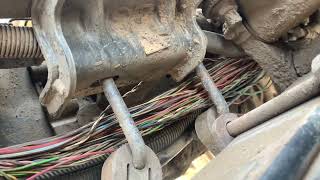
- Wiring issues-damaged, corroded, or loose connectors between the sensor and the main computer
- Problems with the power or ground supply to the NOx sensor
- Issues with the CAN bus network (the communication wiring that lets modules talk to each other)
- Less commonly, a problem with the main computer (PCM/ECM) itself
Most often, the issue is with the sensor or its wiring, but I’ve seen cases where a simple loose connector was the culprit. This error can also happen on car brands like Ford and Renault.
Symptoms of U029D trouble code
If you’re driving with this code active, here’s what you might notice:
- Check Engine Light will almost always be on
- Sometimes, you’ll see warning messages about the emissions system or DEF (Diesel Exhaust Fluid) system
- Possible reduction in engine power or the car going into ‘limp’ mode to protect itself
- Increased exhaust emissions-sometimes you’ll smell more exhaust or notice the vehicle running rougher
From experience, the most obvious sign is the warning light, but don’t ignore any changes in how the car drives. The symptom can be linked to sa 16 dtc u029d00 on some models.

Diagnosis process for obd2 code U029D
Here’s how I tackle a obd2 code u029d, step by step:
- First, I always start by checking the basics-look at the NOx sensor and its wiring. Make sure the connector is fully seated and not corroded or damaged. It’s best to have someone wiggle the harness while you watch for any changes.
- Next, I check for any blown fuses related to the emissions or sensor circuits. It’s easy to overlook, but a blown fuse can kill communication.
- Then, I use a scan tool to see if I can communicate with the NOx sensor module. If the scan tool can’t ‘see’ the sensor, that’s a big clue the sensor or wiring is at fault.
- After that, I inspect the wiring harness for any signs of rubbing, pinching, or rodent damage. Pay close attention to areas where the harness bends or is close to hot engine parts.
- If everything looks good, I’ll check the power and ground at the sensor connector using a multimeter. No power or ground means the sensor can’t work, no matter how new it is.
- If all those checks pass, I’ll look at the CAN bus wiring for continuity and shorts. This is a bit more advanced, but sometimes the communication line itself is the problem.
I recommend starting with the simple stuff-visual checks and fuses-before diving into the more technical tests. Some drivers may also notice a u029d issue flagged by their diagnostic tool as u029d00.
Common Mistakes when resolving U029D code
I’ve seen a few common mistakes when folks try to fix this code:
- Replacing the NOx sensor right away without checking the wiring or fuses-sometimes it’s just a bad connection
- Overlooking corrosion or water intrusion in the connectors, especially if the vehicle’s been through a lot of rain or snow
- Not checking for related codes that might point to a bigger network or power issue
- Skipping the step of checking power and ground at the sensor-without these, the sensor can’t communicate at all
It’s easy to jump to conclusions, but taking the time to check the basics can save a lot of money and headaches. In rare cases, issues are related to dtc u029d00 appearing on the scan tool.

Seriousness of obd code U029D
This is something you don’t want to ignore. When the car can’t communicate with the NOx sensor, it can’t properly control emissions. That can lead to higher pollution, but more importantly, it can trigger limp mode or even cause the engine to derate-meaning you lose power, sometimes at the worst possible moment. If left unchecked, you risk damaging the catalytic converter, SCR system, or even the engine itself due to improper emissions control. Honestly, it’s dangerous to put this off, especially if you rely on your vehicle for work or long trips. The appearance of u029d as a detected code should be taken seriously to avoid costly repairs.
Repair steps for U029D
Here’s what usually fixes a u029d code, based on what I see in the field and the official repair guides:
- Repair or replace any damaged wiring or connectors going to the NOx sensor
- Replace the NOx sensor A if it’s confirmed faulty
- Clean and secure all electrical connections-sometimes a simple cleaning does the trick
- Replace any blown fuses related to the sensor circuit
- In rare cases, repair or replace the CAN bus wiring if there’s a communication fault
- If all else fails, and only after everything else checks out, consider a problem with the main computer (PCM/ECM)
It’s best to start with the least invasive repairs and work your way up. In some instances, the presence of u029d as an error may require professional diagnostics.



Conclusion
To sum it up, U029D means your car’s computer has lost touch with the NOx Sensor A, which is crucial for keeping emissions in check. This isn’t something to put off-ignoring it can lead to bigger, more expensive problems and even put your safety at risk. The most reliable way to fix it is to start with a careful inspection of the wiring and connections, check the fuses, and only replace the sensor if you’re sure it’s bad. Acting quickly and methodically is the best way to keep your car running clean and safe.

 4120
4120 6 minutes of reading