
Causes of OBD P007E
When I'm tracing P007E Audi A3 Sportback faults on the 1.4 L engine, the connector and wiring are where I start. A signal that comes and goes often points to a connection that can't stay steady. The usual suspects are:
- A loose connector latch, corroded contact, or terminal that no longer grips properly.
- Wiring rubbed through against a nearby bracket, heat-damaged insulation, or a conductor partly broken inside its insulation.
- A temperature sensor that drops its signal or gives an unstable reading.
- A poor connection, open circuit, or short in the sensor's supply, signal, or ground wiring, depending on the circuit layout.
A cooler that isn't removing enough heat is a different problem from a temperature signal that cuts out. Keeping those two faults separate can save you a sizeable parts bill.
Symptoms of Fault Code P007E
The Audi P007E code can switch on the engine warning light without making the car feel any different. That's common with intermittent electrical trouble: the connection may recover before you notice anything from the driver's seat.
You might also feel reduced power or acceleration that isn't as consistent as usual if the computer limits engine operation because it can't trust the temperature reading. Not every car will do that. What I want to know is when it happens - during warm-up, after a hot restart, over bumps, or when you accelerate. Those details give me something useful to reproduce in the workshop.

Diagnosis of Trouble Code P007E
So, how do I track down a signal that won't misbehave on demand? I work through the basics, then watch what happens as the wiring and sensor are checked.
- Read every stored fault and save the freeze-frame data before clearing anything. Other sensor or supply-circuit codes can point toward a shared electrical problem.
- Use the VIN and exact engine version to find the correct service information, sensor location, wiring diagram, terminal assignments, and test specifications.
- With the engine off and cool, inspect the connector and accessible harness. Check the latch, seals, contacts, terminal fit, and any wiring touching brackets or other components.
- Check live temperature data after the car has cooled thoroughly. Compare it with ambient conditions and other relevant temperature readings, allowing for any remaining engine heat. You're checking whether the reading makes sense, not demanding identical numbers.
- With the car stationary, gently move the safely accessible connector and harness while monitoring live data. A helper watching the screen makes a brief dropout easier to catch. Keep clear of hot surfaces and moving parts, and don't tug on the wires.
- Test the supply, ground, and signal circuits as specified for that engine. Use proper back-probing equipment so you don't spread or damage the terminals. Check for opens, shorts, and poor connections; monitoring the circuit while gently moving the harness can reveal an intermittent break.
- Check the sensor's response against the specified temperature-dependent values. Let those results establish whether the sensor itself is the problem.
A sudden jump on the screen when one section of harness moves is a useful clue. I then narrow the check to that section rather than disturbing the whole loom.
Common Mistakes When Troubleshooting P007E
A classic rookie mistake is reading a component's name in a fault description and treating it as a shopping list. The code identifies the circuit that's causing concern; it doesn't condemn every part attached to it.
- Ordering a charge-air cooler simply because the code mentions it.
- Calling the fault fixed because one live-data reading looks normal. An intermittent connection can behave perfectly while you're watching.
- Using generic resistance figures instead of the specifications for the installed sensor.
- Confusing the charge-air temperature sensor with another intake-temperature sensor nearby.
- Assuming an intact outer wire covering proves the conductor inside is sound.
What I always tell people is simple: a plausible guess still isn't a diagnosis. These mistakes can leave you with new parts and the same warning light.

Seriousness of Code P007E
The Audi trouble code P007E needs timely attention, but it doesn't, by itself, mean the engine is about to suffer damage. The immediate problem is unreliable temperature information, with reduced performance a possible result. Losing acceleration while joining traffic or overtaking is the concern I'd take seriously.
If power drops noticeably, avoid hard acceleration and arrange a prompt assessment. Pull over safely if additional warnings or severe running problems appear. This code alone doesn't establish damage to the turbocharger, cooler, or engine; a separate overheating or boost fault needs its own diagnosis.
Repair Options for DTC P007E
My repair for the P007E engine code Audi vehicles display depends on what the checks actually uncover. There's no single part that fixes every case. The work may involve:
- Restoring a secure connector connection and repairing damaged terminals or seals with the correct repair components.
- Repairing or replacing damaged wiring, then routing and securing it clear of heat and rubbing points.
- Replacing a sensor whose electrical response fails the specified tests.
- Correcting a confirmed supply, signal, or ground-circuit problem.
After the repair, I clear the fault memory, monitor the temperature signal, and carry out a controlled verification drive when it's safe. The check needs to include the conditions that brought the fault on before. A light that stays off for five minutes isn't the whole story - the reading needs to stay steady, too.


Conclusion
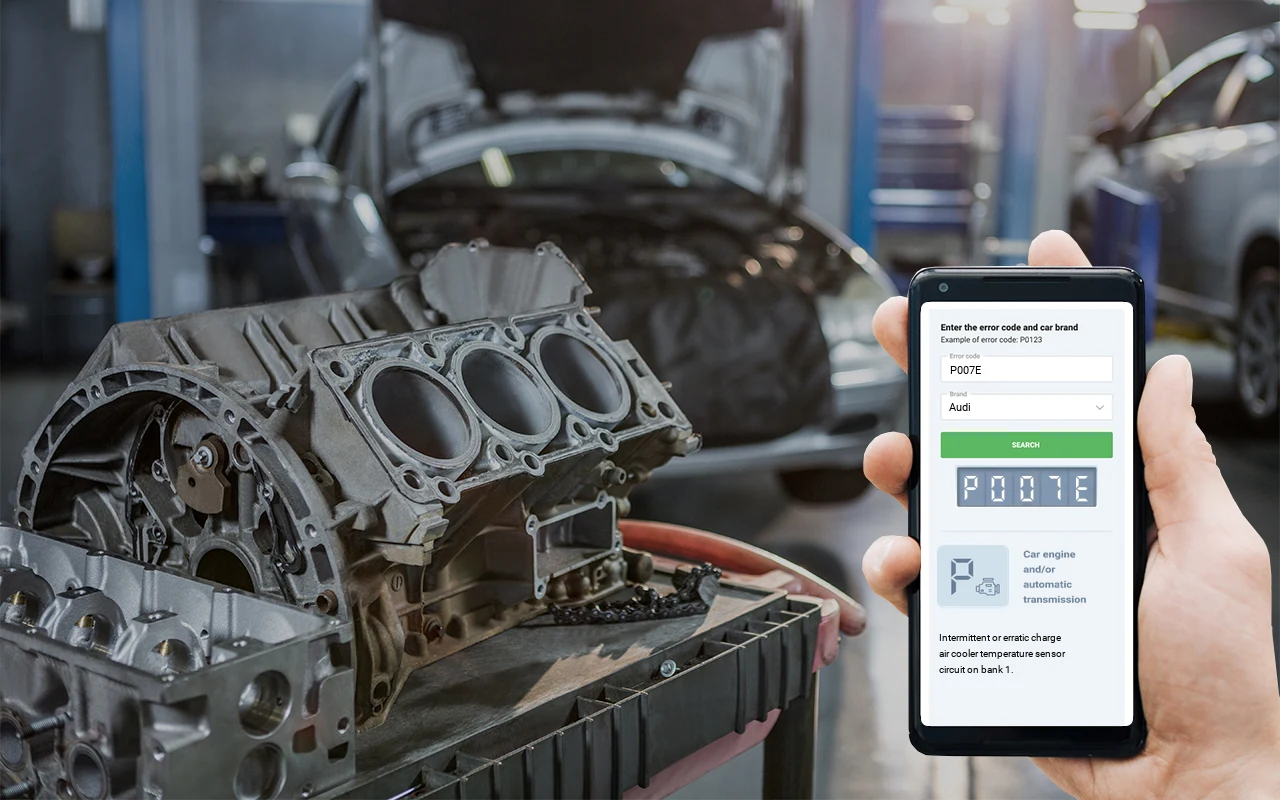
P007E is an intermittent bank 1 charge-air cooler temperature sensor circuit fault, not an automatic verdict on the cooler or engine. The problem may be a poor connection, damaged wiring, or a sensor that loses its signal. I approach it as an electrical fault to pin down, not a reason to start replacing expensive hardware. Finding the actual break in the signal is what gets you a dependable repair.
 1178
 6 minutes of reading