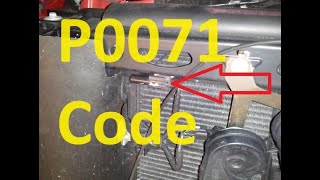
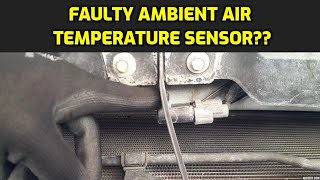
When you see a P0071 code pop up, it’s your car’s computer telling you there’s a problem with the Ambient Air Temperature (AAT) sensor or the wiring connected to it. This little sensor sits out front, measuring the temperature of the air outside your ride, then sends that information back to the computer. Your vehicle uses this data for things like keeping the air conditioning blowing cold and showing you the outside temp on your dash. From what I’ve seen, the computer likes to double-check the AAT sensor’s reading against the Intake Air Temperature (IAT) and Engine Coolant Temperature (ECT) sensors-especially after your car’s been parked awhile and everything should have cooled off to the same temperature. If the AAT sensor’s reading doesn’t line up with the others, that’s when you get the P0071 code. Most cars rely on this sensor more for climate control than engine performance, but it still plays a vital role in the system.
DTC P0071
 3974
3974 6 minutes of reading
Causes of P0071
From what I see most often in the shop, the main culprits behind a P0071 code are:
- A bad or failing ambient air temperature sensor - this is the most common issue.
- Wiring problems, like broken wires, poor connections, or corrosion in the sensor’s circuit. Sometimes the wires get pinched, shorted to ground, or even shorted to voltage.
- High resistance in the sensor ground or signal wires.
- Very rarely, a problem with the vehicle’s computer (PCM) itself.
In my experience, it’s usually the sensor or the wiring, not the computer. But it’s important to check everything to be sure.
Symptoms of dtc P0071
If you’ve got a P0071 stored, here are the telltale signs I usually spot:
- The check engine light or malfunction indicator light flips on.
- Your air conditioning may act up-especially if you have automatic climate control, you might notice it’s not cooling you off like it should.
- The outside temperature reading on your dash or overhead console is either way off or missing completely.
Sometimes, the only thing you’ll notice is the pesky warning light. But if your A/C’s not working right or that outside temp display seems fishy, this code is high on my list of suspects. I’ve run into this issue plenty on Fords, Renaults, Volkswagens, and a bunch of other brands-no one’s immune.

Diagnosis with the P0071 engine code
When I’m tracking down a P0071, here’s my usual workflow:
- Grab a scan tool and pull up the live data for the AAT, IAT, and ECT sensors. I always let the car sit for a few hours so everything’s at the same starting temp. All three readings should be nearly identical-if the AAT is way out of line, you’ve found a clue.
- Next, I go hands-on and inspect the sensor and its wiring. I’m looking for stuff like cracked insulation, loose plugs, or corrosion. Don’t overlook the simple wiggle test-a bad connection will often reveal itself with just a little movement.
- If nothing jumps out, I break out the multimeter to check resistance across the sensor and check voltage at the connector. Always compare your readings to the specs in the service manual. If the numbers don’t add up, you’re probably looking at a bad sensor.
- I also test the wiring for continuity and make sure there’s no short to ground or power. Here’s a pro tip: have someone move the harness while you’re watching the meter-those sneaky intermittent faults can show up only when the wires are flexed.
- If I’ve checked all that and still no luck, I’ll start considering the PCM as a last resort. But honestly, it’s almost never the computer unless you’ve had water intrusion or a history of electrical gremlins.
One more thing-don’t forget to check for Technical Service Bulletins (TSBs) for your make and model. Some vehicles have known issues or updated fixes for this exact problem.

Common Mistakes with obd2 code P0071
Let me save you some time by pointing out the mistakes I see folks make with this code:
- Going straight to swapping out the sensor without checking the wiring or connectors first. Nine times out of ten, it’s just a crusty connector or a pinched wire causing grief.
- Skipping the comparison of all three temperature sensors after a full cool-down. If you don’t check them together, you’re missing a big piece of the puzzle about which sensor is at fault.
- Overlooking the wiring harness altogether, especially if you’ve already put in a new sensor and the code keeps coming back. Don’t fall into the trap of assuming new parts mean the problem’s solved.
My advice? Take your time, check the simple stuff first, and don’t throw money at parts until you’re sure you need them.

Seriousness of the P0071 trouble code
Look, P0071 isn’t about to leave you stranded on the side of the road, but ignoring it isn’t a good move either. If your air conditioning stops working right, driving can go from uncomfortable to downright dangerous in serious heat or cold. Plus, a flaky sensor can trip up other systems that rely on solid temperature data. I’ve seen cases where letting a sensor fault fester ends up frying instrument clusters or climate control modules-repairs you definitely want to avoid. Bottom line: don’t brush this off. What starts as a simple sensor or wiring issue can snowball into much bigger headaches if you let it slide.
Repair advice for the P0071 code
Here’s my go-to fix-it list for a P0071:
- If the sensor’s readings are off or it’s out of spec, swap it out for a new one.
- Repair or replace any busted wires or corroded connectors you find in the circuit. Clean those terminals until they shine.
- Once repairs are done, clear the code and give the car a thorough test drive to make sure the problem’s gone for good.
- In the rare event you’ve ruled out the sensor and wiring, you might have to reflash or replace the PCM, but honestly, that’s a last-ditch move. I’ve only seen it come to that a handful of times.
Start simple-sensor and wiring are almost always where the trouble’s hiding.
Conclusion
Bottom line, P0071 means your car’s computer isn’t buying the story your outside air temp sensor is telling. Usually, it’s a bum sensor or a wiring hiccup. While it won’t leave you stuck, it can mess with your comfort and even lead to costlier repairs if ignored. My advice? Start with a close inspection of the sensor and its wiring, double-check all the temperature sensor readings, and don’t jump to expensive repairs unless you’ve ruled out the basics. Stay on top of it, and you’ll keep your car’s climate control and temp displays working just like they should.