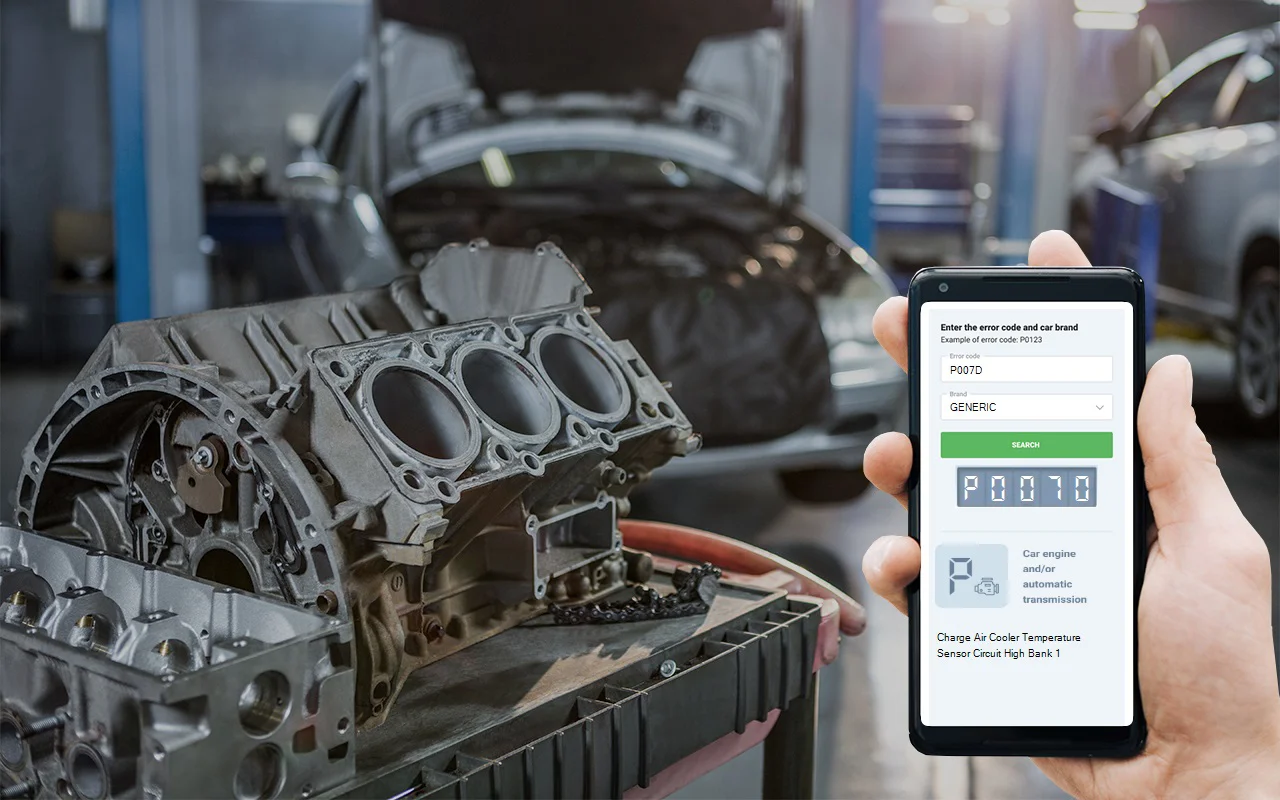
When you see code P007D show up, it means your car’s computer-what we call the PCM-has picked up on an issue with the charge air cooler temperature sensor circuit. Specifically, it’s telling you that the signal it’s getting from Bank 1 is out of range, or maybe the circuit is wide open. I’ve dealt with plenty of these over the years. This sensor, often called the CACT, is the one that keeps a close eye on the temperature of the air after it leaves the intercooler. Remember, the intercooler’s job is to chill the air from your turbo before it hits the engine, making it denser so your engine can breathe better, run stronger, and burn fuel more efficiently. The PCM depends on this sensor’s readings to tweak things like fuel delivery and boost pressure, all to keep your engine humming along smoothly. If the sensor goes bad or the wiring gives up, the computer can’t trust what it’s hearing, and that’s when you get the P007D code flashing at you. That’s your cue that something under the hood needs your attention-sooner rather than later.
DTC P007D
 5010
5010 6 minutes of reading
Causes and P007D Troubles
From experience, the most common reasons I see for a P007D code are:
- A faulty charge air cooler temperature sensor (CACT) itself-these sensors can fail with age or exposure to heat and moisture.
- Damaged or corroded wiring or connectors going to the sensor-sometimes it’s as simple as a loose plug or a wire that’s rubbed through.
- Problems with the intercooler, like blockages or leaks, though that’s less common.
- In rare cases, a problem with the PCM (the vehicle’s computer) itself.
Most often the issue is with the sensor or its wiring, so that’s where I recommend starting.
Symptoms and dtc P007D Effects
When this code is active, you’ll probably notice a few things. The check engine light will definitely be on. You might feel the engine running rough or lacking power, especially when you try to accelerate. Fuel economy can take a hit, and on some vehicles, you might find the car stuck in a kind of ‘limp’ mode where it won’t let you go full throttle. If you drive a diesel, it might even block the regeneration of the diesel particulate filter, which can cause bigger issues down the line. In cases like this, it’s usually pretty obvious something’s not right.

Diagnosis Steps for P007D Code
Here’s what I usually do when I’m tracking down a P007D code:
- Start with a good visual inspection. I look at the sensor and its wiring-sometimes you’ll spot a broken wire, a loose connector, or corrosion right away. Don’t forget to check the intercooler and air ducts for any obvious damage or blockages.
- If everything looks okay, I’ll use a scan tool to check the live data from the CACT sensor. If the reading doesn’t make sense (like it’s stuck at one temperature), that’s a clue.
- Next, I’ll unplug the sensor. The scan tool should show a very low temperature reading. If I jump the sensor’s connector with a paperclip or jumper wire, the reading should shoot up high. If that happens, the wiring and PCM are probably fine, and the sensor is likely the culprit.
- If not, I’ll grab a digital multimeter. With the sensor unplugged, I’ll measure resistance across its pins. The resistance should drop smoothly as the engine warms up. If it doesn’t, the sensor’s bad.
- I’ll also check for the 5-volt reference signal from the PCM at the sensor’s connector. No voltage? There’s probably a wiring break or a PCM issue. I’ll check continuity on both the power and ground wires between the sensor and the PCM, making sure there’s no open circuit.
- Finally, I make sure the PCM itself has a good ground connection. If all the wiring checks out but the PCM isn’t sending the right signals, it could be at fault-but that’s rare.
It’s best to start with the simple stuff before diving into the more technical checks. And if you’re not comfortable with electrical testing, it’s safer to have a pro handle it.
Common obd2 code P007D Mistakes
Honestly, one of the biggest mistakes I see is skipping the basics-people jump straight to replacing the sensor without checking the wiring or connectors first. Another common misstep is not using a scan tool to check live data, which can really help pinpoint if the sensor is the problem or if it’s something else in the circuit. Don’t forget to check for technical service bulletins (TSBs) either-sometimes there’s a known issue or an updated part that fixes the problem. Rushing through the diagnosis or guessing can lead to wasted time and money.

Seriousness of obd code P007D
This isn’t something you want to ignore. While it might not leave you stranded immediately, driving with a faulty charge air cooler temperature sensor can cause the engine to run poorly, use more fuel, and even trigger limp mode, which can leave you with limited power when you least expect it. On diesels, it can prevent the particulate filter from regenerating, which can lead to expensive repairs. If left unchecked, you risk damaging the turbo, intercooler, or even the engine itself. Things can go south quickly if overlooked, so don’t put this off for later.
Repair Tips for P007D Engine Code
Here’s what usually fixes a P007D code, based on what I see in the shop and the official procedures:
- Replace the charge air cooler temperature sensor if it’s faulty or out of spec.
- Repair or replace any damaged wiring or connectors going to the sensor-make sure connections are clean and tight.
- If the intercooler or air ducts are blocked or leaking, repair or replace them as needed.
- In rare cases, if the PCM isn’t sending the right signals and all wiring checks out, the PCM may need to be repaired or replaced.
After repairs, always clear the code and take the car for a test drive to make sure it doesn’t come back.
Conclusion
If there’s one thing I can tell you about P007D, it’s that your engine is relying on the charge air cooler temperature sensor for critical info, especially if you’re driving something turbocharged. When that signal goes wonky, your performance and efficiency take a hit-and if you ignore it, the fallout can get pricey. My advice? Don’t wait around. Check the sensor, look over the wiring, and do the proper electrical checks. Fix what’s wrong, clear the code, and get your ride back to its best. Trust me, your engine-and your wallet-will thank you down the road.