
P0096 trouble code Causes
From my time under the hood and checking the manuals, here’s what usually sets off a p0096 code:
- The IAT2 sensor itself has failed. This is the top suspect, especially if the car isn’t too old.
- A wire in the signal or ground circuit has broken or come loose. Can’t tell you how often a simple open circuit is the real issue.
- The signal wire is shorted to ground-this messes up the voltage readings big time.
- Bad connections at the sensor or PCM. Sometimes, all you’ve got is a corroded or loose plug causing chaos.
In my experience, nine times out of ten, it’s either the sensor or a wiring fault. But always start with the basics before throwing new parts at the problem.
P0096 engine code Symptoms
Let’s be real-most of the time, when P0096 shows up, you won’t feel a single thing different while driving. The check engine light will make an appearance, sure, but the car can run just fine. Now and then, if the sensor’s really acting up, you could get rough idle, hesitation, or burn more fuel than usual. But honestly, these are rare. This is one of those codes that quietly sneaks in, so don’t ignore that warning light just because everything feels normal.

dtc P0096 Diagnosis
When I’m staring down a dtc p0096 ford, here’s how I go about tracking it down:
- I always start by checking for any other codes, especially anything else tied to air temp or related sensors. If there’s more than one, fix those first-they might be the root cause.
- Next up, I plug in the scan tool and pull up live data for the IAT2. When the engine’s stone cold, the IAT2 reading should be close to what the coolant temp sensor (CTS) says. If they’re miles apart, something’s off.
- Then, I get my flashlight and inspect the wiring and connectors at the IAT2. I’m looking for broken wires, corrosion, or loose pins. Pro tip: have someone wiggle the harness while you watch the scan tool-if the numbers jump, you’ve found your issue.
- If the wiring checks out, I’ll pull the IAT2 sensor and test it with an ohmmeter. I like to gently heat or cool the sensor-sometimes with a heat gun or a freezer pack. The resistance should change smoothly as the temp changes. Any wild jumps or no change at all? That sensor’s toast.
- If the sensor seems fine, I’ll get my voltmeter out and check for a solid 5V reference and a good ground at the connector. Missing either? Time to trace those wires back toward the PCM.
- Every now and then, I’ll flex the wiring harness and watch the signal voltage. If it spikes or drops suddenly, you’ve got an intermittent short or open. Those can be tricky to catch, but this method works.
Stick with these steps before chasing deeper electrical gremlins. Most fixes are found right here.
P0096 Common Mistakes
A classic mistake I see all the time? Folks jump straight to swapping out the IAT2 sensor without even glancing at the wiring or connectors. That’s an easy way to waste cash if the real culprit is just a crusty plug or a pin that’s barely hanging on. Another misstep: ignoring other codes that might be lurking. Sometimes the problem starts elsewhere, and you end up chasing your tail. Here’s a garage secret-always compare the IAT2 and coolant temp readings on a cold engine. Skip that, and you might miss the obvious.

obd code P0096 Seriousness
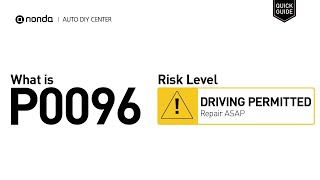
Even though p0096 might seem like a minor annoyance, you don’t want to let it slide. Over time, a bad air temp reading can make your engine run too rich or too lean, and that’ll beat up your catalytic converter or even the engine itself. I’ve seen folks ignore this and end up with big repair bills down the road. If the problem starts messing with drivability, you’ll really feel it. Bottom line-sort it now before it turns into a wallet-buster.
obd2 code P0096 Repair
From what I’ve fixed in the bay and what the OEMs recommend, here’s what usually gets rid of p0096:
- Swap out the IAT2 sensor if it’s failed-that’s the most frequent repair.
- Patch up or replace any damaged wires or connectors in the IAT2 circuit.
- Clean up any corrosion you find at the sensor and PCM terminals.
- Make sure all the connections and pins are tight and secure.
On rare occasions, if the wiring and sensor are all in good shape, the PCM itself might be the problem. But honestly, that’s not very common-don’t jump there unless you’ve ruled everything else out.



Conclusion
At the end of the day, P0096 means your PCM isn’t happy with what it’s hearing from the intake air temperature sensor 2. You might not feel anything wrong right away, but leaving it unchecked is playing with fire-bigger headaches can follow. Always start with the basics: inspect the wiring, check the connectors, and test the sensor. Usually, it’s a straightforward fix. The sooner you handle it, the smoother your ride (and your wallet) will be.

 4932
4932 6 minutes of reading